The 19th International Chopin Piano Competition in Warsaw has finished - Laureates Concerts 21st-23rd October 2025


'There are the notes, there is what is behind the notes and there is what is between the notes'
Ignaz Friedman

Profile of the Reviewer Michael Moran
https://en.gravatar.c atom/mjcmoran#pic-0

 |
| Miodowa Street, Warsaw - Bernado Bellotto (1722-1780) |
https://www.youtube.com/watch?v=u8D855ozt2w (Part I)
and
As William Wordsworth, the immortal English poet, said of Poetry in the Preface to the Lyrical Ballads :
'Poetry is the spontaneous overflow of powerful feelings: it takes its origin from emotion recollected in tranquility.'
Chopin is a distillation of poetry ..... and I prefer to recollect my strongest musical emotions after a little time has passed rather than give them the instantaneous gratification of words in that familiar contemporary Facebook surge of coup de foudre feeling.
All the prize winners gave performances on a Fazioli instrument
My general musical observation was that all played the same pieces in a far superior way than during the actual competition !
I greatly missed the absence of young Russian and Ukrainian pianists who are always a brilliant addition and make a magnificent contribution to this competition. Great Russian artists of the past - Gilels, Horowitz, Richter, Ashkenazy, Cherkassky, Lhevinne, Moiseiwitsch, Shebanova, Sokolov - to name only the most famous - have had a close association with the music of Chopin, which has such universal world cultural resonance. For how many years will this tragic exclusion and that of Russian music, all surely artistically beyond narrow nationalism, last in the present lamentable situation of war ?
 |
| Inside the Teatr Wielki (Polish National Opera) Warsaw - Laureates' Concert |

 |
|
 |
A Japanese member of the exotic and glamorous audience |
 |
|
 |
| Eric Lu (USA) |
MAIN PRIZES:
- 1st Prize – Eric Lu (USA)
- 2nd Prize – Kevin Chen (Canada)
- 3rd Prize – Zitong Wang (China)
- 4th Prize – (ex-aequo) – Tianyao Lyu (China), Shiori Kuwahara (Japan)
- 5th Prize – (ex-aequo) – Piotr Alexewicz (Poland), Vincent Ong (Malaysia)
- 6th Prize – William Yang (USA)
SPECIAL PRIZES:
- Polish Radio Award for the best performance of Mazurkas – Yehuda Prokopowicz (Poland)
- Warsaw Philharmonic Award for the best performance of a Concerto – Tianyao Lyu (China)
- Krystian Zimerman Award for the best performance of a Sonata –Zitong Wang (China)
- Fryderyk Chopin Society Award for the best performance of a Polonaise – Tianyou Li (China)
- Bella Davidovich Award for the best performance of a Ballade – Adam Kałduński (Poland)
The other finalists of the 19th Chopin Competition will receive equivalent distinctions funded by the Fryderyk Chopin Institute.
Full List of Awards
The jury scores have been published but I am not in the business of postmortems after piano competitions. I am interested primarily in the music, the cultural context and only then the individual performance and interpretation.
https://www.chopincompetition.pl/en/awards?award=all
Later I shall expand on these notes as there were severe time constraints in the multiple review writing.
Eric Lu is a well-deserved win despite some public, even surprisingly private, professional musical objections (a usual outcome of this competition).
Overall, I agree with the jury decisions (except perhaps the ex-aequo positions) which were clearly difficult to achieve given the complex scoring and took some 6 hours to be released at 2.30 am
I have written enthusiastically about this winner, the remarkably sensitive musician and outstanding pianist Eric Lu. There are many posts on his art on this internet Notebook over the last 10 years if you care to search ...
I first heard him at the Duszniki Zdrój International Chopin Piano Festival in 2015 after achieving 4th place at the age of 17 in the International Chopin Competition of 2015. I termed him a 'poet of the piano', an identity he has regained after it seemed to fade a little over intervening years in the glowing successes and many performances of his subsequent distinguished career.
http://www.michael-moran.com/2015/07/70th-international-chopin-piano.html
Finals of the Competition
The programmers have intelligently contrasted this 'late' work, the Polonaise-Fantaisie (1846), with the earlier concertos (1830) to hear the acquired range of Chopin style and interpretation over time
Before the reviews please read these few important contextual and cultural observations on the Polonaise-Fantaisie and both concertos.
It is interesting and helps to somewhat complete the interpretative picture
The Polonaise-Fantaisie contains all the troubled emotion and desire for strength in the face of the multiple adversities that beset the composer at this late stage in his life. This work, the first in the so-called ‘late style’ of the composer, was written during a period of great suffering and unhappiness. He laboured over its composition. What emerged is one of his most complex of his works both pianistically and emotionally.
Chopin produced many sketches for the Polonaise-Fantaisie and wrestled with the title. He wrote: ‘I’d like to finish something that I don’t yet know what to call’. This uncertainty surely indicates he was embarking on a journey of compositional exploration along untrodden paths. Even Bartok one hundred years later was shocked at its revolutionary nature. The work is an extraordinary mélange of genres and styles in a type of inspired improvisation that yet maintains a magical absolute musical coherence and logic.
Chopin leads us through a succession of extraordinary scenes and events. The fantasy element of the work is prominent so that we receive a spontaneous 'searching' improvisational survey within the composition which clearly offered Chopin many psychological obstacles. They pass in successive train through the imagination of any listener or pianist who can selflessly give himself in a meditative trance to this hypnotic music, the composition flickering on the screen of the mind. I feel one has an imaginative experience bordering on the cinematic.
Chopin completed it in August 1846. The reception was one of confusion and even upset. As Jachimecki stated: ‘the piano speaks here in a language not previously known’. Frederick Niecks’s judgment was that the Polonaise-Fantasy ‘stands, on account of its pathological contents, outside the sphere of art’.
The work reminds me incontrovertibly of lines from Byron's poem of 1816
The Dream
A change came o’er the spirit of my dream
The Wanderer was alone as heretofore,
The beings which surrounded him were gone,
Or were at war with him; he was a mark
For blight and desolation, compass’d round
With Hatred and Contention; Pain was mix’d
In all which was served up to him, until,
Like to the Pontic monarch of old days,
He fed on poisons, and they had no power,
But were a kind of nutriment; he lived
And made him friends of mountains: with the stars
And the quick Spirit of the Universe
(excerpt)
 Lord Byron's Dream (1827) Sir Charles Lock Eastlake PRA (1793 – 1865) Some important cultural context and my own views concerning the E minor and F minor Piano Concertos Op.11 and Op.21 before reading the reviews The Concerto in F minor Op. 21 is the fruit of youthful compositional spontaneity. Despite the differing opus numbers it was composed first, before the E-minor concerto Op.11. Written on the wave of Chopin's Vienna success, it gives the impression of a matter of extraordinary consistency, shaped with dramatic logic and consistency, without unnecessary dilemmas. This fascinating document is extracted from Friederike Müller: letters from Paris 1839–1845. Chopin's teaching and surroundings in the light of the correspondence of his favorite student (Fryderyk Chopin Institute, Warsaw, 2022) Please excuse the solecisms in translation as it involves French, German, Polish and English ! Dear Aunt Sophie, please pray that Chopin might remain healthy, kind and contented with me. I want to work with all my soul, head and heart, then everything will turn out well’ (from a letter to Sophie Müller of 30–31 August 1840) * * * * * * * * * * Friederike Müller was one of Chopin’s favourite and most talented pupils. In 231 letters written to her aunts in Vienna, gives detailed accounts of her life in Paris. She writes (sometimes in highly critical terms) about artists, concerts, pianos and musical novelties, sketching out, in a way that is filled with youthful wit and temperament, a remarkably vivid picture of Parisian musical and social life in the early 1840s. Above all, however, she gives vivid and detailed descriptions of nearly every one of the 70 or so lessons she had with Chopin and quotes verbatim many of the conversations she had with him. Therein lies the extraordinary character of this material: this is not an account given a long time after, like the testimonies of other pupils, often based on recollections seen in a better light; it is one that conveys her immediate, fresh and unembellished experiences. Her remarks concerning Chopin's lessons on the solo version of the F minor concerto have particular significance for any executant of this demanding work. Fryderyk Chopin observed on his Concerto in F minor Op.21 'There are people with whom studying this is impossible for me' * * * * * * * * * * 'The concerto in F minor is wonderful [...]. The Adagio is sublime! And thanks to its kindness, I will be able to play it in full sound even without an orchestra. Lately, I said that choosing between his two Concertos is painful for me. One is worth the other - he said - and both are worthless. And I assure Aunt that he not only says so, but he really thinks so.' Letter from Friederike Müller, dated Paris, Sunday, November 1, 1840. We have the comfort that we can disagree with Chopin about the assessment of his piano concertos. Refusing them value, we would deprive ourselves of the most beautiful pages of music from the first half of the 19th century. However, the dilemma of his students - also our privilege - can be resolved in favor of the Concerto in F minor op. 21, using a quote from Schumann: 'the second concerto, which we all together barely reach, we can only kiss its edge.' He wrote these words in 1836, already after the publication of the work, accompanied by a dedication 'to Countess Delfina Potocka née de Komar'. It is symptomatic that six years after the completion of the Concerto there is no trace of the youthful fascination in it, of which Chopin confessed in letters to Tytus Woyciechowski. Later biographies are attached to this thread like a burr... The 'Ideal' (that is, the unfortunate Konstancja Gładkowska), which Fryderyk dreamed of for half a year, 'for which Adagio was erected' (Chopin always titled the Larghetto Adagio), passed with the wind from Warsaw and never returned. But the Concerto in F minor - the quintessence of romantic virtuosity and emotional lightness, the embodiment of beauty - remained. Its premiere took place on March 17, 1830, at the National Theatre. An anonymous reviewer (probably Wojciech Grzymała) in Kurier Polski summed up the mastery of the work: 'In addition to originality, beautiful singing, great and bold passages applied to the nature of the instrument, decorated in vivid colors of feeling and fire, finally, the combination of all this into one whole, constitute the main feature of his composition.' The extraordinary work, practically without precedent, entered not only Polish but also European piano literature. The Concerto in F minor op. 21 is the fruit of youthful compositional spontaneity. Written on the wave of Vienna success, it gives the impression of a matter of extraordinary consistency, shaped with dramatic logic and consistency, without unnecessary dilemmas. Chopin juxtaposed the classical, three-part form with contrasting and complementing elements: a sonata-like Allegro (Maestoso), captured in the form of a Larghetto song, and a dance-like rondo. If the theme of the first part was marked with seriousness, it is far from tragedy, although the main key would suggest such an affect. The third part (Allegro vivace), although not afraid of sentimentality, predominantly emanates joyful playfulness, fixed in the cheerful F major key. The essence of the Concerto in F minor, however, is its central part - almost unearthly, poeticized - the culmination of emotions and feelings. Chopin offers the listener a certain programme - first leading him astray, 'lulling' him with idyllic, nocturnal moods, tempting him with cantilena fiorituras and rocking rhythms. Therefore, with incredible energy, a recitative melody explodes against the background of tremolando - in this culmination there is everything, including ecstacy. And then, as if nothing had happened, the music returns to the dreamy, initial aura. The Larghetto was enthusiastically received already during the first performance and to this day belongs to the most brilliant pages of European romanticism. Liszt saw in it 'ideal perfection'. On Saturday and Sunday (October 31 - November 1, 1840), Friederike Müller wrote a letter to 'dear, good Aunt Lotte'. At Tuesday's lesson, she played the Concerto in F entirely by heart. Chopin was pleasantly surprised by this. He commented: 'How is it, do you already play it by heart? [...] so let's start, but everything, even tutti. I played it. I'm sorry, but that's not what it's about - he said - you play it like a solo, and I want to hear the orchestra as best as possible; this is a completely different style - I will try to play it for you. Saying this, he played tutti for me, accentuating just like an orchestra'. A week later, on November 7, 1840, 'dear, good Aunt Sopherl' reported on the course of the next, Thursday's lesson: "Oh, let's take my Adagio right away - he announced, so I started playing it. I accompanied the recitative according to the score with my left hand and fortunately Chopin liked it, but he changed a few places. Then I played those places one by one, imitating him. I have never taught this way and I don't want to show it to anyone. Only you will be able to play this Adagio in my way. [...] - You see - said Chopin - there are people with whom studying this is impossible for me. If you don't understand me completely, that's it. There are still those who simply play me the notes, and those who manage to grasp some sense. I listen to them, but I would like to finally show you all the subtleties of the style, so that you convey my thought as I conceived it, and that pleases me". Friederike must have been extremely happy to hear such compliments from her beloved teacher. And we have evidence that the Concerto in F minor op. 21 functioned in Chopin's pedagogical practice and, importantly, was played in its entirety in the solo version. The printed edition from 1836 was arranged so that the entire musical content of the work was placed on two staves (in the classical notation layout) - both all orchestral tutti (reduced) and the solo part, highlighted with a different font. The verbal markings tutti and solo introduced additional structural-formal divisions. In the most important places, the parts of wind instruments were also indicated. Friederike must have used such an edition. Chopin, in one of the copies of the Concerto in F minor, belonging to Jane Stirling, proposed his own version of the accompaniment in the middle section of the second part (mm. 45-72) for use in solo performances. It is interesting to what extent it differed from what Friederike suggested on Thursday, November 5, 1840, in Paris... Piano Concerto in E minor Op. 11
Allegro maestoso Romanze. Larghetto Rondo. Vivace Chopin wasted no time in composing his next concerto, the Piano Concerto in E minor Op. 11 in 1830 after that in F minor. At this time Warsaw was an extraordinary melange of cultures. Magnificent magnate palaces shared muddy unpaved streets with dilapidated townhouses, szlachta farms, filthy hovels and teeming markets. By 1812 the Napoleonic campaigns had financially crippled the Duchy of Warsaw. The French Ambassador commented ‘Nothing could exceed the misery of all classes . . . I even saw princesses quit Warsaw from the most extreme distress’. Chopin spent his formative years during this turbulent political period and the family often escaped the capital to the refuge of the Mazovian countryside at Żelazowa Wola. Here the fields are alive with birdsong, butterflies and wildflowers. On summer nights the piano was placed in the garden and Chopin would improvise eloquent melodies that floated through the orchards and across the river to the listening villagers gathered beyond. In many ways the E minor concerto revolves around the exalted Romanze. Larghetto central movement. He elucidated its inspiration to his friend Tytus Woyciechowski: ‘Involuntarily, something has entered my head through my eyes and I like to caress it’. The limpid, untroubled and joyful nature of the early polonaises, mazurkas, rondos, sets of variations on Polish themes and piano concertos were written in the virtuosic style brillante fashionable in Warsaw. Now decidedly, from what we hear in this competition, returning to fashion especially with Asian pianists, this style was characterized by lightness, delicacy, charm, sonority, purity, precision and a rippling execution resembling pearls – le son perlé. These works could only have been composed in a state of happiness and youthful ‘sweet sorrows’ living in his native land. He was clearly still emotionally preoccupied with the idealized young singer Konstancja Gładowska. ‘Little is wanting in Gładkowska’s singing’, he wrote to his friend following her performance in the Italian Ferdinando Paer’s opera Agnese, ‘She is better on stage that in a hall. I shall say nothing of her excellent tragic acting, as nothing need be said, whilst as for her singing, were it not for the F sharp and G, sometimes too high, we should need nothing better’. In the same letter written to Tytus in May 1830, Chopin describes the nature of the pivotal movement of this work. ‘The Adagio for the new concerto is in E major. It is not intended to be powerful, it is more romance-like, calm, melancholic, it should give the impression of a pleasant glance at a place where a thousand fond memories come to mind.’ One cannot help wondering about the source of these 'fond memories' and imagining the romantic nature and occurrences that may have given rise to them. Yet this limpid music of extraordinary inspiration has a far greater resonance than an adolescent infatuation. The Warsaw premiere audience numbered around 700. ‘Yesterday’s concert was a success’, wrote Chopin on 12 October 1830 to Tytus ‘A full house!’ Two young female singers also performed at the concert conducted by that controversial figure in Warsaw musical life, Carlo Soliva. Contemporary programming was unimaginably different to 2021. After the Allegro had been played to ‘a thunderous ovation’, Chopin sacrificed the stage to a singer [‘dressed like an angel, in blue’], Anna Wołkow. Typical of the pressing personality of Soliva, she sang an aria he had composed. The other young singer was Konstancja Gładkowska. Chopin wrote as descriptively as always: ‘Dressed becomingly in white, with roses in her hair, she sang the cavatina from [Rossini’s] La donna del lago as she had never sung anything, except for the aria in (Paer’s) Agnese. You know that “Oh, quante lagrime per te versai”. She uttered "tutto desto” to the bottom B in such a way that Zieliński (an acquaintance) held that single B to be worth a thousand ducats’. This 'farewell' concert was only three weeks before Chopin left Warsaw and the subsequent November 1830 uprising burst upon the city. ‘The trunk for the journey is bought, scores corrected, handkerchiefs hemmed… Nothing left but to bid farewell, and most sadly’. Konstancja and Frycek exchanged rings. She had packed an album in which she had written the words ‘while others may better appraise and reward you, they certainly can’t love you better than we’. Only two years later, Chopin added: ‘they can’ which speaks volumes. An introductory book on the concertos and their context I cannot recommend more highly: Chopin - The Piano Concertos by the jury member John Rink (Cambridge Music Handbooks 1997) |


* * * * * * * * * * * *
Reviews of Finals of the Competition
Day III
The reviews and entire competition are in reverse order of appearance to save readers the labour of scrolling down each day
20.10.2025
Day 3 | Warsaw Philharmonic Concert Hall | 18:00
Kevin Chen
Canada
Warsaw Philharmonic Orchestra
Andrzej Boreyko
18:00
Programme:
Fryderyk Chopin - Polonaise-Fantasy in A flat major Op. 61
Chen created an extraordinarily atmospheric opening for the work. He is a master of using silence as important structurally and in expression as notes. He sculpted the work most expressively with an almost conversational aspect between RH and LH. There was a great deal musically in his approach with many fascinating fantasy moods, soundscapes and exotic harmonic transitions.
He develops what is actually there to develop if the pianist perceives the expressive resource. His dynamic never rose above forte yet the moods swing like a massive pendulum of feeling. He used dynamics in an expressive manner. He did not use the piano as a mainly percussive instrument as many pianists in this competition have done but developed it as an instrument of pure feeling. As a motive idea, the climactic constant search for certainty in life, faced with the mystery of death, with just a touch of hysteria sometimes prevailing.
Fryderyk Chopin - Piano Concerto in E minor Op. 11
In the opening Allegro maestoso at this stage of the Finals, I felt the orchestra were improving in some ways as an ensemble in producing a massed cohesive sound. The first entry by Chen was majestic in tone colour and dynamic. The followed passages of immense clarity, transparency, inner voices and polyphony. He produced rhapsodic sound without blurring. His style brillant was perfectly focused and the phrasing betrayed a completely musical personality with little egotism. A great deal of affected period style was also present in his command of the keyboard. Here I remarked yet again his crystalline colour, rich tone, refined touch and creation of timbre which kept him as a human being. His use of silence indicated that pauses were if vital immeasurable pianist . His use of silence created pauses within the interpretation with a seamless change of tempo towards the conclusion.
For the Romanze. Larghetto he chose a moderate tempo which became slow and meditative. There was definite innocence in his playing of this immortal love song of unrequited love (or possibly infatuation). It was certainly not the fraught trajectory of difficult adult love. At times clouds hid the sun and the dream became a grimmer reality but only briefly.
In the Rondo vivace his articulation was quite stunning as was the glistening sound if his stile brillante in the krakowiak dance. I felt he captured that stylish sensibility of Hummel, Moscheles or Kalkbrenner in the Viennese or Parisian manner. The stile brilliante of Chopin’s piano concertos and variations was much influenced by the glittering style of Hummel’s piano concertos. There was a constant vibratory pulse of energy where one could hear every note and many variations of tempo for expression.
The traditional Cortot sound of the jeu perlé ('playing pearls'). This is a quality where the sound becomes clear and the notes gain much clarity and distinction, their succession reminiscent of the row of pearls on a necklace. The sound Chen extracts from the Steinway remains clear and distinct no matter what the tempo. Chen's nature is naturally musical as the L.H. chords shelter under the glittering rain of R.H. notes. He maintained this until the triumphant conclusion, a sense of effortless dance and a tremendously acute inner sense of rhythm. The most expressive Rondo of the final round so far.
20.10.2025
Davit Khrikuli
Georgia
Warsaw Philharmonic Orchestra
Andrzej Boreyko
19:00
Programme:
Fryderyk Chopin - Polonaise-Fantasy in A flat major Op. 6
He showed an instinctive sense of improvisation and 'searching' for the home harmonization or theme which does finally emerge from this created feeling of undecided insecurity. This is possibly not at all PC but I felt his whole approach was often decidedly 'masculine' - solid and strong - and a complete contrast to the more 'perfectionist' texture of beauty and refinement that has been relatively common in this competition. Chopin was of course capable of both, being for me an androgynous being.
I did feel however, that Khrikuli was not so skilled at creating isolated fantasy episodes of distinct, clear character. Yet there was great passion here, his poetry coming organically from within his spirit. Sometimes I felt as if we were witnessing the powerful and deeply soulful dredging of the riches of an interpretative coal seam. Khrikuli galvanized us with a triumphant conclusion at a noble tempo and dynamic. I would only observe that there was a slight element of refinement missing and a few solecisms in this playing. How important you consider these to be is bound up in the reaction created by your own temperament and life experience.
Fryderyk Chopin - Piano Concerto in F minor Op. 21
The Maestoso opening by the orchestra and the piano entrance were noble in posture. However I felt nothing particularly exceptional in this reading of the first movement by Khrikuli. The phrasing was rather predictable and conventional. Repeated phrases were with exactly the same dynamic and colour.
The Larghetto was at a highly elegant tempo and the fiorituras, so important to the timbre and texture of this work, were a charming even seductive delight. Darker shadows formed with Khrikuli as reality and its unavoidable disillusionment and phantom intimations formed in one's imagination as the negative consequences of 'love' arose. This account was one of the 'best' Larghettos in the entire competition which appeared to stem directly from the pianist's experience.
In the Allegro vivace, Khrikuli used the stile brillante creatively, not for superficial effect, but to rejuvenate memory. He created superb colours and a variety of touch, tone, and dynamic articulation. In the orchestra for the first time a natural horn sounded, the texture of the sound itself having a great atmospheric effect in the cor de chasse. The dance rhythms of the kujawiak persisted to the conclusion as the drama and tempo built.
Tremendous enthusiasm for the sheer bravura, style and mature authority and sound of this Georgian pianist. He should go into the list of prizes without doubt!
20.10.2025
Shiori Kuwahara
Japan
Warsaw Philharmonic Orchestra
Andrzej Boreyko
20:10
Programme:
Fryderyk Chopin - Polonaise-Fantasy in A flat major Op. 61
I had heard this formidable pianist at Duszniki Zdrój for the first time in August 2021.
The opening chords lead to pianissimo conclusions. She forged this work into an extraordinary variety of psychological ballade. with a powerful sound. A type of chiaroscuro vision evolved with dark shadows. She did not present us with a delicately poetic construction but a far richer vein, more like maturity in distress. There were all the elements of a musically narrative Ballade. I received the impression she was painting a landscape in oils through which she wandered breathlessly taking us with her. Kuwaharac expresses tremendous authority at the keyboard unlike any Japanese lady pianist I have ever encountered.
Fryderyk Chopin - Piano Concerto in E minor Op. 11
Allegro maestoso
She emerged from the first piano entry as a tremendously powerful, resolved, mature and consolidated performer. This was a straightforward, deeply impressive, almost dynamically homogeneous account with no cosmetic superficial appearances or gestures. The stile brillante that was so characteristic of these early Chopin works, influenced by Field, Hummel and Moscheles, was held in some abeyance. Here we were given a classic account of the first movement.
Larghetto
All the penetrating melodies of illusion, distant infatuated affection for 'The beautiful Other' were present here. Fine fluctuations of mood and attitude so characteristic of this early, idealistic, unconsummated admiration.
The Rondo Vivace was brilliantly delivered with forceful power rather than being overloaded with 'expression'. She was more spontaneous in her approach than many other participants. There was an enigmatic simplicity in this presentation of the krakowiak rural dance. Her fabulous technique and regular pulse was correct in every regard. Except that I yearned on occasion for more variegated musical meaning and subtle expression.
The conclusion was built in dramatic powerful style into a great architectural edifice of composition. I am not entirely sure she is a natural Chopinist as I have come to envision this composer rather differently living as I do in Poland. Her performance at Duszniki in 2021 indicated major strengths for other more declamatory composers such as Beethoven, Liszt and Stravinsky.
Her tremendously charismatic personality and ability to connect the spirit of music intimately with her audience (and the jurors) meant wild applause, shouts, cheers and general mayhem. Many minutes of applause but no return to the platform.
If you wish to read about her extraordinary Duszniki Zdrój 2021 performance:
https://app.box.com/s/i97tusryttb7yhcvd639qq51vw9ntbpi
You can watch and hear her magnificent 2021 Duszniki recital of Beethoven Op.110, Liszt B Minor Sonata (one of the greatest performances I have ever heard), Bach/Busoni Chaconne and Stravinsky Petruchka here:
https://www.youtube.com/watch?v=8E-nPU8XVQ4
Surely one of truly great pianists of our time
Reviews of Finals of the Competition
Day II
19.10.25
18:00
Miyu Shindo
Japan
Polonaise-Fantasy
in A flat major, Op. 61
The feeling of improvisation and 'searching' at the opening is rather important in this work and I felt Shindo was too well 'prepared' and not open to very much spontaneity of imaginative invention. When we 'find our way' and move into the body of the piece, she chose an excellent tempo, which is vital. I felt that her performance was more pianistic brilliance than a philosophical and experiential exploration. I felt her soundscapes in her often very sensitive reflections bordered on the mannered and a fraction over-sentimentalized which is foreign to Chopin's temperament. Her emotive moderate pace allowed the polyphony to speak and the rising of żal was deeply expressed dynamically.
Concerto in
E minor, Op. 11
I must say I love the tympani in the orchestral opening of the work - so politically appropriate at the time for Poland under the Russian hegemony. I must say however, as to the orchestra, I far prefer Franz Brüggen and the Orchestra of the Eighteenth Century in these works, recordings of which are still available. The dynamic scale of this large orchestra against the soloist often provided problems of balance, at least where I was seated.
Shindo gave an authentic Allegro maestoso opening to the concerto and caressed the yearning melody that evoked such an emotional and energetic love of youthful life. Her sounds glittered in stile brillante and suited the work well. I was very moved by much of her rhapsodic playing and superfine legato. She made me feel what a truly universal and immortal composer is Fryderyk Chopin. She maintained close eye contact with both conductor and orchestra. Her dynamic control was most expressive.
The Romanze Larghetto was slow and poignant. I found her phrasing in this movement rather mannered in order to extract the last vestige of sentiment from the melody. However, I feel Chopin was less profoundly engaged emotionally in this beautiful nocturne of love, a dreamer after the inaccessible, limited by reality. His early emotional life is indicated in his letters which all piano students of this work should read. They give a rare insight into his character. I found the overall effect rather cool despite the aesthetically beautiful phrasing, tone and touch she magically aroused.
The Rondo. Vivace was full of dance energy. The Rondo’s refrain bears the traits of a rural krakowiak dance: its rhythm, distinct articulation, liveliness and wit. The closing chase across the keyboard reminds one of the provenance of this supremely Romantic work: it was born of the virtuosic stile brillante. Although tremendously impressive digitally, I was looking for more expressive and affecting stylistic phrasing in this movement, to break up the seemingly endless cascades of notes.
The audience were highly enthusiastic with cheers, clapping and shouts !!
19.10.25
19:00
Zitong Wang
China
Polonaise-Fantasy
in A flat major, Op. 61
I had admired the sensitivity and deep musicality of this lady and had written about her in the former stages with glowing appreciation. The result of the competition is not just judged on the concerto stage. Consistency is the answer to victory.
There was grandeur in this 'search' for certainty by Wang with intimations of the pain to come. She achieved a remarkable ultra pianissimo which was deeply touching and emotional. In her varied waves of dynamics she expressed the many moods and episodic fantasies Chopin magically brings into being. Her soundscapes subtly merged into one another in long lines of expression and change.
I felt also much meditative and philosophical wandering which convinced me that she was somehow in touch with something metaphysical. There appeared to be a deeply personal side to some of these phrases and utterances. There was an eloquent statement of the main theme on return at mezzo-forte which moved me greatly. Silences were as important structurally and expressively as sound to this pianist. So rare. In the return to life, suffering remained to be overcome, although the conclusion was rather too fast and dynamic considering the deep spiritual explorations that had preceded it. A fascinating performance.
Concerto in
E minor, Op. 11
Her Allegro maestoso opening was rather harsh and percussive which was a surprise given her former subtlety. The work became magnificently rhapsodic at times with scintillating stile brillante tone that pushes forward with momentum. I felt some of the glorious melodies could have been cherished more in expression. Many episodes are lyrical and poetic and should be shaped into musical sculpture. I felt much of the expression was over-prepared and not spontaneous enough. The end of this first movement had tremendous forward impetus and drive.
I was much moved by her conception of the Romanze. Larghetto. She chose just the right tempo for this youthful yearning after the promises offered by distant love. The greatest love song ever written ? I felt she understood the curious dreamy, almost irrational nature of adolescent infatuation - 'love' is something quite different. Fine conception indeed.
In the Rondo. Vivace the orchestra was rather strident. Wang adopted a brilliant style that glistened but the pace was a rather relentless race to the finishing post that followed lyrical, slow episodes. Chopin Rondos give the pianist many unexpected challenges digitally, in terms of creative stamina, keyboard virtuosity, both stylistically and emotionally. She gave us a quite fantastic virtuoso conclusion but the music demands more than that in terms of the affectations of the period style, breath pulse, rubato and a command of expressive tensions and relaxations.
Wildly enthusiastic audience response!
19.10.25
20:20
William Yang
USA
Polonaise-Fantasy
in A flat major, Op. 61
From his previous stages I was always bothered by what I considered excessive dynamic contrasts in his playing. However, I found this work curiously understated. I felt a lack of the essential improvisatory spontaneity although many of his lyric episodes were moving because of his refined tone at mezzo- forte to forte. His forte tended to the strident and harsh. His expressive palette often simply oscillated between fast, slow, fast ......however I found his natural musicality attractive and skilled. I was unsure that Chopinesque fantasies were actually being played, knowing the composer's other works involving fantasies. Towards the conclusion we moved as ever into the large 'modern idiom' dynamic contrasts that I feel uncomfortable with as a Chopin 'traditionalist'.
Concerto in
F minor, Op. 21
There was certainly a maestoso feeling in his fertile and attractive phrasing and expressive musical gestures. He seemed to have achieved an ideal dynamic balance with the orchestra. His immensely strong and authoritative keyboard technique did not glitter overmuch but I do look forward to hearing this quality of stile brillante in the early works.
The Larghetto had the enchanting texture, tone and tempo of a nocturne. He produced some highly sensitive, embroidered fiorituras. Any emphatic poetry he produced seemed slightly misplaced. I found the whole recollection and emotional aspiration captivating.
Of the piano’s entrance, the great Polish writer and musician Jarosław Iwaszkiewicz said that it ‘sounds like the opening of a gate to some haven of love and peace’. The principal theme appears three times. On each occasion, Chopin has it played molto con delicatezza, yet each time he arrays it in new, increasingly airy fiorituras. The third time, the phrase originally comprising eight notes gains the form of a wave, expressed by a forty-note fioritura. An inimitably Chopinian mood is forged writes the great Polish musicologist Tomaszewski.
Yang made a fine and subtle transition to the Allegro vivace. His touch did not quite produce the stile brillante that this movement calls for, influenced as it is by Hummel, Moscheles or Kalkbrenner.
Tomaszewski again concerning this final movement:
'It thrills us with the exuberance of a dance
of kujawiak provenance. It plays with two kinds of dance gesture. The
first, defined by the composer as semplice ma graziosamente, characterizes
the principal theme of the Rondo, namely the refrain.
A different kind of dance character – swashbuckling and truculent – is presented by the episodes, which are scored in a particularly interesting way. The first episode is bursting with energy. The second, played scherzando and rubato, brings a rustic aura.
It is a cliché of merry-making in a country inn, or perhaps in front of a manor house, at a harvest festival, when the young Chopin danced till he dropped with the whole of the village. The striking of the strings with the stick of the bow, the pizzicato and the open fifths of the basses appear to show that Chopin preserved the atmosphere of those days in his memory. The opening key of the Rondo finale is F minor, a key with a slightly sentimental tinge. According to Marceli Szulc, it brings ‘wistful reflection’. But the Concerto ends by shaking itself out of reflection, nostalgia and reverie, with the appearance of a horn signal, the French cor de chasse, denoting the start of the dazzling coda and the entrance of the simple, cheerful key of F major.'
The music of his concertos expresses Chopin's personality so strongly and Yang achieved this in part. He is clearly a natural musician of immense talent and this was a true vivace.
The enlivened audience wildly applauded his interpretation !!
19.10.25
21:20
Piotr Alexewicz
Poland
Polonaise-Fantasy
in A flat major, Op. 61
Immediately he began to play, I felt the return of what Chopin termed the 'Polish element' which had largely been held in abeyance in this competition. Was this also another fantasy to add to the work ? Am I permitted to observe this in 2025 ?
The opening was strong with great self-confidence in its approach to the polonaise rhythm. The work with Alexewicz possessed a great deal of forward, improvisational drive. I sensed, even perceived with my mind's eye, fascinating oil landscapes painted in musical fantasy of wonderful tonal colour. A great deal of expression in this competition has not been either Polish or for that matter, Chopinesque, but here we have it unmistakably present. A tremendously evocative conclusion which expressed Polish spiritual unease, some moments of joy,the anguish of war, the pain and the suffering of fraught recollections in series, a mosaic of fantasies.
Concerto in
F minor, Op. 21
The orchestra and conductor leave something to be desired I am afraid to say, considering their generous selflessness and familiarity with the score. The soloists (except the horn cor de chasse) could have attended to detail far more. The piano entry held a posture of maestoso in character with a full understanding of the Polish polonaise spirit. I felt this was going to be a classically understated performance, not flash or virtuosically 'showy', but of spiritual and sensual Polish quality and depth. And so it was ...
The Larghetto had a beguiling simplicity even at this slightly faster than customary tempo. I was not moved in any sentimental sense by the immortal love song, but absorbed it more as a muscular masculine feeling. No, it was not overtly 'romantic ' in its approach to mind and heart. The Allegro vivace could have followed more Tomaszewski's colourful description that I quoted in my William Yang review below. There was nothing particularly arresting in terms of colour, affected period expression or style brilliant in Alexewicz's account of this movement. However, it stands as a welcome Polish settlement, unencumbered by sensationalism of which we have heard a great deal in this competition. Perhaps the best performance of the day.
Of course, being in my view, scandalously the sole Polish competitor in the Chopin competition, he received tumultuous, long applause, cheering enthusiastic applause and shouts of approbation !!
Reviews of Finals of the Competition Day I |
18.10.2025
Warsaw Philharmonic Concert Hall | 18:00
Tianyou Li
Warsaw Philharmonic Orchestra
Andrzej Boreyko
18:00
Programme
Fryderyk Chopin
Polonaise-Fantasy in A flat major Op. 61
The only criticism I have of this admirable performance is a slight lack of spontaneous fantasy and improvisational atmosphere. We should enter Chopin's fluid imagination at this fraught time for him. The interpretation of this work by any pianist (and the reaction of the listener) is particularly personal.
Piano Concerto in E minor Op. 11
As often at this stage of the competition, the orchestra under their conductor appear fresh and excited. I felt this strong ensemble chose an excellent tempo for the Allegro maestoso. I personally love the tympani in the opening 'salvo' of the concerto. Hardly surprising as Warsaw was occupied by the Russians in a militaristic sense.
There was good attention to orchestral detail by Boreyko. The opening entry by Li was maestoso certainly which developed into an electrifying style brillante. Despite this impressive digital dexterity, I felt a sufficient lack of period expressiveness with its rather constant dynamic level. There was a touching poetic cantabile at times. Will this variety of playing become the predominant 'modern Chopin' interpretation ? Is this Chopin's voice ? Li has immense clarity and transparency in his virtuoso playing and the glistening sound he produces. The only problem is just this this lack of what I consider early Chopin aesthetic style
In the Romanze. Larghetto Li adopted a moderate tempo, sensitive tone and phrasing - the expression of a youthful and romantic, distant, illusioned love that seems inaccessible to the heart (which can apply even if you are 'a certain age' !). The bassoon obbligato Chopin writes in tandem with the piano was very affecting. There were brief, beautiful melodic ritardandos as he sculpted the glorious love song in a comforting mezzo-forte.
Li was able to display his fabulous clarity of articulation in the Finale. Rondo. It was as if jewels were scattered on a Persian rug by a Marchesa. The movement was full of joyful exuberance in simply playing the piano, presenting music as speech. Highly accurate and minimal pedal. The movement developed a poignant pulse in the brief minor cloud that passes across the sun before the return to excitable life. I just missed a shaping expression of gesture in that cascade of jeu perlé notes that possessed such powerful forward momentum.
Enthusiastic audience response with applause and much calling out !
Eric Lu
Warsaw Philharmonic Orchestra
Andrzej Boreyko
19:00
Programme
Fryderyk Chopin
Polonaise-Fantasy in A flat major Op. 61
He began with a statement of psychological security that soon began to disintegrate as the improvised 'searching' for a path through the forest of life took flight. Finally the composer found his direction. ..Lu was most impressive as his fertile imagination created fantasies of different orders that came and went. The emotional disturbance continued to build as the fantasy landscapes folded over one another. Scarcely perceptible dreams appeared and dissolved in brilliant panorama. The rising emotions caused Lu to increase the tempo and dynamics allusively. He expressed a passionate feeling of that untranslatable Polish word żal (melancholic regret leading to a mixture of passionate resistance, resentment and anger in the face of unavoidable fate). A fine, mature and moving performance.
Piano Concerto in F minor Op. 21
The Maestoso opening was highly expressive and Lu gave it deep melodic meaning. Expressive episodes were joined as if to create a seamless narrative. There was close cooperation between conductor, orchestra and soloist. Drama built in intensity for the piano part and Lu's eloquent phrasing carried us forward with uninterrupted momentum.
The Larghetto betrayed affecting moderation and did not indulge the sentiments, however tempting that is - almost impossible to resist with one of the greatest love songs ever written. I felt the rising passions of rejection as grim reality began to lightly strike but this subsided as is the nature of dream time in youth. Lu created graceful and radiant fiorituras (decorative embellishments named after flowers in Italian).
The Allegro vivace was attractively and creatively phrased in the manner of literate musical speech (rarely heard). Expressive arabesques played across fields of dancing sunflowers. The bassoon obbligato was full of minimal charms and the hunting call on the French horn, the cor de chasse, was most rousing and correct. Lu's style brillant created real electricity in the air and his dynamic variations added 'emotional spice'. He achieved tremendous clarity of sound with an enlivening and secure pulse. This was a true Allegro vivace !!
He must win this competition or come close to it.
Tremendously enthusiastic applause and cheering in the hall!
Tianyao Lyu
Warsaw Philharmonic Orchestra
Andrzej Boreyko
20:20
Programme:
Fryderyk Chopin
Polonaise-Fantasy in A flat major Op. 61
Instantly this prodigious talent (she will be 17 on 21 October) announced itself with a gloriously refined sound, tone and touch. The trait of 'seeking a refuge' for Chopin had begun. Her tensions and relaxations throughout the creation of the fantasies were remarkable for their grace and refinement. There was infinite expressivity here and artful embroidery of the melodic line. Inner voices were clear and the polyphony full of restrained emphasis. She appeared to be painting landscapes of a full emotional life which expanded into a glorious apotheosis. A superbly artistic mezzo-forte conclusion, not triumphant at all, as it is not. An extraordinarily precocious performance by such a young artist.
Piano Concerto in E minor Op. 11
The Allegro maestoso had a noble opening on the piano with dense chords. The glorious melody that followed was uplifting in its natural musical texture, phrasing and dynamics. This expressive, refined achievement at the piano at such a tender age is nothing short of miraculous. Lyu listens to the orchestra with great musical maturity. We were listening to style brillant in abundance and to her extraordinary clarity and transparency - such a gift! The glorious melodies of Chopin floated above the uneven orchestral fields like a skylark. Such phrasal arabesques gave me that unique tingle along the spine that the Russian author Vladimir Nabokov said he observed when he contemplated being in the presence of true art. The subtle alteration of mood was quite extraordinary and organically natural.
The Romanze.Larghetto, arguably the most beautiful love song ever written, gave us divine yearning at an internal tempo. The tempo and phrasing were even apparitional, full of visions of hope yet celebrating the loved one's absence with the richly metaphorical presence of unrequited love. Her technique is magical at mezzo-forte and piano dynamic. It remains undiminished in quality and in terms of depth of tone. She is never harsh, strident or aggressive when Chopin indicates dynamic augmentation. The whole movement was elegant and full of illusioned youthful tenderness as it should be.
The dance rhythms she achieved in the final Rondo vivace were perfect. The Rondo’s refrain bears the traits of a krakowiak: its rhythm, distinct articulation, liveliness and wit. Her eloquent repeated phrases were never similar. This was the true French jeu perlé to my mind reminding me of past masters. The only reservation I had was her entrapment by her own virtuosity. We need to hear voices and meaning within the racing tempo, even in a display Rondo. We also need variety of articulation and phrasing in that grand rush of pearly notes.
Wild cheering, clapping and shouting for many minutes from the audience at this quite fabulous performance by 'The Princess of the Keyboard'. Perhaps a deserved competition victory ?
Vincent Ong
Warsaw Philharmonic Orchestra
Andrzej Boreyko
21:20
Programme:
Fryderyk Chopin
Polonaise-Fantasy in A flat major Op. 61
I felt the beginning rather crude and perfunctory. I soon came to the conclusion that this was rather a remarkable, personal vision of the work that clearly paid no dues to past performances or recordings. On occasion it seemed mannered but then the notion of spontaneous improvisation entered my assessment and I began to listen rather differently. This extraordinary feeling of listening to a fractured yet cohesive musical mosaic grew on me.
Piano Concerto in E minor Op. 11
I liked his approach to the E-minor concerto which was somewhat unexpected given his rather mediocre performances (I felt) in earlier stages of the competition. In the Allegro maestoso he adopted a moderate, true maestoso tempo which enabled him to shape phrases internally like a sculptor releasing the desired form from the marble. One listened to this personal approach with concentration. My interest wavered a little as time passed as I felt he could have adopted more expressive period gestures rather than performing this movement rather as a late nineteenth century virtuoso composition. Chopin remember was greatly influenced by Bach, Hummel, Mozart and Moscheles.
The Romanze. Larghetto was also attractive in its moderate, ardent melodic tempos and alluring tone colours. I was surprisingly emotionally moved by this inventive approach which I often felt was being created spontaneously on the spot as it were, as a jazz pianist might proceed. Again, the Rondo vivace was at a comparatively moderate tempo which allowed the natural internal expression to bloom. His advanced keyboard skills unfortunately gave rise to solcisms within the style brillant. I felt this as unimportant strangely enough as the general impetus forward and his concept of the work never wavered.
A uniquely personal vision of developing creativity.
Tremendously popular reception in the hall !!
* * * * * * * * * * * *
The 17th October 2025 is the 176th anniversary of the death Chopin. This was commemorated by a performance of the Mozart Requiem on solo historical piano by the great pianist Vadym Kholodenko at the Church if the Holy Cross, Warsaw at 8.30pm.
 |
| Watercolour and pencil drawing of Chopin on his death bed by the Polish artist Teofil Kwiatkowski (1809-1891). The painter was a witness to his last hours and death and drew a number of likenesses |
 |
The plinth in which the heart of Fryderyk Chopin has been laid Holy Cross Church, Warsaw |

The work was faithfully transcribed for solo piano by Liszt's favorite pupil and Wagner's friend Karl Klindworth. Kholodenko will play the Mozart Requiem on a superb 1858 Erard period instrument.
This extraordinary transcription takes you into the realms of the deepest conception of mortality (especially now, in real time, with our constant sight of daily horror, death and destruction in the Ukraine conflict and the entrails of the authentic hell of Gaza). Yes, the universality of death comes to us all but seems not to dissuade some from embracing it murderously with vengeance and dedication.
Realms of internal feeling, not touched by the massive orchestral/choir original score, are revealed in an intimate and polyphonically revealing manner on the solo instrument. The work of immense, tragic grandeur we are all familiar with, the masterpiece known as Mozart's Requiem, is transformed and taken into an additional realm of feeling and sensibility by this transcription.
My imagination and human empathy are moved beyond calculation into the fluid landscape of human emotion and suffering in the face of death, taken there by the consoling universality of Mozart and Chopin, their sublime music, destiny and expression of grief.
There are some extraordinary moments where expressive polyphony, cantabile phrasing and internal details not normally heard, came poignantly into the musical foreground. The work is one of the most moving and unusual of this genre, so appropriate as a heartfelt lament in these distracted times.
The jury of the 19th International Fryderyk Chopin Piano Competition, chaired by Garrick Ohlsson, admitted the following 11 pianists to the Finals, listed below in alphabetical order:
1. Piotr Alexewicz, Poland
2. Kevin Chen, Canada
3. David Khrikuli, Georgia
4. Shiori Kuwahara, Japan
5. Tianyou Li, China
6. Eric Lu, USA
7. Tianyao Lyu, China
8. Vincent Ong, Malaysia
9. Miyu Shindo, Japan
10. Zitong Wang, China
11. William Yang, USA
The list of pianists who have qualified for the finals is also available here.
The finals auditions will be held from 18 to 20 October, only in evening sessions starting at 6:00 p.m. CEST
Stage III
Day III
16.10.2025
Morning session | Warsaw Philharmonic Concert Hall
16.10.2025
Morning session | Warsaw Philharmonic Concert Hall
Tomoharu Ushida
Japan
10:00
Programme
Prelude in C sharp minor Op. 45
So often neglected by pianists, many consider the Prelude in C-sharp Minor Op. 45, composed at Nohant during the summer of 1841, as one of the most private and intimate compositions Chopin ever wrote. It gives one the impression of a written down improvisation. He proudly spoke to his amanuensis Julian Fontana of the piece being 'well modulated'. It dreams and movingly explores the many harmonic colour and timbrel differences among the different keys it meanders through. This would have been far clearer in the sensitively unequal temperament in which the Pleyels of Chopin’s time were tuned. Equal Temperament was considered unachievable and perhaps undesirable as it was during the Baroque and Classic periods.
Chopin wrote from Paris in 1848, fourteen months before his death : 'All those with whom I was in the most intimate harmony have died and left me. Even Ennike, our best tuner, has gone and drowned himself; and so I have not in the whole world a piano tuned to suit me.' Many different temperaments were used in the Paris of the 1830s and 1840s. Equal temperament remained a matter of speculation. This preoccupation continued well into the 1890s to preserve the emotional associative differences between keys.
Ushida brought a beautiful glowing sound from the Steinway instrument. The moderate, considered tempo suited the atmosphere of time passing and somewhat melancholic recollection. His phrasing and varied dynamics were affectingly expressive. A particularly fine musical performance.
Mazurka in B major Op. 56 No. 1
Mazurka in C major Op. 56 No. 2
Mazurka in C minor Op. 56 No. 3
I have spoken earlier elsewhere in this post concerning the passion for dance and 'Mazurka Fever' that gripped Europe during the Chopin period.
I very much enjoyed Ushida's Chopin Mazurkas Op. 56 (1843–44). No. 1 in B major captured the shifting internal life of Chopin's nostalgic and melancholic reminiscences, fertile sublimated fragments of his past with flashes of remembered dancing, the joy and boldness of the mazur. He often spoke of otherwise fine performances but missing the 'Polish element' as he termed it. This is something all pianists who are not Polish struggle to achieve yet I did feel the element here. No. 2 in C major had an affecting rumbustious rural energy contrasted with more, not terribly serious, romantic moments of reminiscence. Ushida gave the work attractive dynamic gradations.
This one was quite unlike No. 3 in C minor, a deep poem replete with nostalgia and recall. Chopin's harmonic adventurism in this mazurka is so arresting. Ushida expressed a particularly 'Polish atmosphere' with different tone colours for the changes of scene (always present in these often visual musical evocations). Ferdynand Hoesick, writer and musicologist historian of literature, musicographer and publisher, wrote ‘rather the music of memories than of reality’ and Zdzisław Jachimecki saw in its tonal boldness ‘the foundations for the music of future times’.
Fantasy in F minor Op. 49
The difficulties in bringing together the fragmented nature of the next work are well known. Carl Czerny wrote perceptively in his introduction to the art of improvisation on the piano ‘If a well-written composition can be compared with a noble architectural edifice in which symmetry must predominate, then a fantasy well done is akin to a beautiful English garden, seemingly irregular, but full of surprising variety, and executed rationally, meaningfully, and according to plan.’
At the time Chopin wrote this work, improvisation in public domain was declining. Ushida expressed the lonely, bleak, isolated atmosphere I feel that opens the work. Chopin contemplates the destiny of his country and himself within its history. Ushida brought together all these disparate elements into an enviable unity of expressive intention with well judged expressive rubato.
Waves of ominous rebellion then rose which augmented the strength of the rising emotion. Phases of the Fantasy were clear in Ushida's articulation, tone and touch which expressed various colours and shifts in timbre. He brought a deeply natural musical phrasing to this interpretation which gave me a feeling of the inevitability of destiny. The central chorale emerged as a prayer, a devotional and reflective chorale, affectingly played. This internal life was followed by a passionate spontaneous eruption of emotion like a volcano of pent up energy released in rich tone and clear articulation. With many of Chopin’s apparently ‘discontinuous’ works (say the Polonaise-Fantaisie), there is, in fact, an underlying and complexly wrought tonal structure that holds these wonderful dreams of his tightly together as rational wholes.
There was a feeling of improvised fantasy playing like globes of mercury in the composer’s mind, sometimes merging and sometimes autonomous but never controllable. As Uschida played and I listened and to this great revolutionary statement, fierce anger, nostalgia for past joys and plea for freedom, I could not help reflecting. The artistic expression of the powerful spirit of resistance in much of Chopin is desperately needed today – not in the nationalistic Polish spirit he envisioned but with the powerful arm of his universality of soul. We are now again confronted by a rationally incomprehensible onslaught of evil and barbarism. We need Chopin, his heart and spiritual force in 2025 possibly more than ever before. An excellent performance.
Piano Sonata in B minor Op. 58
One of the greatest masterpieces in the canon of Western piano music. The opening Allegro maestoso was dramatic and combined nobility and strength. This was a presentation of Chopin as a heroic grand maître of the piano rather than a composer embracing the cusp of Romanticism, yet at the same time hearkening back to classical restraint. The density of sound continued to accumulate excitingly. The internal polyphony was clear and pointed. The trio had a fine cantabile that made the piano sing. The beautiful song winged floating above trouble and strife, surmounting tumult. The regular pulse built.
The Scherzo had a light and airy velocity, inhabiting at times that Mendelssohnian atmosphere of fairy realms and dreams I feel it needs. There is an almost improvisational wandering through the keys through these sculpted musical phrases. It entirely depends on how you conceive this extraordinary movement. The trio again displayed a lyrical Chopin cantabile.
The difficult transition to the Largo was not sufficiently expressive and rather too heavy for my taste, although a common trait among pianists. Here we begin an exquisite extended nocturne-like musical voyage taken through a night of meditation and introspective thought. This great, improvisational musical narrative of extended and challenging harmonic structure must be presented as a poem of the reflective heart and spirit.
I felt Ushida at times was composing at the piano, wandering with us through a poetic landscape in a dream world of diffuse outline. I felt he was sculpting arabesques of polyphonic moods and atmospheres. There was a quite wonderful central meditation. The Finale. Presto ma non tanto was certainly 'heroic' of great urgency but not hysterical. He approached this movement as a rhapsodic narrative Ballade in character. His RH and LH were remarkably independent and the pedaling superb. Certainly it was a dramatic and exciting, irresistible headlong flight with just the right Presto ma non troppo pulse but I felt there should or could be more to the irresistible forward drive. Organic rubato heightened the effect as we were overtaken with a triumphant and optimistic, courageous conclusion.
The Polish musicologist Tomaszewski once again cannot be bettered in description:
Thereafter, in a constant Presto (ma non troppo) tempo and with the expression of emotional perturbation (agitato), this frenzied, electrifying music, inspired (perhaps) by the finale of Beethoven’s Seventh Symphony…’
Zitong Wang
China
11:00
Programme
Mazurka in G major Op. 50 No. 1
This had a fine 'Polish feel' for the work with correct rhythm and idiomatic intonation
Mazurka in A flat major Op. 50 No. 2
This work was full of moving nostalgia. Wang has a seductive tone used to great effect here. She produces a wonderful variety of soundscapes for us to wander nostalgically through with a beautiful melody to lead us by the hand
Mazurka in C sharp minor Op. 50 No. 3
Here we were taken into the land of dreams so important to Chopin. We were embraced in a recollection of fluctuating moods, beauty and sweet sense of the loss of those sybaritic pleasures valued by us all
Sonata in B flat minor Op. 35
The opening Grave created a suitably serious atmosphere for the funereal anguish that was to follow. In the Doppio movimento Wang had tremendous control of the rhapsodic rise of the heart in motion facing oblivion. Wang utilized rather broad strokes but retained a noble aspect in conception. The Scherzo was highly energetic as they should be. I felt the cantabile was not as moving as a song that I would wish but the movement developed into a struggle against the implacable nature and arrival of death. Moods alter in the mind and heart faced with the grim reality of physical dissolution. Wang seemed to understand these fated emotions.
The Marche funèbre opened with lugubrious chords at a tragic tempo. I felt her LH swinging with the merciless inevitable passage of time. Her glorious tone in the cantabile central section had an atmosphere of the flight of a bird into the azure of memory. The audience in the hall were hypnotized into silence. Much of this song was ultra pianissimo but without loss of tone in her refined and sensitive touch. The Marche returned from this ethereal dream. The entire funereal procession faded into the dissolution of the physical. The Presto possessed an extraordinarily unearthly, otherworldly sound. A quite remarkable performance of this dark sonata, so much misunderstood.
Variations in B flat major on a theme from ‘Ludovic’ by Hérold/Halévy (‘Je vends des scapulaires’) Op. 12
Wang brought a fine style brillante to the work with her superb articulation that resembled correctly strings of jeu perle or a sparkling mountain stream at the elevated source of a river. A fabulous glittering conclusion.
Waltz in E major (WN 18)
There was a true initial 'call to the floor' for the waltz. Great elegance, charm and grace suffused the performance. A sound to adore ! To my memory no other candidate has played this waltz. The tempo was suitably civilized and imagined danceable. A gem this waltz was marooned in a velvet lined case.
Scherzo in B minor Op. 20
Again Wang produced fabulous clarity and articulation capturing the true scherzo spirit. Many telling tensions and relaxations. The singing central cantabile revealed polyphonic voices (Chopin loved Bach and was taught composition by the Silesian Elsner). Much was in the alto register of this stunning and 'vocal' Shiugero-Kawai instrument (performed under the right hands). At times Wang produced an almost orchestral texture in sound complexity.
A truly outstanding recital to my mind
which will surely take her to the finals - but not the opinion of everyone !
Yifan Wu
China
12:25
Programme
Berceuse in D flat major Op. 57
He exercised the finest of dynamic control, superb rubato to create a beautiful atmosphere of innocence.
Ballade in F major Op. 38 (1839)
Chopin was working on the F major Ballade in Majorca. In January 1839, after his Pleyel pianino had arrived from Paris, he wrote to Fontana ‘You’ll soon receive the Preludes and the Ballade’. And a few days after, when sending the manuscript of the Preludes: ‘In a couple of weeks, you’ll receive the Ballade, Polonaises and Scherzo.' So the conception took place in the atmosphere of a haunted monastery, threatened by untamed nature. Here was conceived the idea of contrasting a gentle and melodic siciliana with a demonic presto con fuoco – the music of those ‘impassioned episodes’, as Schumann referred to them.
Wu gave us a dramatic performance of the work that expressed the narrative of its imaginative drive and his conception of Chopin as a grand maître. The Leipzig encounter with Chopin Schumann experienced in 1840 is instructive. 'A new Chopin Ballade has appeared’, he noted in his diary. ‘It is dedicated to me and gives me greater joy than if I’d received an order from some ruler’. He remembered a conversation with Chopin: ‘At that time he also mentioned that certain poems of Mickiewicz had suggested his ballade to him.’ So the narrative balladic tradition did underlie this conception but naturally not in any programmatic way. Wu achieved a convincing narrative drive.
Mazurka in B major Op. 56 No.
Wu imbued this work with a dance element within its harmonically adventurous and fragmented nature. The mazurka rhythm emerges triumphant
Mazurka in C major Op. 56 No.
Ferdynand Hoesick described this mazurka that has such a rustic dance feel as follows: ‘The basses bellow, the strings go hell for leather, the lads dance with the lasses and they all but wreck the inn’. I felt Wu brought out the boisterous and rumbustious high jinks with energetic rhythm!
Mazurka in C minor Op. 56 No. 3
I always felt this mazurka as not based in reality but in nostalgic dream and memories. I felt Wu presented this fragile, refined work as reflections after the wild party of the previous C major mazurka. The work drifts over the Mazovian plain on a summer breeze fading away to nothing as an autumn leaf falls into a stream...
Piano Sonata in B minor Op. 58
One of the greatest masterpieces in the canon of Western piano music. The opening Allegro maestoso was dramatic and combined nobility and strength which continued until the end. The trio was sunny and gave me a feeling of reflections on the happiness that lies in life. The Scherzo was a feast of agitation and improvisational feelings but rather repetitive in its interpretation.
The extensive Largo, a Nocturne in all but name, was not as poetic as I had hoped. The meditation sounded at times like a children's nursery rhyme rather than a deeply serious utterance. Poetic strength did develop as the 'Nocturne' moved from the world of dreams into the harsh shadows of reality. I felt this complex movement did not have enough forward cohesion or impetus. However, there were many beautiful, isolated moments.
The Finale. Presto ma non troppo had great forward momentum and impetus. The motion was dramatic and exciting in its headlong flight. For the listener, you have to hear and savour the harmonic transitions to achieve the full emotional impact. Hence 'ma non troppo'. However, an impressive reading.
The Polish musicologist Tomaszewski once again cannot be bettered in his description of this movement:
Thereafter, in a constant Presto (ma non troppo) tempo and with the expression of emotional perturbation (agitato), this frenzied, electrifying music, inspired (perhaps) by the finale of Beethoven’s Seventh Symphony…’
Evening session | Warsaw Philharmonic Concert Hall
William Yang
United States of America
17:00
Programme
Scherzo in E major Op. 54
This rarely performed scherzo is not dramatic in the demonic sense of the other scherzi, but lighter in ambiance. The outer sections are a strange exercise in rather joke-filled fun with a darkly concealed centre of passionate grotesquerie. The work mysteriously encloses a deeply felt and ardent nocturne in the form of a longing love poem, suffused with a sense of loss. Yang tended to dynamic exaggeration and mannered expression I felt and so tended to get slightly lost in the musical labyrinth at times.
Playfulness with hints of seriousness and gravity underlie the exuberant mood of this scherzo. Yang slightly missed the emotional ambiguities that run like a vein though the work. The central section (lento, then sostenuto) in place of the Trio, gives one the impression so often with Chopin, of the ardent, reflective nature of distant love.
Heinrich Heine, a German poet who idolized Chopin, asked himself in a letter from Paris: ‘What is music?’ He answered ‘It is a marvel. It has a place between thought and what is seen; it is a dim mediator between spirit and matter, allied to and differing from both; it is spirit wanting the measure of time and matter which can dispense with space.
Mazurka in G sharp minor Op. 33 No. 1
This was charming and elegant and magically retained the 'Polish element' Chopin spoke of as too often lost.
Mazurka in C major Op. 33 No. 2
One can distinctly feel there are sublimated dance memories surfacing here.
Mazurka in D major Op. 33 No. 3
A successful rumbustious and rural romp!
Mazurka in B minor Op. 33 No. 4
A far more introverted and thoughtful mazurka with Yang. Memories often come uncalled for into the mind and heart, rather like catalyst of the Proust Madeleine.
Piano Sonata in B minor Op. 58
One of the greatest masterpieces in the canon of Western piano music. The opening Allegro maestoso tempo Yang adopted was rather questionable I thought. I was looking for more moderate nobility of utterance. The superb cantabile melody could have been cherished rather more. Here are the sunny uplands before grey disillusionment sets in. One should feel that Chopin was embracing the cusp of Romanticism, yet at the same time hearkening back to classical restraint - le climat de Chopin as his favourite pupil Marcelina Czartoryska described it. As mentioned the Trio did have a fine cantabile that made the piano sing.
The Scherzo was rather disappointing in being highly virtuosic without that Mendelssohnian atmosphere of fairy lightness, the Queen Mab effect I feel it needs. The Trio again expressed a warm Chopin cantabile. Here we begin an exquisite extended nocturne-like musical voyage taken through a night of meditation and introspective thought. Yang performed this with eloquent poetry but this great musical narrative is extended and challenging. There must therefore be a perceived direction in the harmonic structure. This movement is a poem of the reflective heart and spirit. Overall I felt Yang to be tonally refined, enveloping us in a mellifluous poetic dream world.
Yang approached the Finale. Presto ma non troppo of this movement as rather a virtuoso piano work than a rhapsodic narrative Ballade in character (which I feel it is). There were immense dynamic contrasts and racing tempi obscuring any musical narrative. One critic I spoke to felt this approach would become in time the modern definition of Chopin, encapsulating an expressive personality quite different to our accustomed more moderate historical view. Who knows ? The passing of time, society's evolution and perhaps piano competitions will determine the outcome.
Piotr Alexewicz
Poland
18:00
Programme
This brilliant young pianist won the
Prelude in C sharp minor Op. 4
The opening was an achievement of discrimination in that it was not sentimental but full of sentiment. The work carried the 'Polish element' of nostalgia and was true Chopin in spirit for me. He has a refined touch and tone in this most intimate of utterance
Sonata in B flat minor Op. 35
The great Polish musicologist Tomaszewski describes the opening movement of this sonata Grave. Doppio movimento perceptively: ‘The Sonata was written in the atmosphere of a passion newly manifest, but frozen by the threat of death.’ A deep existential dilemma for Chopin speaks from these pages written in Nohant in 1839. The pianist, like all of us, must go one dimension deeper to plumb the terrifying abyss that this sonata opens at our feet.
The Grave opening was impactful and solid which presaged a rather grand statement for the funeral which was to follow. He became rather too dynamically strident which indicated to me the symbolic passage of life towards death. The cantabile section was beautifully wrought. The doppio movimento contained within immense dark thoughts and żal, confronting us with our demise. żal is an untranslatable Polish word in this context, meaning melancholic regret leading to a mixture of passionate resistance, resentment and anger in the face of unavoidable fate.
The Scherzo was not so satisfying in terms of depth of interpretation and had a number of solecisms. The tempo of the Marche funebre was perfectly graded, measured and deliberate to be moved in a grief stricken state at the funeral. Have you ever watched the slow heavy tread of pallbearers as they walk slowly towards the graveside on a damp autumn evening with a coffin on their shoulders. It is measured, grieving and slow as the Marche funebre should be. The word 'Marche' should not necessarily indicate a military association. The lyrical cantabile certainly 'sang' in recollection of former lyric experiences with the loved one. In its sensitive and poignant sound, it possessed a lyric feeling of the desperate unreality of memory.
The haunting Presto was polyphonically impressive. I feel this movement more as a confused, panic of the mind than the clichéd but thought-provoking, 'Wind over the graves'. More the disorientated mental reaction in the face of death.
Mazurka in E minor Op. 41 No. 1
Alexewicz again captured the Polish idiom here in a poem of tender reminiscence.
A sketch of this mazurka was made at Son Vent on Majorca, shortly after Chopin and Sand arrived on the island, hence the name ‘Palman’ given to No.1 the Mazurka in E minor. Along with three others, composed slightly later (1838-1839), the ‘Palman’ Mazurka was published (1840) the year after Chopin’s return from Majorca.

That great Polish authority on the composer, Mieczyslaw Tomaszewski, informs us that within the work we hear a distinct Polish echo: the melody of a song about an uhlan and his girl, ‘Tam na błoniu błyszczy kwiecie’ [Flowers sparkling on the common] (written by Count Wenzel Gallenberg, with words by Franciszek Kowalski) – a song that during the insurrection in Poland had been among the most popular. Chopin quoted it almost literally, at the same time heightening the drama, giving it a nostalgic, and ultimately all but tragic, tone.
Mazurka in B major Op. 41 No. 2
Rural memories came almost roughly to the fore
Mazurka in A flat major Op. 41 No. 3
Captured the dance idiom
Mazurka in C sharp minor Op. 41 No. 4
A strong sense of the memory of dance but I yearned for more subtlety here
Andante spianato and Grande Polonaise Brillante in E flat major Op. 22
The Andante was touching in its simplicity and grace. The overall effect was of unsentimental tenderness. Chopin often performed this isolated from the polonaise we associate it with. I found the Grande Polonaise highly spirited and satisfying, energetic as well as expressive. A true polonaise performed in a winning style brillante. One observation was the accuracy of this performance - a rare thing !
Kevin Chen
Canada
19:25
Programme
Mazurka in E minor Op. 41 No. 1
Chen brought a glorious tone to this set of mazurkas (brief history of which is outlined in the Alexewicz review above). An intense nostalgia imbued his interpretation.
Mazurka in B major Op. 41 No. 2
The mazurka rhythm was evident and accurate here
Mazurka in A flat major Op. 41 No. 3
This set is full of lyric dance memories. Sometimes I felt Chen was literally inventing or composing the work as he played!
Mazurka in C sharp minor Op. 41 No. 4
The way Chen developed this piece was remarkable and arresting
Ballade in F minor Op. 52
Penetrating the expressive core of the Chopin Ballades requires an understanding of the influence of a generalized view of the literary, musical and operatic balladic genres of the time. In the structure there are parallels with sonata form but Chopin basically invented an entirely new musical material. I have always felt it helpful to consider the Chopin Ballades as miniature operas being played out in absolute music, forever exercising one's musical imagination. Chen brought a remarkable keyboard virtuosity to the work which is quite prodigious.
The brilliant Polish musicologist Mieczysław Tomaszewski describes the musical landscape of this work far more graphically than I ever could.
The narration is marked, to an incomparably higher degree than in the previous ballades, with lyrical expression and reflectiveness [...] Its plot grows entangled, turns back and stops. As in the tale of Odysseus, mysterious, weird and fascinating episodes appear [...] at the climactic point in the balladic narration, it is impossible to find the right words. This explosion of passion and emotion, expressed through swaying passages and chords steeped in harmonic content, is unparalleled. Here, Chopin seems to surpass even himself. This is expression of ultimate power, without a hint of emphasis or pathos [...] For anyone who listens intently to this music, it becomes clear that there is no question of any anecdote, be it original or borrowed from literature. The music of this Ballade imitates nothing, illustrates nothing. It expresses a world that is experienced and represents a world that is possible, ideal and imagined.

Il Cantastorie (The Ballad Singer) by Giovanni Battista Tiepolo
I thought in his interpretation of these passing scenes, Chen could have emphasized the strong narrative declamatory elements and expressive polyphony in a more musically more satisfying manner. I feel some of these younger artists are too young to properly deal with the internal psychological dramas transformed into tragedy, nostalgia and joy in this great opera of life. The balladic tale's twists and turns were expressively delineated but these beautiful episodes could have had a more flowing cohesion, one linking with or organically growing out of the other without seams. The reading was slightly mannered on occasion. What a monumental story of shifting life realities is displayed in this work! This Ballade is such a great opera of the human psyche.
Piano Sonata in B minor Op. 58
One of the greatest masterpieces in the canon of Western piano music. The opening Allegro maestoso was dramatic but I felt revealed Chen as not musically ready to come to a deep, mature interpretation of this work. But the sheer clarity of line and immaculate articulation of his opening Allegro maestoso is an absolute joy to hear. As mentioned before concerning the Ballade, I would love to have had a more seamless exposition of superbly aesthetic episodes and drama. His complete digital dominance of the instrument in terms of touch, tone, dynamics and pedaling is never in question and miraculous in ways.
But one should feel that Chopin was embracing the cusp of Romanticism, yet at the same time hearkening back to classical restraint - le climat de Chopin as his favourite pupil Marcelina Czartoryska described it. The Trio did have a fine cantabile that made the piano sing. The Scherzo was also brilliantly articulated if rather fast. That Mendelssohnian atmosphere of fairy lightness I feel it needs was present. The Trio again displayed a warm Chopin cantabile.
The transition to the Largo was in the 'modern' excessive sudden dynamic rather than a natural, organic transition I find hard to absorb (my age?). Here we begin an exquisite extended nocturne-like musical voyage taken through a night of meditation and introspective thought. This great musical narrative of extended and challenging harmonic structure should be presented as a poem of the reflective heart and spirit. Chen was meditative in this extraordinary movement but which offers such challenges especially to the maturity and sense of structure of the pianist. The Finale. Presto ma non tanto was focused in its harmonic structure and powerful. Chen moved this movement irresistibly forward with immense impetus and momentum to a triumphant conclusion.
Tomaszewski again who cannot be bettered:
Thereafter, in a constant Presto (ma non troppo) tempo and with the expression of emotional perturbation (agitato), this frenzied, electrifying music, inspired (perhaps) by the finale of Beethoven’s Seventh Symphony…’
Eric Lu
United
States of America
20:20
Programme:
Barcarolle
in F sharp major Op. 60
A fine opening at mezzo-forte
which perfectly sets the tonal scene. Chopin was fond of this initial tonal painting 'setting' of a work.
Lu brought mellifluous flowing phrasing and polyphony to his reading. He
brought a great variety of dynamics and changing moods of love to our excursion
on the lagoon. Clearly he is a poet and artist in addition to being a fine
pianist. The coherent structure, so important in this complex work, emerged sotto-voce
in watercolours or pastels rather than strident, distinct oils. Lu's forte even if costumed in passionate agitation never
became crude, just a rising of the tide of sensuality or lovers frictional emotional
disagreement. A superb aesthetic creation....
Polonaise
in B flat major [Op. 71 No. 2] (WN 17)
I must say I love this poet
of the piano with his arabesques of expression even in the polonaise. This work
written in 1828 rests on the cusp of change. It shows Chopin beginning to
introduce personal moods and emotions into his work and move away from
conventional expressions created in the shackles of previous forms and genres.
This Polonaise seems to be one of the documents of an imminent breakthrough. It
was composed in the virtuosic style brillant. Really it is a piece
of chamber music for an intimate room. As Frederick Niecks noted, in Chopin’s
music from that time ‘The bravura character is still prominent, but,
instead of ruling supreme, it becomes in every successive work more and more
subordinate to thought and emotion’. This work admirably reconciles
the conventional with the original, the coquetry of the salons with the
approaching Romantic watershed (Tomaszewski)
Lu extracted a beautiful
tone from the Fazioli. His entire approach to interpretation of the work
speaks of an accomplished artist
Mazurka
in B major Op. 56 No. 1
Lu began as if improvising
to produce variegated scenes of refined immaturity. Ominous clouds appear
briefly on the horizon but do not develop.
Mazurka
in C major Op. 56 No. 2
Quite rural in its clipped
rhythms and rather exotic oriental harmonic transitions.
Mazurka
in C minor Op. 56 No. 3
Intense nostalgia lies embedded here. Rural dance rhythms with imaginative
varied use of colour. In many ways it seemed to me to be a musical beginning of
a sad Chekov short story with a melancholic conclusion, like The Lady with
the Little Dog. Lu highlighted the adventurous harmonic transitions of
Chopin. The mazurka faded away unsubstantially into the ether ....
Piano
Sonata in B minor Op. 58
Written in 1844, this
sonata is one of the greatest masterpieces in the canon
of Western piano music. The Allegro maestoso opening was suffused
with majestic nobility as we began the journey through this great opera of
life. The opening was dramatic but revealed poetry and moving lyricism.
One should feel that Chopin
was embracing the cusp of Romanticism, yet at the same time hearkening back to
classical restraint - le climat de Chopin as his favourite
pupil Marcelina Czartoryska described it. The Trio did have a beautiful
legato cantabile that made the piano sing. The cantabile
melody within was intensely beautiful but avoided any tempting sentimental
indulgence. There was an extraordinary cohesiveness in his conception of this highly
complex work. Moods changed from mere consciousness to anger into a variety of
lyrical resignation.
Lu opened the sonata
dramatically and polyphonically but with immense clarity and controlled power
which is a hallmark of his execution at the keyboard.
The Scherzo executed
with delicate velocity revealed all the glistening articulation Lu was capable
of being energetic with a Mendelssohnian atmosphere of Queen Mab fairy
lightness. Nevertheless, dark ghosts hovered above but any apprehension of
threat was dispelled with his changes of mood. The Trio again displayed a warm
Chopin cantabile.
The transition to the Largo was
not sufficiently expressive and heavy. Here, however, we began with him an
exquisite extended nocturne-like musical voyage, a narrative tone poem taking
us through a night of meditation and introspective thought. This great musical
narrative was a spellbinding tapestry of emotional landscape. We travelled through an extended and
challenging harmonic structure, presented as a poem of the reflective heart and
spirit. I felt his playing was tonally refined in truth and integrity. Lu
transported us with spiritual introspection, enveloping us in a mellifluous
dream world.
The Finale. Presto
ma non tanto (carefully observed unlike many others) was tremendously
powerful expression in its headlong flight though the threats and obstacles
that life heartlessly throws up before us. From dream, we were brutally thrown
into the forces of life. He approached this movement with tremendous virtuosity
which benefits its emotional impact. It rose not unlike a rhapsodic
narrative Ballade in character. Marvelous, poetic, lyric phrasing
gave the movement irresistible forward impetus. We were transported majestically,
yet passionately, to the conclusion. Again Tomaszewski cannot be bettered:
Thereafter, in a constant Presto (ma non troppo) tempo and with the expression of emotional perturbation (agitato), this frenzied, electrifying music, inspired (perhaps) by the finale of Beethoven’s Seventh Symphony…’
Stage III
Day II
15.10.2025
Morning session | Warsaw Philharmonic Concert Hall
Xiaoxuan Li
China
10:00
Programme
Around 1835, Chopin began
working on two new sets of mazurkas, which were published as
Op. 30 and Op.33. In each of the sets, he placed four mazurkas; and
in each, the last mazurka, closing the opus, brought an atmosphere breath of
grand music – the dance miniatures grew into dance poems. One needs to examine
the nature of dancing in Warsaw during the time of Chopin. Almost half of his
music is actually dance music of one sort or another and a large proportion of
the rest of his compositions contain dances.
Dancing was a passion
especially during carnival from Epiphany to Ash Wednesday. It was an opulent
time, generating a great deal of commercial business, no less than in Vienna or
Paris. Dancing - waltzes, polonaises, mazurkas - were a vital part of Warsaw
social life, closely woven into the fabric of the city. There was
veritable 'Mazurka Fever' in Europe and Russia at this
time. The dancers were not restricted to noble families - the
intelligentsia and bourgeoisie also took part in the passion.
Chopin's experience of
dance, as a refined gentleman of exquisite manners, would have been
predominantly urban ballroom dancing with some experience of peasant hijinks
during his summer holidays in Żelazowa Wola, Szafania and elsewhere. Poland was
mainly an agricultural society in the early nineteenth century. At this
time Warsaw was an extraordinary melange of cultures. Magnificent magnate
palaces shared muddy unpaved streets with dilapidated townhouses, szlachta farms,
filthy hovels and teeming markets.
By 1812 the Napoleonic campaigns
had financially crippled the Duchy of Warsaw. Chopin spent his formative years
during this turbulent political period and the family often escaped the capital
to the refuge of the Mazovian countryside at Żelazowa Wola. Here the fields are
alive with birdsong, butterflies and wildflowers. On summer nights the piano
was placed in the garden and Chopin would improvise eloquent melodies that
floated through the orchards and across the river to the listening villagers
gathered beyond.
Of course he was a perfect
mimic, actor, practical joker and enthusiastic dancer as a young man,
tremendously high-spirited. He once wrote a verse describing how he spent a
wild night, half of which was dancing and the other half playing pranks and
dances on the piano for his friends. They had great fun! One of his friends
took to the floor pretending to be a sheep! On one occasion he even sprained
his ankle he was dancing so vigorously!
He would play with gusto
and 'start thundering out mazurkas, waltzes and polkas'. When tired and wanting
to dance, he would pass the piano over to 'a humbler replacement'. Is it hardly
surprising his teacher Józef Elzner and his doctors advised a period of 'rehab'
at Duszniki Zdrój to preserve his health which had already begun to show the first
signs of failing. This advice may not have been the best for him, his sister
Emilia and Ludwika Skarbek, as reinfection was always a strong possibility
there. Both were dead not long after their return from the 'cure'.
Many of his mazurkas would
have come to life on the dance floor as improvisations. Perhaps only later were
they committed to the more permanent art form on paper under the influence and
advice of the Polish folklorist and composer Oskar Kolberg. Chopin floated
between popular and art music quite effortlessly.
Mazurka
in G sharp minor Op. 33 No. 1
Li had such a fine and sensitive tone in this work. He conjured up
poignant reminiscences of past dancing
Mazurka
in C major Op. 33 No. 2
Expressive moderation which was a delight
Mazurka
in D major Op. 33 No. 3
Excellent rhythm - very Polish in idiom! Li has great transparency
and clarity with an attractive and accurate 'lilt ' of the mazurka dance. Fine sense of
structure here.
Mazurka
in B minor Op. 33 No. 4
Sweet sense of nostalgia in
this piece with an outstandingly refined touch on the instrument. A sense of real
dance rhythm that is essentially sensitive. His phrasing is deeply musical
which reveals true art in this playing.
Sonata in
B flat minor Op. 35
I found his Grave opening
magnificently atmospheric in preparation for the dark meditation that was to
follow. In the Doppio movimento Li gathered the doom-laden music around
himself like a cloak on a winter night. The movement was performed in a measured tempo, laden with grief and żal. This is
an untranslatable Polish word in this context, meaning melancholic regret
leading to a mixture of passionate resistance, resentment and anger in the face
of unavoidable fate. Much moving internal polyphonic detail was
revealed in this performance, especially in the L.H.
The Scherzo was
emotionally committed but I felt rather overdone in 'attack'. Brilliant pedaling. The cantabile was
expressively sung. The music is a lament for approaching death which surrounded
Chopin with suffering in a way we find almost unimaginable in the modern world today.
Xiaoxuan Li approached the Marche funèbre with dark sonority and in a moderate tempo. There was wide dynamic, sensitive expression. The cantilena emphasized the grief of physical and spiritual loss. I found this cantabile profoundly expressive which gave one a unique feeling of unrepeatable reminiscence played at this intensity and ghostly refinement. The Marche funèbre returned in darkness and pianissimo with a marvelously controlled and disciplined increase in dynamic as the soul broke free of the dream and came to a full realization of the cruel tragedy of reality and destiny.
The Presto was a
virtuosic statement of the state of an almost hysterical internal mind submerged
by grief. There was a clear polyphony of agitation and dynamic variation of
expression carrying deep poetic relevance.
Scherzo
in C sharp minor Op. 39
Dedicated to his pupil Adolf Gutmann (perhaps not a star of a pianist), this was the last work the composer sketched during the Majorca sojourn and in the fraught atmosphere of Valldemossa. Chopin was ill at the time which interrupted and perhaps affected the writing. Work on the manuscript was interrupted by a strong recurrence of this illness.
From the very first bars, questions or cries are hurled into an empty, hollow space –presto con fuoco. Xiaoxuan Li adopted superb articulation and an irresistible developing momentum. And then came the pungent, robust motives of the principal theme of the Scherzo, played fortissimo and risoluto in double octaves (bars 25–56). The music is given over to a wild frenzy, mysteriously becalmed, then erupting a moment later with a return of the aggressive octaves. And then… the tempo slows, the music softens. Like a voice from another realm comes the focused, austere music of a chorale, interspersed with airy passages of beguiling sonorities (bars 152–191). (Tomaszewski).
Li performed a beautifully
paced chorale and extracted a glorious sound from the Steinway. He
expressed much dynamic variation and changes of mood. Tone and touch were acutely
realized with a range of color suitable for the palette of an impressionist
painter. He created graduated arabesques of superb dynamic scope and range. The
minor mode was affecting and desperately moving in emotional impact.
The conclusion was a terrific
display of virtuoso accomplishment.
This for me was a recital of the highest musicality and a highlight of the competition so far. He must inhabit the Finals.
Tianyao Lyu
China
12:00
Programme
Mazurka
in A minor Op. 59 No. 1
Here in this miniature masterpiece lay charming, lyrical nostalgia.
Tianyao Lyu presented it very much as an emotive reminiscence. She produced the
most glorious tone and seductive sound from the first moment she touched the instrument.
I have already written about the dance passion that gripped Europe in Chopin's
day - 'Mazurka Fever'. Here in the Op.59 set (1845) Lyu drew us into the
world of Chopin's nostalgic and poetic dreams in an affecting rendition of
these ‘most beautiful sounds that it is possible to produce from the
piano’ (Ludwig Bronarski).
Mazurka
in A flat major Op. 59 No. 2
A certain ‘romantic’ story
is linked to this mazurka. Towards the end of 1844, Chopin received a short
letter from Felix Mendelssohn. During their first years in Paris, those two
composers, together with Liszt, Hiller, Berlioz and Bellini, created a musical
‘Romantic movement’. Mendelssohn later left Paris, and thereafter he and Chopin
met only sporadically. Mendelssohn wrote: ‘My dear Chopin, This
letter comes to you to ask a favour. Would you out of friendship write a few
bars of music, sign your name at the bottom to show you wrote them for my wife and
send them to me? It was at Frankfort that we last met you and I was then
engaged: since that time, whenever I wish to give my wife a great pleasure I
have to play to her, and her favourite works are those you have written.’
Chopin, albeit with a
certain delay, met the request. ‘Just try hard to imagine, my dear
friend, that I am writing by return of post […] If the little sheet of music is
not too dog-eared and does not arrive too late, please present it from me to
Mrs Mendelssohn’. That little sheet of music, happily preserved, was
the autograph of the A flat major Mazurka.
Lyu gave great attention to
details, so vital in mazurka performances. I felt some could have been slightly
more rural and robust in rhythm but then again this young lady is soon to be
only 17.
Mazurka
in F sharp minor Op. 59 No. 3
Lyu certainly created the exuberant moods of the dance in the Mazovian
countryside with many affecting changes of piano tension, tone, colour and
sound texture. She maintained a fine dynamic balance between her hands
Let me allow the great
Polish musicologist Mieczysław Tomaszewski describe the third of these Mazurkas
in F sharp minor which 'drags one into the whirl of a Mazurian dance
from the very first bars, with its sweeping, unconstrained gestures, its verve,
élan, exuberance, and also, more importantly, the occasional suppressing of
that vigour and momentum, in order to yield up music that is tender, subtle,
delicate...'
Prelude
in D flat major Op. 28 No. 15
I found her view was
sensitive and expressive of picturesque 'raindrops' but this is an innocent outlook
and not sufficiently haunting or threatening. As the repeated A flats become
the enharmonic G sharp, dark thoughts develop
but not terrifying ones with Lyu. Few pianists come to fearsome atmospheric
terms with this settlement of the phantoms of evil, that sublimation of a gloomy
night of cold rain at the monastery at Valldemossa. Penetrating the heart of
this profound work provides the challenges to the expression of personal maturity
and experience. In her Histoire de ma Vie George Sand wrote a
well-known account of its possible genesis:
He [Chopin] saw
himself drowned in a lake. Heavy drops of icy water fell in a regular rhythm on
his breast, and when I made him listen to the sound of the drops of water
indeed falling in rhythm on the roof, he denied having heard it. He was even
angry that I should interpret this in terms of imitative sounds. He protested
with all his might – and he was right to – against the childishness of such
aural imitations. His genius was filled with the mysterious sounds of nature,
but transformed into sublime equivalents in musical thought, and not through
slavish imitation of the actual external sounds.
Sonata in
B flat minor Op. 35
The all important setting
of what is to follow opened with an expressive Grave of appropriate
duration. The Doppio movimento was
at a tempo of anxiety rather than hysteria, which is so tempting to many young pianists.
The movement was attractively fragmented which added to the feeling of
uncertainty and fear during the attempt to escape the great reaper on
horseback. Lyu utilized much dynamic variation and colour, varied articulation,
tone and touch in a graphic illustration of human panic.
She began the Scherzo attacca
(immediately after) which I have never heard before but which was most
effective in carrying the drama forward. Not as light in dynamic as some I have
experienced, it was nevertheless premonitory and ominous, a prelude to the Marche
funèbre. The cantabile carried a sense of loss but not quite deeply yearning
enough for me. Dark shadows and intimations of grief need to fall more clearly across
the lyricism. One must remember that the more extended music of this composer
is never simply a pianistic excursion.
Lyu took the Marche funèbre at an ultra slow and deliberate tempo. This was to be a rare experience of immanence. I was metaphysically moved in a grief- stricken state as if taking part in a funeral. Have you ever watched the slow heavy tread of pallbearers as they walk slowly, lurching in step towards the graveside on a damp autumn evening, the coffin on their shoulders ? I have...
The tempo was
measured, grieving and slow, as the Marche funebre should be. The
constant pulse was cumulative in effect. The lyrical cantabile was childlike
in its innocence, inhabiting another dimension of reality with Lyu. We were
taken by her into gradations of reality, taken far beyond mere recollections
of former lyric experiences with a loved one. Playing in the mind, this music
with its sensitive and poignant sound channeled by Lyu, possessed the lyric
feeling of the desperate unreality of memory. A quite unique and
extraordinary experience.
Lyu gave the polyphonic Presto a many-voiced expression of unearthly feelings. The dislocation of reality
created by the Marche funèbre was
consummated by the mind chaotic in thought and in grief.
Berceuse
in D flat major Op. 57
The Berceuse, composed
and completed at romantic Nohant in 1844, appears to constitute a distant echo
of a song that Chopin’s mother sang to him: the romance of Laura and
Philo, ‘Już miesiąc zeszedł, psy się uśpiły’ [The moon
now has risen, the dogs are asleep]. (Tomaszewski). In view of this tender
genesis of infancy, it is well known Chopin loved children and they loved him
This work can surely be
considered ‘music of the evening and the night’. The Chopin Berceuse is
possibly the most beautiful lullaby in absolute music ever written. The
manuscript of this cradle-song masterpiece belonged to Chopin's close friend
Pauline Viardot, the French mezzo-soprano and composer. The work was inspired
by his concern with her infant daughter Louisette. George Sand wrote in a
letter ‘Chopin adores her and spends his time kissing her on the
hands’
Perhaps the baby caused
Chopin to become nostalgic for his own family or even reflect on a child of his
own that could only ever remain an occupant of his imagination. The work does
speak of a haunted yearning for his own child, a lullaby performed in his
sublimely imaginative mind, isolated and alone. No, not a common feeling
about the work and possibly over-interpreted on my part, but what of that ....
Lyu created an innocent,
delicate and tender music. Her LH was constant in its rocking motion whilst the
RH ranged freely above in decorative arabesques of delicate melodic feeling. She
engaged us with extreme delicacy of touch, colour and dynamic variation in maintaining
a glorious balance between her hands. Her enhancing fiorituras were perfect
in their sense of spontaneous improvisation. A fading away to infant sleep in
scarcely perceptible sound was the consummate conclusion.
A most remarkable recital by the precocious young lady that must take her into the final round of the competition.
Evening session | Warsaw Philharmonic Concert Hall
Vincent Ong
Malaysia
17:00
Programme:
Variations in B flat major on a theme from Mozart’s ‘Don Giovanni’ (‘Là ci darem la mano’) Op. 2
Chopin was only 17 when he wrote this work in 1827, a piece which
indicates his dominance of the keyboard in every way. Ong certainly took command
of the stile brillante so beloved of Hummel, Moscheles, Weber and
Clementi, all influences on Chopin and this compositional style. The variations were absolutely
scintillating, played with facility and bravura, displaying much Fingerfertigkeit.
The Warsaw Gazette mentions the fact that on the Warsaw French stage,
Zerlina was often sung by Mlle Konstancja, an early reference to Chopin's
distant love, Konstancja Gładowska.
However, a work of this ostentatious keyboard type, written at this
opera-preoccupied social time, would have also contained elements and phrasing
indicating the stylish elegance, even behavioral artificiality of aristocratic
life. Much could have been implied by the insidious ambiguity and duplicity of
Don Giovanni's seduction. Such gestures would have been derived from along the vocal
lines of the famous aria.
There was great virtuosity here but the deeper expressive artifice
of society tended to elude him. This quality was also true of most of the highly
accomplished, almost incomparably virtuosic, participants in the competition.
They revealed a higher standard of keyboard performance than ever before, yet on
the interpretative level, left something to be desired. The stile brillante is
a feature of an increasing number of works performed during this competition.
One might even term this phenomenon the 'Bruce Liu' effect!
Mazurka
in E minor Op. 41 No. 1
A sketch of this mazurka was made at Son Vent on Majorca, shortly after Chopin and Sand arrived on the island, hence the name ‘Palman’ given to No.1 the Mazurka in E minor. Along with three others, composed slightly later (1838-1839), the ‘Palman’ Mazurka was published (1840) the year after Chopin’s return from Majorca.
 |
| The Mazurka at Mabille's the famous Parisian Dance Hall 1844 Eugène Charles François Guérard (1821-1866) |
That great Polish authority
on the composer, Mieczyslaw Tomaszewski, informs us that within the work we
hear a distinct Polish echo: the melody of a song about an uhlan and
his girl, ‘Tam na błoniu błyszczy kwiecie’ [Flowers sparkling
on the common] (written by Count Wenzel Gallenberg, with words by Franciszek
Kowalski) – a song that during the insurrection in Poland had been among the
most popular. Chopin quoted it almost literally, at the same time heightening
the drama, giving it a nostalgic, and ultimately all but tragic, tone. Ong
was rhythmically attractive in this work but I felt without o indicating a deeper
meaning always significant in Chopin.
Mazurka in B major Op. 41
No. 2
Rural memories came almost
roughly to the fore but without the 'Polish element' Chopin spoke of...
Mazurka in A flat major Op.
41 No. 3
The melody captured the
dance idiom but again for me the work did not feel 'Polish', surely a feature
of the mazurka.
Mazurka in C sharp minor
Op. 41 No. 4
A strong sense of nostalgia
for the dance but there was much use of the pedal which rather spoilt things
for me.
Piano
Sonata in B minor Op. 58
I did not feel the pianist came to crux of this masterpiece. We all have pour own Chopin as I have said many times. I am afraid this rather literal rendering was not one of them. I suggest you listen again and come to your own conclusions rather than read my possibly distracting comments. Ong has an immensely popular following among both listeners and audience.
Piotr Pawlak
Poland
18:00
Programme
I must say I enjoyed this
recital a great deal ! Piotr Pawlak is an excellent communicator and always
carries the enthusiastic Polish audience with him. Many fine pianists and musicians lack this
chemistry to communicate so much of the impact of their carefully nourished
interpretations are lost. That is not to say the jury will share this view of
Pawlak in academic musical terms.
Rondo à la Krakowiak in F major Op. 14
He decided to play the
challenging solo piano version of this work written by Chopin the 'student' under
the guidance of his teacher Józef Elsner in 1828 originally for pianos and
orchestra. This was the second composition (after the ‘Là ci darem’ Variations)
in which Chopin, in his third year of studies at the Main School of Music, created
an orchestral accompaniment to the piano. In the Krakowiak, the
orchestra is a lightly scored partner to the piano. The piece was
written as a rondo in the stile brillante in which the orchestra accompanies
and on occasion augments the piano. The great Polish musicologist Mieczysław
Tomaszewski points out :
'At the time Chopin
composed his Rondo à la krakowiak, the titular dance was leading what
might be termed a double life. Its folk provenance and rural vitality were
obvious to all, yet since the end of the previous century, when it first
entered the ballroom, raised to the status of a society dance, it had remained
there, together with the polonaise and the mazur, forming a triple canon of
national dances. [...]
When listening to
the Ronda à la krakowiak, we sense that it was written by someone not
unfamiliar with the element of dance. It was first heard on a concert platform
in Vienna. Chopin did not hide his joy and pride from his parents. In a letter
of August 1829, he boasted: ‘With my Rondo, I won over all the
professional musicians. From kapellmeister Lachner through to the piano-tuner,
they marvel at the beauty of this composition. […] Gyrowetz [it was his
concerto that the eight-year-old Fryderyk performed in his first public
appearance in Warsaw]… Gyrowetz – standing close to Celiński – cried out and
applauded. Only in the case of the Germans do I not know if I pleased them’.
Pawlak made the opening
rather spare rather than declamatory as if on an improvisatory search. He then
burst almost explosively into the stile brillante of the Krakowiak with a most attractive
foot-tapping rhythm. I felt his approach had great style which is certainly not
common in this competition and he was able to communicate this to the audience.
He was presenting Chopin as a young virtuoso. At times I felt that at times his
articulation was not quite adequate to the fiendish demands of this dense transcription.
Overall I enjoyed this presentation of the work very much on both a technical
and interpretative level.
 |
| Dancing the Krakowiak in modern times |
Pawlak began this set of
mazurkas attacca (immediately) which was an effective musical gesture of
surprise. One of my favourite sets of Mazurkas are those of
Op.17
Mazurka
in B flat major Op. 17 No. 1
I felt
there could have been more style, elegance and panache in his interpretation to
fill it with life
Mazurka
in E minor Op. 17 No. 2
The sentiment
and touching melodic lines were present in the great expressiveness he brought
to the work
Mazurka
in A flat major Op. 17 No. 3
The great Polish musicologist
Tomaszewski writes of No.3: The Mazurka in A flat major is not
an easy work. The key to its interpretation would appear to lie in grasping
that atmosphere – somewhat surreal, on the boundary of dream and reality.
Mazurka
in A minor Op. 17 No. 4
Pawlak
gave a most moving and emotive account of Mazurka No.4 in A minor,
an affecting farewell to the remembered dreams of life. His conclusion was
played demi-staccato which is as written in the National Edition (rarely played in this way,
even by the greatest artists) which gives a breathless and affecting fading aspect of
reality.
Piano
Sonata in B minor Op. 58
The Allegro maestoso was noble in its beginning which led to expressive polyphony. Pawlak developed the movement into a variety of life history. The Scherzo was light and airy a la Mendelssohn expressively and movingly communicated his conception to the audience. The complex and extensive Largo, such a challenge in cohesive structure, was successfully interpreted as a true nocturne which moved the heart. Pawlak gave the Finale tremendous forward impetus, completely irresistible as the force of Nature. Immense momentum. A successful sonata which gave a fine sense of structure and sensibility.
He deserves a place in the
final for the sheer joy in playing the piano and fiery Polishness he communicates so intensely to
the audience. His facial expressions and body language are those of happiness not torture !
Yehuda Prokopowicz
Poland
19:25
Programme:
I am fond of this pianist
who comes close in so many ways to the ideal Chopinist. The beauty of his
scaled-down sound spectrum is immediately attractive compared to much we have
heard. His alluring tone, refined touch and phrasing is so affecting. He also
possessed an excellent sense of structure. he is young and full musical maturity
lies on the landscape he will traverse ahead.
Around 1835, Chopin began
working on two new sets of mazurkas, which were published as
Op. 30 and Op.33. In each of the sets, he placed four mazurkas; and
in each, the last mazurka, closing the opus, brought an atmosphere breath of
grand music – the dance miniatures grew into dance poems. One needs to examine
the nature of dancing in Warsaw during the time of Chopin. Almost half of his
music is actually dance music of one sort or another and a large proportion of
the rest of his compositions contain dances.
I have written elsewhere in
these reviews of Chopin's passion for dancing. Dancing - waltzes, polonaises,
mazurkas - were a vital part of Warsaw social life, closely woven into the
fabric of the city. There was veritable 'Mazurka Fever' in
Europe and Russia at this time.
Mazurka
in G sharp minor Op. 33 No. 1
Affectingly
nostalgic for past pleasures of the ballroom
Mazurka
in C major Op. 33 No. 2
Dance
elements in abundance suffused his performance
Mazurka
in D major Op. 33 No. 3
Robust
rhythms and real dance character with great energy and panache.
Mazurka
in B minor Op. 33 No. 4
An intense
nostalgia is soaked into these divine melodies. Prokopowicz plays with feeling
and his heart emerging from his spirit naturally and organically - so rare during
this competition.
By far the
best competition mazurkas for me
Scherzo
in E major Op. 54
This is a strange and bizarre work fully filling Schumann's
description of the Chopin scherzi (Italian for 'joke'). 'How is
'gravity' to clothe itself if 'jest' goes about in dark veils?'
This rarely performed
scherzo is not dramatic in the demonic sense of the other scherzi, but lighter
in ambiance. The outer sections are a strange exercise in rather joke-filled
fun with a darkly concealed centre of passionate grotesquerie. The work
mysteriously encloses a deeply felt and ardent nocturne in the form of a
longing love poem, suffused with a sense of loss. Prokopowicz was meditative
in this sequence.
Playfulness with hints of
seriousness and gravity underlie the exuberant mood of this scherzo. Prokopowicz effectively presented the emotional ambiguities and musical mysteries that run like a vein through the work. The
central section (lento, then sostenuto) in place of the
Trio, gives one the impression so often with Chopin, of the ardent, reflective
nature of distant love. Prokopowicz tended to rush some phrases which did not lend
itself to elucidating the musical meaning for the listener.
Heinrich Heine, a German
poet who idolized Chopin, asked himself in a letter from Paris:
‘What is music?’ He answered ‘It is a marvel. It has a place between
thought and what is seen; it is a dim mediator between spirit and matter,
allied to and differing from both; it is spirit wanting the measure of time and
matter which can dispense with space.
Berceuse
in D flat major Op. 57
Superbly
sensitive touch and restrained tone for this lullaby. A poet of the piano undoubtedly. The
tempo. rubato, phrasing, constant rocking pulse of the cradle in the L.H. were all deeply expressive. A fine performance of this work
Sonata in
B flat minor Op. 35
In the Grave opening
an ominous, noble opening atmosphere with a fine, dark sound and tonality. This became
powerful and cumulative in effect in the Doppio movimento with excellent
discipline and spontaneous control yet a feeling of improvised virtuosity. The meditation
on death comes to all of us finally in the midst of life. His clarity, transparency
and phrasing contributed a quite 'other worldly' metaphysical aspect to this
interpretation.
The Scherzo was
overpowering in emotion until the cantilena which was supremely eloquent
in contrast, the dream forced to give way to lugubrious reality. Many
expressive voices within were revealed by Prokopowicz.
The Marche funèbre was
taken at a poetically deliberate and dark tempo. He took a slightly softer
dynamic on the third note of the marche which was expressively most
effective. The cantilena again took us into a metaphysical universe with
its sheer simplicity, the highest quality obtained according to Chopin
after many notes had been played. There was not sentimental indulgence or cliché
of death that inhabits the common mind and imagination. The L.H. always sotto
voce. The implacable marche of death moves like a premonition over
the surface of this movement and absorbs life. A magically deeper dimension of suggestive
performance in this movement.
There was an unearthly
breathing in the polyphonic, 'baroque' counterpoint of the Presto. Chopin
wrote characteristically with intentional irony of the ‘chattering
after the march’ leaving Schumann to write in philosophical and
literary frustration: ‘The Sonata ends as it began, with a riddle, like
a Sphinx – with a mocking smile on its lips’.
A magnificently imaginative
and satisfying performance of this sonata.
A Polish finalist surely .... the understated 'Polish element' Chopin spoke of was present in great concentration. After all the original intention of the Chopin Competition was to present the defining Polishness of Chopin to the world.
Miyu Shindo
Japan
20:20
Programme
I encountered a similar
difficulty with this pianist as with many others in the competition. The fluency
and high degree of digital virtuosity or Fingerfertigkeit, perhaps
greater in this competition than ever before, tended to mask or indeed
limit the genuine organic expressiveness that clearly struggled to gain an
emotional dimension and expression. She shone brilliantly in the stile
brillante but as for idiomatic Polish character of the mazurkas, much was to
be desired in terms of Polish dance rhythm and non-sentimentalized expression.
Mazurka
in B major Op. 56 No. 1
Mazurka
in C major Op. 56 No. 2
Mazurka
in C minor Op. 56 No. 3
Sonata in
B flat minor Op. 35
I was seldom moved by this performance, as much was unapologetically 'pianistic' and galvanizingly virtuosic with rather expressive but clichéd mannerisms. This is not to deny the incredible facility at the instrument shown by this pianist.
The recital was clearly exhaustively
prepared, perhaps even over-prepared. This denies in some ways the improvised and
spontaneous nature of music-making as a magical process, an art form. 'The
perfection of imperfection' if you will. This resounding keyboard command
was too often at the expense of poetry, a deeper plumbing of the metaphysical
depths which I believe this work calls for desperately.
Andante
spianato and Grande Polonaise Brillante in E flat major Op. 22
The Andante (which
Chopin often performed detached from the polonaise) was pleasant but not particularly
alluring or seductive. The polonaise on the other hand was surprisingly idiomatic
and glitteringly spirited in performance and interpretation. The correct polonaise
rhythm, sparkling articulation, style and panache were all entertainingly
present.
This simply underlines much of the playing in this competition - immense, even miraculous digital dexterity but little depth of spontaneous musical 'interpretation'. This should derive from the social, artistic context and a period feel for the composer's compositions, augmented by the interpretative perception, character and personality of the pianist.
Are we witnessing the imminent birth of 'modern' Chopin interpretation that emphases untrammeled fluency, dynamics, power and 'perfection' through recordings above expression and moving the heart ? Is my age showing ? Not my Chopin ?
Stage III
Day I
14.10.202
Morning session | Warsaw Philharmonic Concert Hall
Yang (Jack) Gao
China
10:00
Programme
Berceuse in D flat major Op. 57
I was immediately struck by the seductive, aesthetically attractive sound he produced from this superb Shigero-Kawai. The work was full of innocence and tenderness, as one might feel as a father contemplating his newborn son or daughter.
This work can surely be considered ‘music of the evening and the night’. The Chopin Berceuse is possibly the most beautiful lullaby in absolute music ever written. The manuscript of this cradle-song masterpiece belonged to Chopin's close friend Pauline Viardot, the French mezzo-soprano and composer.
Perhaps this innocent, delicate and tender music was inspired by his concern with her infant daughter Louisette. George Sand wrote in a letter ‘Chopin adores her and spends his time kissing her on the hands’ Perhaps the baby caused Chopin to become nostalgic for his own family or even reflect on a child of his own that could only ever remain an occupant of his imagination.
Gao's interpretation contained a poignant poetry replete with the purity of innocence. The work hovers hesitatingly between piano and pianissimo.
The Berceuse, composed and completed at romantic Nohant in 1844, appears to constitute a distant echo of a song that Chopin’s mother sang to him: the romance of Laura and Philo, ‘Już miesiąc zeszedł, psy się uśpiły’ [The moon now has risen, the dogs are asleep]. (Tomaszewski). In view of this tender genesis of infancy, it is well known Chopin loved children and they loved him.
For me the work does speak of a haunted yearning for his own child, a lullaby performed in his sublimely imaginative mind, isolated and alone. No, not a common feeling about the work and possibly over-interpreted on my part, but what of that ...
Impromptu in G flat major Op. 51
A pleasant lively reading of this work.
Mazurka in G sharp minor Op. 33 No. 1
Mazurka in C major Op. 33 No. 2
Mazurka in D major Op. 33 No. 3
Mazurka in B minor Op. 33 No. 4
Around 1835, Chopin began working on two new sets of mazurkas, which were published as Op. 30 and Op.33. In each of the sets, he placed four mazurkas; and in each, the last mazurka, closing the opus, brought an atmosphere breath of grand music – the dance miniatures grew into dance poems. Gao made a largely successful attempt to make these wonderful pieces danceable. I liked this interpretative Polish thorny bush with Gao very much
One needs to examine the nature of dancing in Warsaw during the time of Chopin. Almost half of his music is actually dance music of one sort or another and a large proportion of the rest of his compositions contain dances.
Dancing was a passion especially during carnival from Epiphany to Ash Wednesday. It was an opulent time, generating a great deal of commercial business, no less than in Vienna or Paris. Dancing - waltzes, polonaises, mazurkas - were a vital part of Warsaw social life, closely woven into the fabric of the city. There was veritable 'Mazurka Fever' in Europe and Russia at this time. The dancers were not restricted to noble families - the intelligentsia and bourgeoisie also took part in the passion.
Chopin's experience of dance, as a refined gentleman of exquisite manners, would have been predominantly urban ballroom dancing with some experience of peasant hijinks during his summer holidays in Żelazowa Wola, Szafania and elsewhere. Poland was mainly an agricultural society in the early nineteenth century. At this time Warsaw was an extraordinary melange of cultures. Magnificent magnate palaces shared muddy unpaved streets with dilapidated townhouses, szlachta farms, filthy hovels and teeming markets.
By 1812 the Napoleonic campaigns had financially crippled the Duchy of Warsaw. Chopin spent his formative years during this turbulent political period and the family often escaped the capital to the refuge of the Mazovian countryside at Żelazowa Wola. Here the fields are alive with birdsong, butterflies and wildflowers. On summer nights the piano was placed in the garden and Chopin would improvise eloquent melodies that floated through the orchards and across the river to the listening villagers gathered beyond.
Of course he was a perfect mimic, actor, practical joker and enthusiastic dancer as a young man, tremendously high-spirited. He once wrote a verse describing how he spent a wild night, half of which was dancing and the other half playing pranks and dances on the piano for his friends. They had great fun! One of his friends took to the floor pretending to be a sheep! On one occasion he even sprained his ankle he was dancing so vigorously!
He would play with gusto and 'start thundering out mazurkas, waltzes and polkas'. When tired and wanting to dance, he would pass the piano over to 'a humbler replacement'. Is it hardly surprising his teacher Józef Elzner and his doctors advised a period of 'rehab' at Duszniki Zdrój to preserve his health which had already begun to show the first signs of failing. This advice may not have been the best for him, his sister Emilia and Ludwika Skarbek, as reinfection was always a strong possibility there. Both were dead not long after their return from the 'cure'.
Many of his mazurkas would have come to life on the dance floor as improvisations. Perhaps only later were they committed to the more permanent art form on paper under the influence and advice of the Polish folklorist and composer Oskar Kolberg. Chopin floated between popular and art music quite effortlessly.
Piano Sonata in B minor Op. 58
This sonata is one of the greatest masterpieces in the canon of Western piano music. Gao opened the sonata dramatically but without the driving power I have come to expect. The opening Allegro maestoso was definitely dramatic but I yearned for more poetry and lyricism at times. One should feel that Chopin was embracing the cusp of Romanticism, yet at the same time hearkening back to classical restraint - le climat de Chopin as his favourite pupil Marcelina Czartoryska described it. The Trio had a legato cantabile that made the piano sing.
The Scherzo could have revealed more with an increase in glistening articulation. Energetic definitely but there could have been more lightness perhaps with the Mendelssohnian atmosphere of Queen Mab. The Trio displayed a warm Chopin cantabile.
The transition to the Largo was not sufficiently expressive and Gao made a rather heavy transition. Here, we begin with an exquisite extended nocturne-like musical voyage taken through a night of meditation and introspective thought. This great musical narrative, an emotional landscape we traveled through, is an extended and challenging harmonic structure, partly presented as a poem of the reflective heart and spirit. I wanted to be transported by spiritual introspection, enveloping me in a mellifluous dream world. This did not always happen although lyricism was certainly present.
The Finale. Presto ma non tanto is a tremendously powerful expression in its headlong flight though the threats and obstacles that life heartlessly throws up before us. Gao approached this movement with virtuosity which benefitted its emotional impact, not unlike a rhapsodic narrative Ballade in character.
Again Tomaszewski cannot be bettered in his description of this movement:
Thereafter, in a constant Presto (ma non troppo) tempo and with the expression of emotional perturbation (agitato), this frenzied, electrifying music, inspired (perhaps) by the finale of Beethoven’s Seventh Symphony…’
Eric Guo
Canada
11.00
Programme
Ballade in A flat major Op.
47
The opening from Guo was
untroubled by emotion and a proper narrative in music emerged. The most
expressive phrasing evolved with much evidence of polyphony and dynamic
variation.
The Ballade in
A flat major Op. 47 (1841) possesses a 'narrative' musical force and the
feeling of a miniature opera being played out in absolute music. The
work contains some of the most magical passages in Chopin, some of the greatest
moments of passionate fervour culminating in other periods of
shattering climatic tension.
In the music of the A
flat major Ballade, which unfolds a dizzying array of events, attempts have
been made to discern and identify the separate motifs, characters and moods.
Two possible sources of inspiration have been inferred. Interestingly, they can
be reduced to a common, supremely Romantic, denominator. Schumann was
captivated by the very ‘breath of poetry’ emanating from this
Ballade. Niecks heard in it ‘a quiver of excitement’. ‘Insinuation
and persuasion cannot be more irresistible,’ he wrote, ‘grace
and affection more seductive’. In the opinion of Jan Kleczyński, it is the
third (not the second) Ballade that is ‘evidently inspired by Adam Mickiewicz’s
Undine. That passionate theme is in the spirit of the song “Rusalka.”
The ending vividly depicts the ultimate drowning, in some abyss, of the fated
youth ‘in question’.
A different source is
referred to by Zygmunt Noskowski: ‘Those close and contemporary to
Chopin’, he wrote in 1902, ‘maintained that the Ballade in A flat
major was supposed to represent Heine’s tale of the Lorelei – a supposition
that may well be credited when one listens attentively to that wonderful
rolling melody, full of charm, alluring and coquettish. Such was surely the
song of the enchantress on the banks of the River Rhine’, ends Noskowski,
‘lying in wait for an unwary sailor – a sailor who, bewitched by the
seductress’s song, perishes in the river’s treacherous waters’.
This was a fine
interpretation from Guo and was emotionally moving on many levels. It revealed his experience playing
period pianos of Chopin's day which can be highly instructive to the modern
pianist. Tone colour, timbre and touch were impeccable. There was far less
dynamic exaggeration as too often occurs in the other Ballades.
Mazurka in A minor Op. 59
No. 1
Mazurka in A flat major Op.
59 No. 2
Mazurka in F sharp minor
Op. 59 No. 3
I have already written above [Yang (Jack) Gao] about the dance passion that gripped Europe in Chopin's day -
Mazurka fever. Here in the Op.59 set we were drawn into the world of Chopin's
nostalgic and poetic dreams in an affecting rendition of these ‘most
beautiful sounds that it is possible to produce from the piano’ (Ludwig
Bronarski).
Let me allow the great
Polish musicologist Mieczysław Tomaszewski describe the third of these Mazurkas
in F sharp minor which 'drags one into the whirl of a Mazurian dance
from the very first bars, with its sweeping, unconstrained gestures, its verve,
élan, exuberance, and also, more importantly, the occasional suppressing of
that vigour and momentum, in order to yield up music that is tender, subtle,
delicate...'
Guo at first took us on a
long nostalgic journey and then into the robust heart of Mazovia. The sublimated
countryside rhythms were beautifully controlled. Again, his experience on
period instruments broadened his abilities allowing a far more colourful expressiveness
which never ventured into dynamic wildness.
Scherzo in B flat minor Op.
31
Here we have another great
narrative drama, an eruption of dramatic force that leads almost to its own
destruction. Chopin knew the Shakespeare play Hamlet and the opening
triplets are meant to indicate existential questions. He insisted his pupils
achieved a correct execution of this 'question' of fate and they were required to repeat them many
times before he was satisfied.
Hamlet
To be, or not to be, that is the question:
Whether 'tis nobler in the mind to suffer
The slings and arrows of outrageous fortune,
Or to take arms against a sea of troubles
And by opposing end them.
However, Guo did not
overplay the work and expressed a pleasing variety of dynamics. A perfect example of 'Chopinian
dynamic romanticism' with fine melodic lines building the dramatic sense. His
lyrical and singing cantabile Trio at a pianissimo level transported us to a
dreamlike Arcadian garden from which were almost brutally dragged away until
the demolishing power of the mighty coda.
Impromptu in G flat major
Op. 51
I feel this work carries an
atmosphere of elegance, refinement and the grace of another age, possibly that
of the Parisian salons that Chopin inhabited – yet is not in the slightest degree
superficial. The title ‘Impromptu’ tends to suggest invention ‘on the spot’. Guo
presented it in a delightfully joyful manner with alluring phrasing and
breaths. The tempo he chose was lively yet reflective at times.
André Gide, who was also a
fine pianist as well as a writer, wrote affectingly of the impromptus in
his Notes on Chopin :
‘What is most
exquisite and most individual in Chopin’s art, wherein it differs most
wonderfully from all others, I see in just that non-interruption of the phrase;
the insensible, the imperceptible gliding from one melodic proposition to
another, which leaves or gives to a number of his compositions the fluid
appearance of streams.’
I liked the whimsical feeling
Guo gave to the work and the improvisational atmosphere that overlaid his
conception.
Sonata in B flat minor Op.
35
The great Polish
musicologist Tomaszewski describes the opening movement of this
sonata Grave. Doppio movimento perceptively: ‘The Sonata
was written in the atmosphere of a passion newly manifest, but frozen by the
threat of death.’ A deep existential dilemma for Chopin speaks from
these pages written in Nohant in 1839. The pianist, like all of us, must go one
dimension deeper to plumb the terrifying abyss that this sonata opens
at our feet.
Grave-doppio movimento
The 'Grave'
indication at the outset was not cursorily executed but set an appropriate tone
of grief for the entire work through extended duration and deliberation. One
felt it was the disturbed mind facing the reality of death.
The doppio
movimento contained within it immense dark thoughts and żal, confronting
us with our demise. żal is an untranslatable Polish word in
this context, meaning melancholic regret leading to a mixture of passionate
resistance, resentment and anger in the face of unavoidable fate. Here we are
occupied in musical imagination with a moderate yet horrified contemplation
that was profoundly atmospheric in its contrast of dreams and grim reality -
much the way life presents itself.
Guo had a fine sense of
structure, dynamics and rhythm as a 'rider' of life, such as ourselves, galloping
along a forest track to one's inevitable doom. Remember, movement in Chopin's day
was restricted to horse, carriage or walking. He could not luxuriate in our
variety of travel methods when considering the expression of movement.
Scherzo
Guo's cantilena was
lyrical and attractive in the sheer nature of the beautiful sound he produced.
Nostalgic reveries abounded. 'In the midst of life we are in death' emerged
as an undiminished sentiment, a message only temporarily assuaged by the lyric
and poetic contrasting nature of the Trio. One felt a certain psychological Chopinesque instability here.
Marche funébre
The dark emotions and
implications, about to be unfolded before us, were not quite mysterious or
melancholic enough for me but then I am so much older than this pianist and
have suffered many bereavements. Death was a familiar companion in Chopin's
day. The deliberate tempo gave existential weight, avoiding the customary
inflated dynamics that often create crude, operatic effects. With Guo the
lyrical cantabile certainly 'sang' as it should to recall former
lyric experiences with the loved one. It possessed a true feeling of the
desperate reality of memory and dream.
Finale. Presto
I felt this movement more as a confused, panic of the mind, the disorientated mental reaction in the face of death. 'Wind over the graves' is far too prosaic an interpretation for this movement. More a musical stream of consciousness, the voices of grief, expressed in baroque counterpoint of superb virtuosity.
A quite outstanding recital altogether to my mind.
David Khrikuli
Georgia
12:25
Programme
In 1843 Chopin
composed three new mazurkas and set them together in Opus 56. Each one of them
can be listened is a self-contained universe of memory. They are unique and
nostalgic, delightful, adventurous and at the same time exploratory and
strange. 'Fragments of memories bound together' (Tomaszewski)
Mazurka in B major Op. 56
No. 1
Here Khrikuli expressively utilized various glowing colours, produced
a charming tone and an air of calm nostalgia
Mazurka in C major Op. 56
No. 2
Excellent robust rhythm that make one want to dance! The Georgians
know something of dance!
Mazurka in C minor Op. 56
No. 3
This mazurka is almost
conversational in tone and content. A conversation about past pleasures and
joys now faded. Khrikuli changes the
texture and introduces a varied and most effective expressiveness.
An excellent group of
mazurkas
Sonata in B flat minor Op.
35 (1839)
Khrikuli opened this work
devoted to death with a suitable dark and lugubrious extended Grave. These opening
chords announce, in a melancholic mood, that this work was to be preoccupied
with the nature of death and is not to be a stroll in the park. In the
opening Doppio movimento with Khrikuli, there was great masculine
strength and menace present here. One could not, did not wish to, escape the
imagery of a galloping horse.
Of the Scherzo, the great Polish musicologist Tomaszewski comments: ‘…one might say that it combines Beethovenian vigour with the wildness of Goya’s Caprichos.’
Again
light and dark immerse in its flashes of consciousness, more energetic than
calm in this shift from exuberant life towards inevitable doom. The graded
dynamics indicate passions which became forte but were never harsh,
breaking the sound ceiling. The cantilena was meditative but not over
sentimental. His phrasing is highly musical.
The beautiful trio took us
singing into the further dimension of ardent dreams which made the Marche funèbre such
a shocking jolt of the force of destiny. The pianissimo lead into the Marche
was subtle and impressive at a metaphorically doom-laden tempo, yearning to desperately
hold onto a moderate life but ultimately failing. The reflective trio of
the Marche with its innocence, love and purity, was a
convincing contrast to the pitch-black cavern. The melodic line sang with an affectionate
love for the one who had passed over.
This pianissimo cantilena
was magical and barely existed in sound. Blighted as life is by the ultimate
reality of death, Tomaszewski continues perceptively: ‘The Sonata was
written in the atmosphere of a passion newly manifest, but frozen by the threat
of death.’ Chopin himself was terrified of being buried alive (often
horrifyingly possible in those primitive medical times). He insisted his heart
be removed, which it was and placed in a pillar of the Holy Cross Church in
Warsaw.
A deep existential dilemma
for Chopin speaks from these pages written in Nohant in 1839. The pianist, like
all of us, must go one dimension deeper to plumb the terrifying abyss this
sonata opens at our feet. Khrikuli often took us there to contemplate our ultimate
destiny and had a great deal to say musically.
Of the Presto which
concludes the work, Khrikuli's extraordinary articulation and sound in this
curious polyphonic utterance, transported me into another dimension. We were haunted
by hysterical grief or by troubled resignation. Chopin wrote characteristically
with intentional irony of the ‘chattering after the march’ leaving
Schumann to write in philosophical and literary frustration: ‘The
Sonata ends as it began, with a riddle, like a Sphinx – with a mocking smile on
its lips’.
Impromptu in G flat major
Op. 51
The sun emerged once again from
grim landscapes in this carefully prepared and designed programme. A delightful
tempo, that of joyful life, was adopted. Khrikuli's runs are luminous. The
melodies were polyphonic and rhapsodic. He beautifully revealed eloquent separate
voices and sculpted creatively with the dynamics.
Waltz in A flat major Op.
42
Not a proper understanding
of the Chopin waltz rhythm as far too many in this competition.
Waltz in A minor Op. 34 No.
2
This was the most affecting
of the waltzes. It teemed with ghosts of the past dancing on the dream floor of
a remembered ballroom.
Scherzo in E major Op. 54
This rarely performed
scherzo is not dramatic in the demonic sense of other scherzi, but lighter in
ambiance. The outer sections are a strange exercise in rather joke-filled fun
with a darkly concealed centre of passionate grotesquerie. The work
mysteriously encloses a deeply felt and ardent nocturne in the form of a
longing love poem, suffused with a sense of loss. Khrikuli conjured up a
strange world of fantasy and was able to
express the complexity of these emotions with conviction and skill. He
delighted us both with the beauty of his tone and his lightness of transparent
articulation.
Playfulness with hints of
seriousness and gravity underlie the exuberant mood of this scherzo. Khrikuli
maintained this difficult expressive balance very well, indicating the
emotional ambiguities that run like a vein though the work. The central section
(lento, then sostenuto) in place of the Trio, gives one the
impression so often with Chopin, of the ardent, reflective nature of distant
love. Khrikuli is clearly a most accomplished musician. He gave full expression
to the variety of colour, tone dynamics and sense of the 'story' of this
wandering work.
The image of the glittering
turtle shell took hold of me in this scherzo. A variegated surface conceals a
complex interior. The internal irrationality and neurotic dislocation evident
within this piece did not escape Khrikuli. His virtuosity and musicality added
to the organic life within the piece that the colourful surface carapace was
concealing. Chopin seduces one inside his works but one must become sensitive
to his gestures. Yet Khrikuli brought a sense of glowing triumph
and the will to continue with life in the passionate, rather glittering phrases
that close the work.
An absolutely outstanding
interpretation of this masterpiece and a remarkable recital altogether which I truly
hope the jury will recognize and reward.
Heinrich Heine, a German
poet who idolized Chopin, asked himself in a letter from Paris:
‘What is music?’ He answered ‘It is a marvel. It has a place between
thought and what is seen; it is a dim mediator between spirit and matter, allied
to and differing from both; it is spirit wanting the measure of time and matter
which can dispense with space.
An outstanding and brilliantly thought-provoking recital from this artist.
Cheering, applause and shouts of
approbation from the audience !
Evening session | Warsaw Philharmonic Concert Hall
Shiori Kuwahara
Japan
17:00
Programme
Scherzo in C sharp minor
Op. 39
She invests such intense
drama in her approach to this work, even from the outset! Nobility is followed by cascading festoons of
jewels. A rich power engulfs us in the
hall - impulsive and emotionally disturbing. This expansive aristocratic
potency is a mode of magnificent declamation.
This was a fine
account which approached grandeur at the conclusion. That soul-lurching
masterstroke of Chopin, the change to the minor key was moving and atmospheric, forcing us into poetic reflection, something for which this extraordinary pianist
is particularly gifted. Dedicated to his pupil Adolf Gutmann, this was the last
work the composer sketched during the Majorca sojourn and in the fraught
atmosphere of Valldemossa. Chopin was ill at the time which interrupted and
perhaps affected the writing. ‘…questions or cries are hurled into an
empty, hollow space – presto con fuoco.’ (Tomaszewski). A majestic and
magnificent performance.
Mazurka in G sharp minor
Op. 33 No. 1
Charm with rural strength. Extraordinarily
'conversational'
Mazurka in C major Op. 33
No. 2
A profoundly affecting
piece of nostalgia was given to us by Kuwahara
Mazurka in D major Op. 33
No. 3
A rumbustious oberek dance!
The work is actually danceable as Chopin's family wrote to him from Warsaw about
dancing his mazurkas in fond recollection and love of him.
Mazurka in B minor Op. 33
No. 4
The inestimable Franz Liszt, a brilliant observer of everything that went on around Chopin, comes to our assistance with his admiration.
‘All the women in Poland are gifted
with a magical knowledge of this dance’, he writes in his monograph, ‘the
less happily endowed are able to find improvised charms within it. Here,
timidity and modesty are turned to advantage, as is the majesty of those who
are fully aware of being the most admired. Is it not so because of all dances
this is the most chastely amorous? Since the female dancers do not ignore the
public, but on the contrary address themselves to it, there reigns in the very
essence of this dance a mixture of intimate tenderness and mutual vanity that
is filled in equal measure with decency and allurement’.
This was another mazurka to attract the attentions of Pauline Viardot, who confessed in a letter to George Sand:
‘His mazurkas in my rendering have become favourites
with audiences, who demand them at every soirée with The Barber of
Seville [as we know, during the ‘singing lesson’ scene, it was the custom for
something put forward by the audience to be sung] and in all the concerts in
which I sing’.
This last Mazurka, in B
minor, which closes opus 33, is one of Chopin’s great wonders. In it, we
listened to a synthesis of heard mazurkas and remembered what may have been
personally experienced by Chopin and thus profoundly true. Lyrical
contemplation and dialogue, eruptions of passion, rocking and calming.
‘Where did Chopin hear and
catch red-handed the plaintively graceful melodies of kujawiaks,
the fiery rhythms of the mazur and the dizzy arabesques of
the oberek?’ asked Stefan
Kisielewski semi-rhetorically in his beautiful essay on Chopin,
written in 1957. ‘How did he transport them out of Poland’, he went
on to ask, ‘like that symbolic clod of native soil? How did he preserve
them, not eroded, not sullied, on the market of the world – in faraway Paris?
It is a mystery, just as the extraordinary unity of his musical personality,
made up of so many contradictions, is a mystery. But let us allow Chopin’,
concludes Kisielewski, ‘a few mysteries, let us not try to account for
everything’.
Kuwahara always moves me
deeply with these immortal melodies. Such eloquent phrasing. I truly love her
interpretation of this work.
Piano Sonata in B minor Op.
58
One of the greatest masterpieces in the canon of Western piano music. Again such nobility opens the Allegro maestoso. Her phrasing was deeply affecting in the melodic statement. There is a curious feeling of the metaphysical inevitability of destiny and suffering about her musical speech, a ringing tone and authoritative touch. The polyphonic counterpoint she revealed brought to the work a marvelous liquidity. The beautiful song took wing, floating above trouble and strife, surmounting the tumult of life. The singing cantabile melodies executed by Kawahara brought me to tears.
This was a presentation of
Chopin as an heroic grand maître of the piano rather than a
composer embracing the cusp of Romanticism, yet at the same time hearkening
back to classical restraint. The regular pulse built a musical edifice.
The Scherzo had
a light and scintillating articulation, inhabiting at times that Mendelssohnian
Queen Mab atmosphere of fairy realms and dreams I feel it needs. There was an
almost improvisational wandering through the keys through these sensitively sculpted
musical phrases.
The difficult transition to the Largo was not sufficiently expressive and rather too heavy for my taste. Here with Kuwahara we began an exquisite extended nocturne-like musical voyage, taken through a night of meditation and introspective thought. This great, improvisational musical narrative of extended and challenging harmonic structure was presented as a poem of the reflective heart and spirit.
The Finale. Presto ma non tanto was certainly 'heroic' of great urgency but not hysterical but with tremendous forward momentum. There was enormous logic in the development of this Presto. Powerful arabesques of great dignity and beauty culminated in a triumphant conclusion over the threats of domination. A prodigious expression of Polish resistance.
She approached this movement as a rhapsodic narrative Ballade in character. She adopted just the right Presto ma non troppo pulse. Here we were in headlong flight from the angel of death. We seemed to be racing unhindered in a carriage along the roads of Wielkopolska. Organic rubato heightened the conflict as we were overtaken with a triumphant yet mysteriously optimistic, courageous conclusion.
The Polish musicologist
Tomaszewski once again cannot be bettered in description:
Thereafter, in a
constant Presto (ma non troppo) tempo and with the expression
of emotional perturbation (agitato), this frenzied, electrifying
music, inspired (perhaps) by the finale of Beethoven’s Seventh Symphony…’
A truly great pianist who must be awarded a prize in Warsaw
If you wish to read about her extraordinary Duszniki Zdrój 2021 performance:
https://app.box.com/s/i97tusryttb7yhcvd639qq51vw9ntbpi
You can watch and hear her magnificent 2021 Duszniki recital of Beethoven Op.110, Liszt B Minor Sonata (one of the greatest performances I have ever heard), Bach/Busoni Chaconne and Stravinsky Petruchka here:
https://www.youtube.com/watch?v=8E-nPU8XVQ4
Surely one of truly great pianists of our time
Hyo Lee
Republic of Korea
18:00
Programme
I had first met (not heard)
this pianist after his brother Hyuk Lee won the International Paderewski Competition
in 2016. 'My brother is learning the piano' said Hyuk. Now Hyo is well placed in Stage III
of the International Chopin Competition ! What a talented family !
Ballade in G minor Op. 23
An excellent beginning to
'the story told in sound'. Most expressive and musically illuminating phrasing.
Most rhapsodic and illustrative playing. remember that to the audience of the
time (probably small and in a salon) the Ballade would have had a clear Polish national narrative
of conflict and the outcome. In literature the Ballade form and its conventions
were well established. Chopin created this new form in music. I felt he had a
fine interconnected episodic flow.
Mazurka in A minor Op. 59
No. 1
Here in this miniature masterpiece
lay charming, lyrical nostalgia with affecting tone and sheer seductive sound. I
have already written above [Yang (Jack) Gao] about the dance passion that
gripped Europe in Chopin's day - 'Mazurka Fever'. Here in the Op.59 set (1845)
Hyo Lee drew us into the world of Chopin's nostalgic and poetic dreams in an
affecting rendition of these ‘most beautiful sounds that it is possible
to produce from the piano’ (Ludwig Bronarski).
Mazurka in A flat major Op.
59 No. 2
A certain ‘romantic’ story
is linked to the A flat major Mazurka. Towards the end of 1844, Chopin received
a short letter from Felix Mendelssohn. During their first years in Paris, those
two composers, together with Liszt, Hiller, Berlioz and Bellini, created a
musical ‘Romantic movement’. Mendelssohn later left Paris, and thereafter he
and Chopin met only sporadically. Mendelssohn wrote: ‘My dear Chopin, This letter comes to you
to ask a favour. Would you out of friendship write a few bars of music, sign your
name at the bottom to show you wrote them for my wife and send them to
me? It was at Frankfort that we last met you and I was then engaged: since that
time, whenever I wish to give my wife a great pleasure I have to play to her,
and her favourite works are those you have written.’
Chopin, albeit with a
certain delay, met the request. ‘Just try hard to imagine, my dear friend,
that I am writing by return of post […] If the little sheet of music is not too
dog-eared and does not arrive too late, please present it from me to Mrs
Mendelssohn’. That little sheet of music, happily preserved, was the
autograph of the A flat major Mazurka.
I felt this as a graceful
dance, felt physically in the body of Hyo Lee
Mazurka in F sharp minor
Op. 59 No. 3
Hyo Lee explored many of
the robust moods of the dance in the Mazovian countryside with many affecting
changes of piano timbre and sound texture.
Let me allow the great
Polish musicologist Mieczysław Tomaszewski describe the third of these Mazurkas
in F sharp minor which 'drags one into the whirl of a Mazurian dance
from the very first bars, with its sweeping, unconstrained gestures, its verve,
élan, exuberance, and also, more importantly, the occasional suppressing of
that vigour and momentum, in order to yield up music that is tender, subtle,
delicate...'
Sonata in B flat minor Op.
35
The great Polish
musicologist Tomaszewski describes the opening movement of this sonata Grave.
Doppio movimento perceptively: ‘The Sonata was written in the
atmosphere of a passion newly manifest, but frozen by the threat of death.’ A
deep existential dilemma for Chopin speaks from these pages written in Nohant
in 1839. The pianist, like all of us, must go one dimension deeper to plumb the
terrifying abyss that this sonata opens at our feet.
The suitably lugubrious
opening Grave to this work by Hyo Lee announced its dedication to the
nature of death. The doppio movimento contained within immense
dark thoughts and more significantly żal, confronting us with
our demise. żal is an untranslatable Polish word in this
context, meaning melancholic regret leading to a mixture of passionate
resistance, resentment and anger in the face of unavoidable fate. Although
satisfyingly rhapsodic, the 'ride of the horseman' towards his doom was slightly
rushed and I felt rather 'theatrical' in expression.
The Scherzo
needed to be lighter but nevertheless was movingly energetic. An affectingly
expressed cantilena was robustly framed in a remarkable visualization of
the nature of death. As often in Chopin, reality brutally interrupts the dream.
The tempo of the Marche
funèbre was appropriately moderate with Hyo Lee, but I felt he could
have done more expressively with the darkness that descends over us. Have you ever watched and experienced
the slow heavy tread of pallbearers in a grief stricken state at the funeral as
they walk slowly towards the graveside on a damp autumn evening with the coffin
on their shoulders. The singing, lyrical cantabile was a memory reminiscent
of past happiness and people left behind. This surely is an interned nostalgia
of the mind of barely physical substance. In this sensitive and poignant song, one
felt a lyric emotion of the desperate unreality of memory. Hyo Lee returned
to the Marche poignantly pianissimo.
The haunting Presto was
polyphonically delineated by Hyo Lee but the otherworldly nature and atmosphere
it possesses was not always clear to me. I feel this movement is more of a
confused, panic of the mind than the clichéd but thought-provoking, 'Wind over
the graves'. More an utterly disorientated mental reaction in the face of death
bordering on the hysterical rather than philosophical.
Scherzo in C sharp minor
Op. 39
Dedicated to his pupil Adolf Gutmann
(perhaps not a star of a pianist), this was the last work the composer sketched
during the Majorca sojourn and in the fraught atmosphere of Valldemossa. Chopin
was ill at the time which interrupted and perhaps affected the writing. Work
on the manuscript was interrupted by a strong recurrence of this illness. From
the very first bars, questions or cries are hurled into an empty, hollow space
– presto con fuoco. And following immediately come the pungent, robust
motives of the principal theme of the Scherzo, played fortissimo and risoluto in
double octaves (bars 25–56).
The music is given over to a wild
frenzy, mysteriously becalmed, then erupting a moment later with a return of
the aggressive octaves. And then… the tempo slows, the music softens. Like a
voice from another realm comes the focused, austere music of a chorale,
interspersed with airy passages of beguiling sonorities (bars 152–191). (Tomaszewski).
I felt Hyo Lee presented this more in the nature of a Ballade which is many ways an interpretation that strongly comes to the imaginative mind that creates narratives. Chopin often causes one to think or create inescapably the fraught path of emotional travails in love and life over time.
Hyuk Lee
Republic of Korea
19:25
Programme
Impromptu in F sharp major Op. 36
Ballade in A flat major Op. 47
 |
| Carl Joseph Begas, Lorelei, 1835 |
The Ballade in A flat major Op.47 was a picturesque performance in glowing sound with refined touch and tone reminiscent of the elegant French school of Chopin interpretation. The imaginative imagery of water, lakes or oceans was present.
Chopin
wrote this work of immense narration at Nohant during the summer of 1841. The
narrative is resplendent in contrasts from dark, even forbidding, elements to
sun-bright sound and colour. The first theme is full of premonition. The second
theme 'is dancing, coquettish, rhythmically wilful and constantly
syncopating.' (Tomaszewski). A third theme 'spreads its charms
all around, and then vanishes'
The receipt of the work
historically diverting and is of great interest, so I will quote musically
informed opinions here. Whether this might influence a pianist's interpretation
is a moot point depending with whom you speak on this thorny question. The
Chopin monographer Arthur Hedley summarized the action of the A flat
major Ballade as follows: ‘The only tale that the A flat major Ballade
tells is how [the opening theme] is transformed into [its ultimate shape]’.
Two possible sources of
inspiration have been inferred. Interestingly, they can be reduced to a common,
supremely Romantic, denominator. Schumann was captivated by the
very ‘breath of poetry’ emanating from this Ballade. Niecks heard
in it ‘a quiver of excitement’. ‘Insinuation and persuasion
cannot be more irresistible,’ he wrote, ‘grace and affection
more seductive’. In the opinion of Jan Kleczyński, it is the third
(not the second) Ballade that is ‘evidently inspired
by Adam Mickiewicz's tale of Undine. That passionate theme is in the spirit of
the song “Rusalka.” The ending vividly depicts the ultimate drowning, in some
abyss, of the fated youth in question’.
Hyuk Lee has developed as a musician and accomplished pianist immeasurably since my first encounter in Bydgoszcz 2016. He brought to the fore impressionistically the element of passionate disillusionment that invests so much of the music of Chopin. A truly fine performance on every musical level.
Mazurka in E minor Op. 41
No. 1
A sketch of this mazurka
was made at Son Vent on Majorca, shortly after Chopin and Sand arrived on the
island, hence the name ‘Palman’ given to No.1 the Mazurka
in E minor. Along with three others, composed slightly later (1838-1839),
the ‘Palman’ Mazurka was published (1840) the year after Chopin’s return from
Majorca.
That great Polish authority
on the composer, Mieczyslaw Tomaszewski, informs us that within the work we
hear a distinct Polish echo: the melody of a song about an uhlan and
his girl, ‘Tam na błoniu błyszczy kwiecie’ [Flowers sparkling
on the common] (written by Count Wenzel Gallenberg, with words by Franciszek
Kowalski) – a song that during the insurrection in Poland had been among the
most popular. Chopin quoted it almost literally, at the same time heightening
the drama, giving it a nostalgic, and ultimately all but tragic, tone.
Hyuk Lee gave us a melancholic recall of the past and the ultimate inaccessibility of the intensity of memory opposed to the unwelcome incursions of reality.
Mazurka in B major Op. 41
No. 2
More rural memories
depicted here by Hyuk Lee and over the duration of the work we built a perfect
mind's eye painting of the Mazovian countryside
Mazurka in A flat major Op.
41 No. 3
I felt he captured the
dance rhythm extremely authentically which made this mazurka eminently
danceable
Mazurka in C sharp minor
Op. 41 No. 4
Chopin expresses the mental drama of attempting to recall the joys of the past in the dance. Sometimes we succeed in conjuring a graphic recollection and sometimes sadly not. I found many of the harmonic transitions almost oriental in flavor.
This emphasizes the importance of the Sarmatian philosophy on Polish arts, so often neglected, even by eminent musical academics. Hyuk Lee superbly presented us with the many faces of melancholic remembrance and degrees of tears.
 |
Polonaise under the sky by Korneli Szlegel (1819-1870)
Piano Sonata in B minor Op. 58
With Hyuk Lee the Allegro maestoso was as transparent as a pane of glass which revealed a great deal of polyphony, so important emotionally in Chopin interpretation with his love of Bach. Jim Sampson in his book on Chopin for the Master Musicians series refers to the sonata we have heard often in this competition as being ‘chiselled slowly and painstakingly from a rich and increasingly recalcitrant vein of inspiration.’ (p. 222). In other words Chopin found the composition of this late masterwork difficult in the face of his failing powers. The development of the refined and elegant, rhapsodic song was very moving.
Are there fitful shadows of Dinu Lipatti or Radu Lupu here or is
this just my active imagination? Hyuk Lee adopted a sensitive variation of
expressive dynamics. An internal meditation on the nature of emotional loss in
life. He persuasively expressed Chopin’s mercurial changes of mood, tone
and emotive response in this movement. Being rather neurotic myself (in many ways a necessity to penetrate
much of Chopin) I felt the quality of suffering could have been developed more. Chopin is
an understated art.
The Scherzo certainly
possessed a Midsummer Night’s Dream lightness and
elegance. Felix Mendelssohn would have delighted in the way the music speaks as
lightly as leaves shivering on an alder tree.
The Largo evolved as a heartfelt love song with beautiful phrasing that showed qualities of delicacy, grace and refinement. I always had the feeling that we were feeling our way through an inspired improvisation. A landscape of the heart was explored. As emotional travellers, we moved through mysterious chambers of the beating organ, each offering a different world of feeling. We had been invited inside the psyche to witness a dream.
In the Largo at times we
floated on the clouds of reminiscence as of a Poland recalled by a sometime
lover of the land but now living in exile. On occasion it was as if we were aboard an
inspired glider catching thermals high above a gently rolling Polish
summer landscape of birch, pine and willow. The Largo is supremely meditative, as if
improvised in thought.
The Finale grew out of the Largo in the nature of a natural organism flowering in a most beautiful, almost biological manner. In this movement Hyuk Lee revealed many interesting counterpoint details I had not heard before. The entire structure of his sonata held together as a coherent whole, so well integrated. Impressive indeed but not showy or ostentatious.
In the Finale, reality, ‘raw in tooth and claw’, had burst upon us. The music achieved great forward momentum. There was enormous logic in the development of the Finale and a clear understanding of the sonata structure. A fine recital of the highest Chopinesque qualities.
Tianyou Li
China
20:20
Programme
In the words of my English critic Joseph Addison : A true critic ought to dwell rather upon excellencies than imperfections. I found much of this recital was not my vision of Chopin but I wish to highlight a few very fine things.
Mazurka in A minor Op. 59 No. 1
Mazurka in A flat major Op. 59 No. 2
Mazurka in F sharp minor Op. 59 No. 3
Sonata in B flat minor Op. 35
His ability
to play a beautiful singing cantabile is never in doubt in the Scherzo
and especially in the Marche funèbre. Li's contrasts on these
massive concert grand instruments are far too great and of a harsh tone.
Variations in B flat major on a theme from Mozart’s ‘Don
Giovanni’ (‘Là ci darem la mano’) Op. 2
His ability to play the style
brillant with great élan and panache, required by this demanding work, was
quite superb and convincing. This scintillating style seems to suit these young virtuoso tyro pianists brilliantly - Bruce Liu is another stunning example. Li's sense of the irony and humour within the opera, Chopin's inventive
variations and the insidious seduction by Don Giovanni were quite clear. Immensely
fine articulation and command of the fiendish runs and decorative features of
the variations was breath-taking. He was also able to adopt a different mood or
atmosphere for the different variations. An outstanding performance.
PARTICIPANTS QUALIFIED
FOR THE 3RD STAGE OF THE COMPETITION
In Stage II of the Chopin Piano Competition we listened to many interpretative examples of the
Chopin Preludes
For this reason:
Some thoughts on the Chopin Preludes before the Reviews
Improvisation or 'préluder' before embarking on an extensive work in the same key was well established among composer-pianists of the day but has been largely abandoned except by those few knowledgeable performers on the period piano.
Chopin was a master of ambiguity and luring the listener into false expectations. He often performed the Preludes as separate pieces or in groups possibly arranged in pairs. One reads in his 1842 Parisian recital: 'Nocturnes, Préludes and Etudes'. In those days there was far less academic attention to Urtext numeric detail than today. "Movement by Mozart' might vaguely appear in a programme.
Some of the briefer Préludes do not finish with a full harmonic close which causes the listener to expect further elaboration or another work to follow on. Others such as No. 15 in D major 'The Raindrop' or the existentially blighted, fearsome No.28 in D minor (featured in the 1945 film adaption of Oscar Wilde starring Angela Lansbury and played by Lela Simone). These are clearly to be considered performance works in their entirety.
The Préludes seem now well established by structuralists, pianists and Bach scholars as a complete and symmetrical work, a masterpiece of integrated yet unrelated ‘fragments’ (in the late eighteenth and early nineteenth century sense of that aesthetic term).
James Huneker approved of Arthur Friedheim playing them as a cycle in New York in 1900. James Methuen-Campbell attributes the popularization of all twenty-four to performances by Busoni and Cortot. One scholar has even demonstrated a perfect key design symmetry between the 24 major and minor keys of Preludes and Fugues that make up Bach's Well Tempered Clavier and Chopin's Préludes. As is well known, Chopin adored Bach and practiced the WTC as preparation for recitals of his own work. He took an edition of the ‘48’ to Mallorca where he completed the Preludes.
To my mind, each Prélude can of course stand on its own as a perfect miniature landscape and world of emotional feeling and tonal climate. Although it is now well established as a complete work, a masterpiece of integrated ‘fragments’ or 'ruins' (in the nineteenth century picturesque garden sense of that aesthetic term).
‘Why Préludes? Préludes to what?’ as Andre Gide asked rather gratuitously. I think it unnecessary and superfluous to actually answer this question. One possible explanation is the the practice of préluding. This was an improvisational activity of preparation set in the same key, immediately before a large keyboard work was to be performed. The activity was well established in Chopin’s day but has been abandoned in modern times. We must turn to Chopin’s love of Bach to at least partially understand them.
The Préludes surely extend the prescient Chopin remark ‘I indicate, it’s up to the listener to complete the picture’.
Their 'Prélude egos' should retain an intimacy of meaning and communication which waxes and wanes fleetingly and poetically until that final passionate utterance in D minor of No. 24, traditionally the 'key of death'. The last three notes (the lowest D on Chopin's piano), were executed by some performers with their fist. This gesture for me visually gave expression to those lines by the Welsh poet Dylan Thomas in his poem Do Not Go Gentle Into That Good Night, lines which could apply to the spirit of the cycle as a whole:
Grave men, near death, who see with blinding sight
Blind eyes could blaze like meteors and be gay,
Rage, rage against the dying of the light.
Miyu Shindo refrained from this manner of conclusion.
Some renowned performers of the cycle (Sokolov, Argerich, the greatest historically to my mind by Alfred Cortot) give one the impression of an integrated 'philosophy' or spiritual narrative which I occasionally felt was present there.
The Preludes were written in a period of great emotional upheaval for Chopin. I have always felt a Pleyel in the right hands is the perfect instrument for a poetic and mystical rather than virtuosic interpretation of the Préludes. After all he had a Pleyel pianino sent to Valldemossa. Performance on a Pleyel pianino is not a popular contemporary manner of rendering them in today's cavernous concert halls....
Chopin's Piano: A Journey thorough Romanticism by Paul Kildea (Allen Lane, 2018) is a fascinating detailed historical study of his pianos on Majorca and the evolution of the Préludes.
Such comparisons with great musical artists are desperately unfair and invidious to level at any young pianist with such a precocious talent and glowing pianistic futures ahead. However, profound musical depth grows organically with maturity. This is inevitable as life stretches ahead and the tigers of experience begin their work ... as we all know...
My studies of the poetics of European Renaissance and Romantic nineteenth century historical architecture, painting and literature have prompted alternative connections and additionally a quite different or possibly additional interpretation and genesis of the Chopin Preludes which has little to do with completed musical works. Fragments or 'ruins' of the past as catalysts of nostalgia within the musical imagination. These thoughts are written in the spirit of the E. M. Forster incentive to 'Only connect'.
The evolution or rather invention of the Ballade musical form by Chopin was inspired (not imitated or copied as a programme) by the extended literary form of the Ballade written by great poets such as Adam Mickiewicz. Perhaps this form of brief Chopin Prelude was similarly stimulated or at least strengthened by a cultural philosophy not necessarily connected with music.
The second volume of the 17th century French architect Augustin-Charles D'Aviler's Cours d'architecture (1691) is arguably the earliest dictionaries of architectural terms. The notion or concept of the word 'fragment' is as follows:
'...this word means any part of architecture or sculpture found among the
[Vitruvius, Ten Books on Architecture, trans. D. Rowland
(Cambridge University Press, 1999), 1. 1 and 1. 2.]
D'Aviler informs us that an architectural fragment could be a decorative piece or a collectible object. This meaning of the word fragment as something found and incomplete had not changed much since the seventeenth century. The specific use of the word 'fragment' in music can be considered as an analogy to its conventional meaning as a residue, remains of a work of art or an artifact, a piece of a text, a poem or in this case the 'fragment' as a piece of music. At all events, it is something which no longer exists in its entirety or which is not represented in its totality. A fascination with partial but inspirational fragments provided by ruins, often although not necessarily from ancient Rome or Greece, had taken over the European cultural, painterly and landscape garden imagination in the nineteenth century.
Many antique fragments of anachronic character were incorporated during the construction of landscape gardens into picturesque 'temples', the 'ruins' of castles, follies, bridges, grottos or simply displayed in the picturesque gardens. The gardens at say Puławy or Arkadia in Poland and Stourhead or the Rousham of William Kent in England, illustrate this philosophy. These buildings scattered in the gardens were constructed not for practical purposes but in the image of an ideal historical and painterly context. Picturesque journeys to the ruins and classical texts on architecture helped to create romantic concepts independent of the locality and time and detached from the geography and history.
Interestingly, in 1825 at the age of 15, Chopin was on holiday at Szafarnia and received a letter from his friend Jan Matuszyński in Toruń. His friend mentioned a brick he had seen that had been taken from, what was believed at the time to be, the birthplace in Toruń of the astronomical genius Copernicus (born 19th February 1472). Chopin has also seen this brick and it was mentioned at the time in his bantering correspondence with Matuszyński.
In a grand ceremony in 1810, the brick had been transferred to Puławy and placed in the outside wall of the so-called Gothic House created by Princess Izabela Czartoryska in her gardens. In the Temple of Sybil there, she had also assembled a collection of irreplaceable fragments or historical 'souvenirs'.
Embedded in the thematically named outside walls of the Gothic House at Puławy (El Cid, Rome, Casimir the Great, Kościuszko and so on) were bricks from sundry castles and churches, pieces of marble and stone from famous buildings, fragments of antique Roman or Etruscan ruins, marble sculptures and bas reliefs (Polish eagles carved in stone), Napoleonic iron cannon balls, fragments of historical buildings all in a fascinating lapidarium. Remnants of this philosophy of fragments, the assemblage of 'souvenirs', can still be seen in the Princess's garden of Arkadia despite looting and destruction through invasion and war.
 |
| 'Ruins' of a Roman aqueduct in Arkadia |
Chopin had managed with diplomatic license to travel to Toruń in 1825 and saw this brick and reacted to its remarkable significance as an historic fragment. Being from a highly educated family, he was aware of the imaginative significance of fragments. The Preludes could essentially be considered as brief musical 'fragments'. Of course Chopin was older when composing these remarkable works Valldemossa. Quite naturally, most thoughts around their genesis have centered around music which often does not make complete sense (see André Gide). I feel the word 'Prelude' could additionally be defined in view of a prescient observation Chopin once made concerning his own brief compositions in Paris:
‘I indicate, it is up to the listener to complete the picture’
I feel one could regard the Preludes as brief musical fragments which catalyze an imaginative musical flight on the part of the listener in the same way as an architectural fragment stimulated popular flights of historical fancy in the mind's eye in the nineteenth century. For example, the gardens at Stourhead in England with its temples, obelisks, eye-catchers and grottoes were designed around a circumlocution of the garden following Virgil's Aeneid. The visitor wanders these follies in company with Virgil with his great poem as an inspired historical guide.
I feel the Chopin Preludes may be considered fragments of an idealized musical image, a motif of a past brief reference to a musical work that will be created by mere suggestion in the mind of the listener but without its original content. Each would remain, as they are, complete worlds or a universe of imaginative reference or inspiration, on its own.
After all, Chopin in his rare recitals often performed only two or three disconnected Preludes (which would give time to the listener to briefly imagine a possible extended musical work or context). This would be without the unacceptable (at that time) concept of a 'cycle' of Preludes as one composition, as we conceive of the Preludes almost ubiquitously. This would fit the contemporary nineteenth century cultural philosophy Chopin composed in admirably.
Just an intellectual emotion I experienced listening to so many Chopin Preludes during every Stage II performance in the competition ...
Some personal reflections this morning (13 October, 2025) on Stage II
23.35 pm October 12, 2025
All the pianists and musicians from the outset and
in this round are beyond rational belief gifted. Miracles. It is all too easy to become blasé
as they follow one after another and we attempt to judge the quality.
On 12 October 2025, the second-round auditions
of the 18th Fryderyk Chopin International Piano Competition were completed.
Quite a few of the above listed pianists who most impressed me in Stage II
reached Stage III but as always there were exclusions and inexplicable omissions. I 'achieved' 15 out of 20. No 'achievement' for me personally in that!
Judgments
on the nature of music as a high art of the fertile human imagination, that moves
the heart as well as the mind and fingers, seems all too often absent from the
competition. But then the sensibility of our age has changed or transformed
itself exponentially from the le climat de Chopin observed by Marcelina
Czartoryska, Chopin's best student, friend and guardian.
The auditions for the third round will begin on
14 October at 10:00 am and last until 'close of play' on the evening of 16 October.
There is some poetic justice then in this world by the exquisite poetry revealed by some candidates, superb pianists of immense refinement and talent, who took part in this competition. The subtlety and gem-like refinement of a few of them is clearly lamentably lost in large halls containing the jury. This was a problem for Chopin himself in concert on the pianos of his day.
The jury also have a set of arithmetical judgment parameters quite different to those reactions of the general 'Chopin-loving' audience.
In 2025 the online transmissions, technical adjustments to them, piano chosen and seating positions in the hall can alter the sound produced which is significant with artists of this calibre of sensitivity. Alternative impressions of an artist may be given to the jury and online audience. This goes some way to explaining apparent inexplicabilities.
According to the Competition rules and regulations, the jury – led by the great piano and musical artist Garrick Ohlsohn - admitted 20 participants to the 3rd round from 8 countries.
These comprised: 3 from Poland, 2 from South Korea, 2 from United States, 2 from Canada, 3 from Japan, 6 from China, 1 from Malaysia and 1 from Georgia. 80% come from Asia or are of Asian descent and 20% European. This says something multifaceted and relevant culturally, geographically and academically but what exactly, without causing deep offense to someone or other, is impossible, mired as we are in the cultural judgmental absurdities and so-called 'political correctness' of 2025. Draw your own conclusions. I will not be presenting anything remotely personal or divisive.
As I have often said 'poets' do not win piano
competitions and yet Chopin was unarguably a poet of the instrument and far more. However,
there are a few things I would like to venture that I actually like about piano
competitions. Apart from developing immense pianistic and musical stamina in
the candidate, one fundamental aspect is the challenge to received ideas
concerning the interpretation of works that
they stimulate. Different cultures conceive different cultural
priorities with musical interpretation, the music of Chopin in this case, as
the unifying factor. To paraphrase a remark made by Artur Schnabel concerning
great music he was interested in performing:
Chopin's music is greater than it can ever be
performed.
As the competition progresses I have became more
and more convinced that this is a rather idealistic although aesthetically provoking observation. Chopin belonged
to a Romantic generation of pianist-composers where the main intention was to
communicate the musical content of your own work to the audience. This cannot
be the case with the competitors in competitions. But then piano competitions
are about many other aspects of the music profession rather than the art of
music.
The great Polish pedagogue and pianist Theodor Leschetizky told his pupils:
You are not a pianist, you are a musician
I am beginning to wonder whether, judging by the
reaction of audiences to some of the playing, whether the ear of contemporary
listeners to classical music has also become unable to hear true art rather
than the unadulterated modern aesthetic of 'flawless' recorded reproduction of
'correct', or at the other extreme, 'sensationalist' celebrity interpretations.
This rather than becoming involved with the terrible risks, fears and spiritual
challenges involved in the recreation of immortal music, that you have not
written, as a conduit for the composer. Can audiences discern the difference
any longer? From my en passant conversations of impressions in the foyer
of the Filharmonia it appears not.
In judging performances as a listener both jury and audience unavoidably brings unique personal life experience and musical knowledge to the task. Hence the passionate variety of opinion.
We all have our own Chopin and defend it to the
death. I know of no other national composer that approaches this devotion
with such intensity.
On the part of the performer I feel that, except in the rarest cases, this is also the reason there is such variation in approach.
The inherently tragic vision of Chopin after leaving Poland contrasts enormously with his brilliantly sunny, fun-loving nature as a young man. This is the reason I feel many of these young artists play the early style brillante works and etudes so well and yet struggle for sufficient spiritual depth of interpretation with the profoundly tragic nature of his late style.
Following one late performance, the eminent American critic Jed Distler, who is writing and interviewing contestants for Gramophone magazine, identified what he regards as the first performance of the 'modern approach' of performing Chopin. 'You first heard it here!' he remarked to me enthusiastically after a solitary and unique standing ovation.
Such suffering as Poland experienced after the First Partition is way beyond the experience of most young people in 2025 (except perhaps South Koreans). This is surely a blessing in life but not perhaps in the struggle to recreate the complex psyche of Chopin in musical art. We are now a long way in creative human art terms from the source of his music. Many young pianists are not suited or fully understand the joy, pain and finally inaccessible mystery of Chopin.
My reviews below (when I have time to write them in detail!) will give a more accurate account of my feelings. But do consider everything I write as 'Emotion recollected in tranquility' in the seminal phrase defining Poetry by the great English poet William Wordsworth in the Preface to the Lyrical Ballads.
9-12 October 2025
Stage II
Day IV
12.10.2025
Morning session | Warsaw Philharmonic Concert Hall
Yehuda Prokopowicz
Poland
10:00
Programme:
Ballade in F major Op. 38
The beauty of his scaled-down
sound spectrum was immediately attractive compared to much we have heard. His
alluring tone, refined touch and phrasing was so affecting. He also possessed an
excellent sense of structure.
One of my favourite sets of Mazurkas are those of Op.17
Mazurka in B flat major Op. 17 No. 1
Excellent rhythm and
full of life
Mazurka in E minor Op. 17
No. 2
Just the right amount of sentiment with natural melodic lines
Mazurka in A flat major Op.
17 No. 3
Much welcome variety of rhythmic approach. Understands the Mazurka genre, a controversial subject of some amusement and passion.
Mazurka in A minor Op. 17
No. 4
Yehuda gave a most poignant and emotionally touching account of this work an affecting farewell to the recalled dreams of life. He was affectingly expressive in just the right way. I adore this mazurka and play it of course.
Rondo à la Mazur in F major
Op. 5
Excellent stile
brillante appropriate for this early work. revealing and musical phrasing
for the mazurka as a central inspiration. The return of the main theme was so moving.
Am excellent performance of proper understanding.
Prelude in E flat major Op.
28 No. 19
Prelude in C minor Op. 28
No. 20
Prelude in B flat major Op.
28 No. 21
Prelude in G minor Op. 28
No. 22
Prelude in F major Op. 28
No. 23
Prelude in D minor Op. 28
No. 24
The attractive sound of
his playing rendered these fragments in a way inaccessible to others
Polonaise in A flat major
Op. 53
Oddly not as impressed with this symbol as with his as performance of other works
Hao Rao
China
10:55
Programme:
Barcarolle in F sharp major
Op. 60
I did not find the
sensuality and love I was looking for in this pianistally very fine performance.
The intense agitated sections were overdone for me
Prelude in F sharp major
Op. 28 No. 13
Prelude in E flat minor Op.
28 No. 14
Prelude in D flat major Op.
28 No. 15
Prelude in B flat minor Op.
28 No. 16
Prelude in A flat major Op.
28 No. 17
Prelude in F minor Op. 28
No. 18
Hao Rao is rather a
creature of extremes which meant 'micro management' of episodes leading to a
feeling not quite authentic. I do not share his emotional view of Chopin afraid
to say.
Scherzo in C sharp minor
Op. 39
A great deal of emotional urgency
lies here
Andante spianato and Grande
Polonaise Brillante in E flat major Op. 22
Finely executed stile
brillante in this work with a
stylish approach and graceful elegance. Excellent.
Anthony Ratinov
United States of America
11:45
Programme:
Impromptu in A flat major
Op. 29
Light, graceful with and
alluring sense of improvisation
Impromptu in F sharp major
Op. 36
An interesting
'conversational' approach in the phrasing but I found his tone and touch not
essentially attractive
Polonaise in F sharp minor
Op. 44
A robust, not particularly
subtle although clearly virtuosic approach. Not a great deal of singing in the
central cantabile
Prelude in F sharp major
Op. 28 No. 13
Prelude in E flat minor Op.
28 No. 14
Prelude in D flat major Op.
28 No. 15
Prelude in B flat minor Op.
28 No. 16
Prelude in A flat major Op.
28 No. 17
Prelude in F minor Op. 28
No. 18
Not as riveting as I had
hoped. I find his powerful virtuosity rather lacking in character
Scherzo in C sharp minor
Op. 39
Similar feeling as above
Miyu Shindo
Japan
12:55
Programme:
Preludes Op.28
It would of course have been impossible for Chopin to have ever considered performing this complete radical cycle in his own musical and cultural environment (not least because of the brevity of many of the pieces). It is unlikely ever to have even occurred to him to do this, the way programmes were designed piecemeal at the time. In some of his programmes and others of the period, a few preludes are scattered randomly through them like diamond dust. Each piece contains within it entire worlds and destinies of the human spirit and deserves individual attention rather than being a brick in a monumental edifice.
Schumann famously and memorably referred to them as 'sketches, beginnings of Etudes, or, so to speak, ruins, individual eagle pinions, all disorder and wild confusion.'
An outstanding account in every musical way but I was yearning for more internal emotional drama and abandonment.
Gabriele Strata
Italy
13:45
Programme:
Bolero in A minor Op. 19
Some Latin warmth and culture brought into the cool post-communist hall. A happy dance piece, one of my favourite lighter Chopin works, the Boléro Op.19 (1833). The boléro was originally a lively and rather sensual Spanish dance in triple metre originating in the 18th century and popular in the 19th. The apparent inspiration for this Boléro was Chopin's friendship with the French soprano Pauline Viardot, whose father, the renowned Spanish tenor Manuel Garcia, had introduced boléros to Paris. It is rather a Polonized Spanish work in essence but full of energy and spicy rhythms, even termed by one observer a boléro à la polonaise.
Strata gave us a stylish, delightfully Latin and spirited performance of this rarely performed, rhythmically exciting and youthful work of Chopin. One of the best performances I have ever heard was by Nikolay Khozyainov, the youngest finalist of the XVI International Fryderyk Chopin Piano Competition in Warsaw in October 2010. The Polish pianist Piotr Banasik also has a uniquely 'Latin/Polish' feel for this remarkable work.
I cannot help reflecting on Julian Fontana, Chopin's much put upon amanuensis, visiting Cuba in 1844 where he wrote in 1847 the idiomatic Souvenirs de I’le de Cuba Op. 12. Although infectious rhythmically, I felt I wanted more sensual 'clipping' of the rhythmic figures - more garlic if you wish, which could not possibly have been Chopin's intention!
 |
| A Bolero Dancer by Antonio Cabral Bejarano (1788-1861) |
Prelude in A major Op. 28 No. 7
Prelude in F sharp minor Op. 28 No. 8
Prelude in E major Op. 28 No. 9
Prelude in C sharp minor Op. 28 No. 10
Prelude in B major Op. 28 No. 11
Prelude in G sharp minor Op. 28 No. 12
A finely executed group of the Preludes. See my Prelude notes for Yumeka Nakagawa below
Polonaise in F sharp minor Op. 44
I felt that a Latin temperament imbued this intensely Polish work of resistance to oppression. This gave an unaccustomed 'romantic' ambiance to the cantabile section.
Nocturne in B flat minor Op. 9 No. 1
I have noticed that programming in the competition is sometimes quite imaginative. Here the Nocturne emerged as a luminous subconscious lyrical reversal of the darker side of coin of human nature contained in the polonaise.
Scherzo in B flat minor Op. 31
This was an exceptional account of the work. The existential question posed in the first triplet was raised 'To be or not to be ?'. Chopin was familiar with Shakespeare's Hamlet. The cantilena was so affecting, transformed into song. There were many varied scenes in this dramatic account resembling a musical Ballade. There was a narrative here of tremendous theatricality. The return of the longer triplet was full of accumulated memory in its associations. Wonderful performance.
Evening session | Warsaw Philharmonic Concert Hall
Tomoharu Ushida
Japan
17:00
Programme
Rondo à la Mazur in F major Op. 5
Sonata in B flat minor Op. 35
The great Polish musicologist Tomaszewski describes the opening movement of this sonata Grave. Doppio movimento perceptively: ‘The Sonata was written in the atmosphere of a passion newly manifest, but frozen by the threat of death.’ A deep existential dilemma for Chopin speaks from these pages written in Nohant in 1839. The pianist, like all of us, must go one dimension deeper to plumb the terrifying abyss this sonata that opens at our feet.
This I felt Ushida in a passionate tempo accomplished this expressiveness, a movement that possessed both tragedy and menace. His great talent allowed the phrasing to breathe musically. An introspective and deeply angry discontent with the nature of mortality is present in Chopin here.
The Scherzo again put me in mind of Tomaszewski who commented: ‘…one might say that it combines Beethovenian vigour with the wildness of Goya’s Caprichos.' The beautiful cantabile Trio took us singing into the further dimension of ardent dreams which makes the Marche funèbre such a shocking emotional jolt of the force of destiny. I felt Ushida could have lightened the texture, tone and touch of the Scherzo and given more feeling for the inevitability of death in the cantilena.
The dark colours this funereal theme gives an immediate atmosphere of tragedy to the Marche funèbre. The tempo was slow, deliberate yet not heavy as the pall bearers proceed, swaying through the cemetery to the funeral plot. With Ushida the reflective Trio was sensitively a contrast of innocence, love and purity blighted by the reality of death (Chopin was terrified of being buried alive – often horrifyingly possible in those primitive medical times). He held the lyricism back slightly but it remained a moving recall of the joyful illusions life gives us. The return of the march was taken at a contemplative tempo. It remains sublime Chopin. The fragility of life and the ruthless pendulum of fate and death needs was feelingly communicated to us.
In the Presto Ushida communicated a feeling of the dark, soil of the grave engulfing the body forever in final deeply moving appearance of the funeral theme.
The Presto was virtuosic in performance style yet the baroque counterpoint, polyphony and harmonic complexities were clearly indicated to my rather Gothic imagination. This is the disturbing grief of an unhinged mind, the wind blowing autumn leaves over the grave or more simply the reverential remembrances of the departed in sotto voce conversation after the burial ... as does manifest itself at funerals.
 | |
Cztery struny skrzypiec [Four Strings of a Violin] 1914
|
Prelude in E flat major Op. 28 No. 19
Prelude in C minor Op. 28 No. 20
Prelude in B flat major Op. 28 No. 21
Prelude in G minor Op. 28 No. 22
Prelude in F major Op. 28 No. 23
Prelude in D minor Op. 28 No. 24
The Preludes were offered as highly accomplished fragments of life that gave rise to imaginative pictures in the mind. As Chopin observed: I only indicate. It is up to the listener to complete the picture.
Polonaise in A flat major Op. 53
An 'heroic' outstanding performance that led to a triumphant conclusion.
Zitong Wang
China
17:55
Programme
Nocturne in F major Op. 15
No. 1
I adored this pianist in
Stage I.
Her extreme musical
sensitivity and refinement was clear from the first notes. She extracted the
most alluring sound from the Shigeru-Kawai.
Ecossaise in D major [Op.
72 No. 1] (WN 13 nr 3)
Ecossaise in G major [Op.
72 No. 2] (WN 13 nr 1)
Ecossaise in D flat major
[Op. 72 No. 3] (WN 13 nr 2)
These three Ecossaise were
absolutely full of grace and charm. Aspects of Chopin often neglected through
lack of affected, peaceful, fashionable period conception in 2025. Also full of
Scottish dance energy when required!
Andante spianato and Grande
Polonaise Brillante in E flat major Op. 22
Her sound really does
'sing' as it did in the superb Andante taken a perfect tempo. The smoothness and consoling
calm stilled any arrhythmia of the romantic heart. The Polonaise was essentially
transparent and clear with superlative glowing and glittering sound in style
brillante and what one might term a style galant. Unlike many I felt
she understood this work and its modish period elegance perfectly. A magnificent
performance.
Ballade in A flat major Op.
47
In this she employed many
deeply expressive dynamic variations and varieties of colour and texture with total
control of touch and tone. The harmonic transitions and development were in perfect
taste and balance. This was true expression organically from her heart. I find
her musical delicacy and musical poetry quite beyond words.
Presto con leggerezza in A
flat major (WN 44)
Prelude in E flat major Op.
28 No. 19
A remarkable mixture of
voices emerged
Prelude in C minor Op. 28
No. 20
The voices ....
Prelude in B flat major Op.
28 No. 21
Glorious pianissimos spoken
directly from the heart
Prelude in G minor Op. 28
No. 22
Simply perfect rendition
....
Prelude in F major Op. 28
No. 23
The faery realm of Elysium
beckoned to me painted in sound as in the Watteau painting 'L'embarquement pour Cythère'
Prelude in D minor Op. 28
No. 24
But the force of destiny erupted
over this dream as so often in the music of Chopin. Waves of yearning feeling
to attempt resistance to the dark abyss moved us towards a black conflagration
and fate. Each of the last three notes, the tolling of inevitable doom bell
three times - each at a different dynamic. 'Ask not for whom the bell tolls, it tolls for thee' Absolute musical inspiration.
Mazurka in F minor [Op. 68
No. 4] (WN 65)
And as a consummate
conclusion, the last composition of Fryderyk Chopin. His last mazurka is a
mournful and deeply personal piece of fervid nostalgia. He composed it near the
end of his life and the work was finished after his death by his amanuensis
Julian Fontana.
Without doubt the finest recital of the competition and perfectly in touch with the true soul and spirit of Chopin. For me an unforgettable, velvet-lined treasure box of gems.
Can poets win Chopin competitions ? I sincerely hope so...
Yifan Wu
China
18:45
Programme
Prelude in F sharp major Op. 28 No. 13
Prelude in E flat minor Op. 28 No. 14
Prelude in D flat major Op. 28 No. 15
Prelude in B flat minor Op. 28 No. 16
Prelude in A flat major Op. 28 No. 17
Prelude in F minor Op. 28 No. 18
I found these at a high level of performance but conventional in expression
Fantasy in F minor Op. 49
I missed the nationalistic Polish metaphysical element that lies at the heart of this masterpiece in terms of the hymn-like chorale which acts as a prayer
Andante spianato and Grande Polonaise Brillante in E flat
major Op. 22
Charming Andante. A fine command of spirited style brillante in the Polonaise which sparkled along. However, I felt it all rather heavy overall and without period lightness,,charm, style or elegance which seems to me more authentically Chopinesque at this early stage in his lively life at that time
Miki Yamagata
Japan
19:55
Programme:
Polonaise in A flat major Op. 53
A brilliant performance but without a distinguishing feature or vision of Poland at the time by this musically gifted lady
Preludes Op.28
Many Preludes were outstandingly beautiful which painted landscapes in my mind (No.3 in G major). Skylarks gliding and diving in the azure (No.10 in C sharp minor). I adore No.13 in F sharp major which offers to a yearning listener the promise of more than friendship. The beautiful cantilena of No.21 in B flat major was full of emotion and feeling. No.23 in F major is a walk in a sun-dappled painting in a glade by a mountain stream. Then the reality of No.24 in D minor, the 'key of death' as fate takes one by the throat in a fearful embrace down, down, down into the abyss.
William Yang
United States of America
20:45
Programme
Barcarolle in F sharp major
Op. 60
He opened the beginning of the romantic excursion piano which set a gentle atmosphere of love, starting with the barque leaving the wharf perhaps on an Italian lagoon in Venice or simply the birth of the affections. One received a sense of the undulation of the lagoon swell, a musical metaphor for the growth of passion. Waves of conflict arrive but the huge contrast that the pianist drew from the piano was really without the necessary charm to deal with the conflict of emotions as the argument subsides.
Nocturne in B major Op. 32
No. 1
Much of the smooth flow of atmospheric
and poignant gestures were interrupted rather too much and for too long for
expressive purposes. My heart began to move and then the internal emotional
flow-time of internal clock was disturbed.
Nocturne in A flat major
Op. 32 No. 2
Once his psyche was on the
move the Nocturne settled. However a certain amount of dynamic exaggeration
felt appliqué and not intrinsically
organic coming from the soul.
Andante spianato and Grande
Polonaise Brillante in E flat major Op. 22
In many ways the entire conception of this work evolved as a modern conception of Chopin performance. For anachronists such as myself, who find such phenomenon uncomfortable, the concentration on increased tempo, inflated dynamics, power and lack of all the qualities I associate with the charm and elegance of period were rather absent. The opening was quite violent with massive crescendos and even sforzandos. Possibly a new 2025 definition, conception of Chopin was being played out, interpreted in a manner that may well grow in popularity on the modern instrument.
Prelude in E flat major Op.
28 No. 19
Prelude in C minor Op. 28
No. 20
Prelude in B flat major Op.
28 No. 21
Prelude in G minor Op. 28
No. 22
Prelude in F major Op. 28
No. 23
Prelude in D minor Op. 28
No. 24
The Preludes were in a similarly
'modern' vein of velocity, granite deliberation, exalted dynamics and high colour. As one might imagine, No.24
casts one irremediably into the abyss of hell without the possibility of
redemption.
Is this magnificent display of dynamic pianism to be a growing definition of the modern Chopin style ? A seed planted of what is to come ?
Stage II
Day III
11.10.2025
Morning session | Warsaw Philharmonic Concert Hall
Xiaoxuan Li
China
10:00
Programme
Prelude
in C major Op. 28 No. 1
Prelude
in A minor Op. 28 No. 2
Prelude
in G major Op. 28 No. 3
Prelude
in E minor Op. 28 No. 4
Prelude
in D major Op. 28 No. 5
Prelude
in B minor Op. 28 No. 6
Prelude
in A major Op. 28 No. 7
Prelude
in F sharp minor Op. 28 No. 8
Prelude
in E major Op. 28 No. 9
Prelude
in C sharp minor Op. 28 No. 10
Prelude
in B major Op. 28 No. 11
Prelude
in G sharp minor Op. 28 No. 12
Without going
into an analysis, impression of each Prelude in his chosen set, I would simply
wish to compliment him on his sensitivity to each different sonic landscape, his
clarity and distinct articulation. He simply needs to develop his own 'voice' further in these works.
Do read
concerning the Preludes:
http://www.michael-moran.com/2025/11/some-thoughts-on-chopin-preludes-during.html
Scherzo in B minor Op. 20
This work affects me as
being formidably disturbed emotionally, even if it is Chopin's first scherzo. Li was
striking in his degree of clarity and detailed articulation in this performance,
a strong and convincing declamatory opening. His light articulation throughout
was deeply impressive. Soft expression was kept to a minimum except when used
as a heartbreaking contrast of emotion.
Frederick Niecks quotes
Robert Schumann who wrote of the Chopin Scherzos (the Italian word scherzo meaning
‘joke’) ‘How is ‘gravity’ to clothe itself if ‘jest’ goes about in dark
veils?’.
 |
| Napoleonic battle re-enactment in Poland |
I really must quote the
great Polish Chopin musicologist Miczysław Tomaszewski verbatim as his
description of this work simply cannot be bettered by any modest commentary I
might make.
'When did Chopin write his first Scherzo? When did it
occur, this ‘fulminating’ at the piano, this documenting of an eruption of
emotion stronger than anything he had ever expressed? When did he conceive of a
work that seems to anticipate that formula for a well-constructed drama,
attributed to Tolstoy: start fortissimo, then just carry on crescendo to
the end? Did Chopin write these bars around the turn of 1831 in Vienna, in
an atmosphere of acute solitude, when he confessed to one of his Warsaw
friends: ‘if I could, I would move all the tones that my blind, furious,
unfettered feelings would incite’? Or a couple of years later, in Paris, when
in white gloves and brillant mood, ‘pulled from all
sides’, as he related to another of his friends, he entered the foremost
society, since thence, as he wrote, ‘apparently issues good taste; at
once you possess great talent if […] the Princess de Vaudemont was protecting
you’?
In Chopin’s letters from that time spent in Vienna, certain
motifs recur obsessively: ‘I curse the moment I left… In the salon I
pretend to be calm, but on returning home I fulminate at the piano… I return,
play, cry, laugh, go to bed, put out the light and dream always of you…
Everything I’ve seen thus far abroad seems to me […] unbearable and only makes
me long for home, for those blissful moments which I couldn’t
appreciate… It seems like a dream, a stupor, that I’m with you – and what
I hear is just a dream’.
The peculiarity of Chopin’s scherzos lies in the fact that
between the music of that framework (and so the scherzo itself) and the music
of the interior (the traditional trio) there is a contrast that is so
fundamental that it resembles the collision of two worlds. The inner world
brings anxiety and menace, whilst the outer world offers us refuge. It
transports us to a realm of recollection and dreams.
The music is becalmed in expectation, and we are engulfed
in the unrepeatable and unforgettable aura of a Christmas carol – like a voice
from another world. The lullaby carol ‘Lulajże Jezuniu’ [Hush
little Jesus] is summoned forth, by the strength of recollection, from deep
silence and sung with the utmost simplicity, in a luminous B major, accompanied
by a discreet ostinato, which reinforces the peace and calm of a
Christmas Eve night.
The lyrical Trio central section was gloriously and finely legato and had much affecting phrasing. I found Li's cantabile and legato deeply affecting and most impressive in tone, phrasing and colour. His account was mercurial with good L.H. counterpoint and transparent polyphony. There were eruptions of incandescent żal throughout which graphically moved me emotionally.
Żal, as I have often explained, is an untranslatable
concept used often in relation to Chopin – moments passionately lyrical, then
introspective, then expressing that characteristic Polish bitterness, passion
and emotionally-laden disturbance of the psyche – melancholic regret leading to
a mixture of passionate resistance, resentment and anger in the face of
unavoidable fate.
Barcarolle
in F sharp major Op. 60
The opening to this
masterpiece depicting the travails of romantic love was impressionistically atmospheric.
Li did not overwhelm us with romantic hysteria thank goodness, which is too
often the case. We are on a small craft on a picturesque lagoon, possibly a
gondola in Venice, but certainly not aboard the Titanic about to strike
an iceberg. He brought superb changes of colours developed through the different
registers of the piano which would have been far more obvious on a Pleyel of
Chopin's day than today's Steinway. Dynamic contrasts were never
excessive. His legato cantabile was persuasively lyrical and variegated
moods beautifully controlled. A fine and impressive Barcarolle.
 |
| Turner in Venice |
Polonaise
in A flat major Op. 53
Again Li's chords have rare
clarity and transparent power, an outstanding feature of his vision, tone and
touch at the instrument in this work of passionate resistance to foreign oppression.
A most impressive performance of nobility and lucid structural expression.
 |
| Napoleonic battle re-enactment in Poland |
Zhexiang Li
China
10:55
Programme
Scherzo
in C sharp minor Op. 39
Dedicated to his pupil Adolf Gutmann (perhaps not a star of a pianist), this was the last work the composer sketched during the Majorca sojourn and in the fraught atmosphere of Valldemossa. Chopin was ill at the time which interrupted and perhaps affected the writing. Work on the manuscript was interrupted by a strong recurrence of this illness.
From the very first bars, questions or cries are hurled into
an empty, hollow space – presto con fuoco. And following
immediately come the pungent, robust motives of the principal theme of the
Scherzo, played fortissimo and risoluto in
double octaves (bars 25–56).
The music is given over to
a wild frenzy, mysteriously becalmed, then erupting a moment later with a
return of the aggressive octaves. And then… the tempo slows, the music softens.
Like a voice from another realm comes the focused, austere music of a chorale,
interspersed with airy passages of beguiling sonorities (bars 152–191). (Tomaszewski).
I found this performance by
Zhexiang Li 'inspiringly neurotic', a quality that the music of Chopin often
presents. His singing cantabile posed existential questions that were
then answered as if by fragmented dreams. He created irresistible momentum in
the work with minor but expressive changes of colour and mood. The polyphony
within the structure of the work was finely delineated. The passion this
pianist brings to his interpretations is something one must love. Magnificent.
Variations in B flat major on a theme from Mozart’s ‘Don Giovanni’ (‘Là ci darem la mano’) Op. 2 (1827-28)

'Là ci darem la mano' Walter Richard Sickert (1860–1942)
(National Trust, Fenton House, London)
Chopin composed the ‘Là
ci darem’ Variations in 1827. As a student of the Main School of
Music, he had received from Elsner another
compositional task: to write a set of variations for piano with orchestral
accompaniment. As his theme, he chose the famous duet between Zerlina and Don
Giovanni from the first act of Mozart’s opera Il dissoluto punito, ossia il Don Giovanni. In
this opera overwhelming power and faultless seduction meet maidenly naivety and
barely controlled fascination. (Tomaszewski)
In his famous first review
of Chopin's variations on Mozart’s 'Là ci darem la mano', Schumann
gives us a striking description:
“Eusebius quietly opened
the door the other day. You know the ironic smile on his pale face, with which
he invites attention. I was sitting at the piano with Florestan. As you know,
he is one of those rare musical personalities who seem to anticipate everything
that is new, extraordinary, and meant for the future. But today he was in for a
surprise. Eusebius showed us a piece of music and exclaimed: ‘Hats off,
gentlemen, a genius! Eusebius laid a piece of music on the piano rack. […]
Chopin – I have never heard the name – who can he be? […] every measure betrays
his genius!’”
Chopin’s ‘Là ci
darem’ variations are classical in form with an introduction, theme,
five variations and finale. They are a marvellous example of the stile
brillante and clearly influenced by Hummel and Moscheles. Li
observed the correctly indicated and deliberate tempo Largo that
opens the work without the over-declamatory energy many pianists adopt. It
is well-known Chopin was obsessed with opera all his life, a fascination that
began early.
The first statement of
'Là ci darem la mano' emerged so naturally it was a delight
and genuinely expressive of the mood of the opera. Perhaps it was slightly
lacking in 'operatic ambiance' with its undertone of beguiling seduction. Li's
effortless style brillant was 'simply fabulous' and glittering
with the stylish artificiality Chopin brought to his youthful works. His highlighted L.H. expressed much in its artful counterpoint
from Chopin's love of the baroque and Bach.
This fiendishly difficult work
in the development of the variations was light, elegant with great panache given to the fluctuating
moods. Each variation was carefully delineated in character and had the
feeling of carefree and enjoyable improvisation. However, the Mozart idiomatic
sense of vocal line was not always present and a certain period feel for opera
of the time could have been stronger and more organic rather than a simple 'pianistic' expression of it. These are Variations certainly but one must constantly feel
the nature of this radiant operatic aria as fundamentally underpinning the work.
Clara Wieck loved this work
and performed it often making it popular in Germany. Her
notorious father, who had forbidden her marriage to Robert Schumann,
wrote perceptively and rather ironically of this work: ‘In his
Variations, Chopin brought out all the wildness and impertinence of the Don’s
life and deeds, filled with danger and amorous adventures. And he did so in the
most bold and brilliant way’.
Li brought a feeling of the
late 18th century to its style and artfulness. However, he did approach the
work more in the spirit of a virtuoso display piano piece which of
course may well have been Chopin's intention. Waterfalls of glittering
notes cascaded around us as in the original descriptions of jeu
perlé.
A work composed before the
suffering of exile, chronic ill-health and the travails of love took hold of
his body, heart and soul.
Prelude
in E flat major Op. 28 No. 19
A fine
rhapsodic opening ...
Prelude
in C minor Op. 28 No. 20
A marvelous
parabola of sound created here by Li ....
Prelude
in B flat major Op. 28 No. 21
Prelude
in G minor Op. 28 No. 22
A
grandiose somewhat distorted performance to my mind
Prelude
in F major Op. 28 No. 23
Scintillating
stile brillante in which Li is a
master
Prelude
in D minor Op. 28 No. 24
Li's phenomenal and overwhelming
technique, expressiveness and keyboard command of the fatalistic mood of this
prelude was again in evidence. The final three fatalistic notes were less theatrical
and deliberate than most which was a relief of understatement from the superficial
exaggeration adopted by many pianists. Yet playing them in this way remained an ominous,
even augmented, warning of the inevitability of death. 'I merely indicate.
It is up to the listener to complete the picture' observed Chopin of the Preludes.
Do read these thoughts on
the Preludes:
http://www.michael-moran.com/2025/11/some-thoughts-on-chopin-preludes-during.html
Berceuse
in D flat major Op. 57

Another exquisite performance. Li is in complete expressive command of idiomatic and instinctively expressive Chopinesque rubato as properly defined. A constant in rhythm, magical, cradle rocking in the L.H. Above this cascades of gentle pearls of sound display tender fioritura arabesques of improvisatory character, lulling the infant to sleep. All this executed at a magically reduced pianissimo dynamic...one of the most beautiful Chopin Berceuse I have ever heard.
Polonaise
in A flat major Op. 53
A powerful expression of noble
resistance. The 'galloping cavalry' was magnificent in understated force and
poetry. The execution was all the more threatening in undertones as the
sequence was executed with a technique at piano dynamic. Lyricism was limited
in this interpretation which for me is absolutely appropriate, immersed as we
are in the storm-tossed sea of żal and passionate resistance.

One the most outstanding recitals of the entire competition for me. I trust the jury with listen with musical immersion as I did and place this gifted musician in the Finals.
Eric Lu
United States of America
11:45
Programme
Polonaise in F sharp minor
Op. 44
In the nineteenth century, F-sharp
minor was often considered a dark, melancholic, and expressive key,
particularly in the Romantic era, but it also presented technical and
compositional challenges for a composer. It was used to convey a wide range of
emotions, from passion and grief to introspection. The key Chopin chose for
this polonaise expressed intense emotion and extended the boundaries of
classical form.
Lu gave us a powerful
interpretation of this monumental polonaise. The lyrical interludes were
creatively contrasted with the muscular forward-driven anger and resistance
with much żal in evidence. Lu developed the work into a final statement
of tragic triumph.
Prelude in A major Op. 28
No. 7
Prelude in F sharp minor
Op. 28 No. 8
Prelude in E major Op. 28
No. 9
Prelude in C sharp minor
Op. 28 No. 10
Prelude in B major Op. 28
No. 11
Prelude in G sharp minor
Op. 28 No. 12
A particularly outstanding performance of this set of Preludes. I first heard Eric Lu in 2015 at Duszniki Zdrój Festival. Below is in part what I wrote about his Preludes then, long before his career took flight. My feelings have only become deeper as his maturity grew.
He chose to perform the
great and demanding cycle of Chopin Preludes Op.28. I
could not possibly give an account of each prelude nor would it be desirable in
review of this nature.
During the Duszniki Zdroj International Chopin Festival there is always a 'Duszniki Moment' that is unique. One can never anticipate when it might occur or what nature it might take, be it pianistic, scandalous or highly amusing. But it will occur...this was the moment for me but will there be another?
First of all the tone Eric
Lu produced was luminous, the articulation spellbinding and exciting, the
legato and bel canto desperately moving. Notes were
articulated as flowing water or as 'strings of pearls'. Even if this phrase
smacks of cliche, this is what he did - every note of the score fully
articulated.
The reminiscence of a
Horowitz sound if not a Horowitz temperament seemed inescapable. One could hear
a pin drop in the dworek. The playing was breathtaking and
really of the highest order of finger dexterity. In the background I could hear
the refined sound world produced by one of his teachers, Dan Thai Son (and you
know my opinion of this great artist).
It would have course been
impossible for Chopin to have ever considered performing this complete radical
cycle in his musical and cultural ambiance (not least because of
the brevity of many of the pieces). Although it is now well established
as a complete work, a masterpiece of integrated ‘fragments’ (in the nineteenth
century sense of that aesthetic term). Each can of course stand on its own as a
perfect miniature landscape of feeling and tonal climate but ‘Why Preludes?
Preludes to what?’ as André Gide asked. I think it unnecessary and superflous
to actually answer this question. We must to turn to Chopin’s love of Bach to
at least partially understand them (he took an edition of the ‘48’ to Mallorca
where he completed the Preludes). I think it was Anton Rubinstein who first
performed them as a cycle but I stand to be corrected on this.
The sound world of each as
Lu produced it was simply stunning and breathtaking. A 'leaping to the feet'
moment. Here was a 17 year old with a magnificently precocious
talent and pianistic future ahead. Depth with growing maturity is
inevitable in life as we all know...
As always, I felt the magnificent bass resonance in the left hand of many of
the Preludes on the Steinway in the small dworek, which
occasionally unbalanced the musical writing. This does not detract from
the Lu's amazing execution. It is just that some of their 'Prelude egos' were
inflated rather than retaining the intimacy which waxes and wanes so fleetingly
and poetically until that final passionate utterance in D minor of No.
24, traditionally the 'key of death'. The last three notes (the lowest D
on the piano) Lu played with his fist which for me visually gave expression
expression to the lines by the Welsh poet Dylan Thomas in his poem Do
Not Go Gentle Into That Good Night which could apply to the spirit of
the cycle as a whole:
Grave men, near death, who see with blinding sight
Blind eyes could blaze like meteors and be gay,
Rage, rage against the dying of the light.
They were written in a period of great emotional upheaval for Chopin. I
have always felt a Pleyel in the right hands is the perfect
instrument for a poetic rather than virtuosic interpretation of the Preludes.
After all he had a Pleyel pianino sent to Valldemossa. Not a
popular manner of rendering them....'
I have written on this site extensively concerning the Preludes ....
http://www.michael-moran.com/2025/11/some-thoughts-on-chopin-preludes-during.html
Waltz in C sharp minor Op.
64 No. 2
This was a unique
interpretation to my mind and essentially moving in emotional scope.
Accomplished technique was placed at the service of charm and elegance wherein
Lu captured the period sensibility to perfection.
Sonata in B flat minor Op.
35
The great Polish
musicologist Tomaszewski describes the opening movement of this sonata Grave.
Doppio movimento perceptively: ‘The Sonata was written in the
atmosphere of a passion newly manifest, but frozen by the threat of death.’ A
deep existential dilemma for Chopin speaks from these pages written in Nohant
in 1839. The pianist, like all of us, must go one dimension deeper to plumb the
terrifying abyss that this sonata opens at our feet.
Lu gave us a satisfying interpretation on both the spiritual and musical levels. The Grave opening announced the philosophical tone of the atmospherically dark movements to follow. The Doppio movimento was at a tempo that created anxious premonitions despite or perhaps because of the irresistible the forward-driving momentum. The movement rose on waves of dynamic culmination which added to the feeling of uncertainty and fear during the attempt to escape the great reaper on horseback.
Lu utilized much dynamic variation and colour,
varied articulation, tone and touch in a graphic illustration of human panic.
The Scherzo was not so satisfying in its ungraded dynamics. However, the
lyrical cantabile second movement subject was expressive of an alluring
song. The return of psychic agitation was highly successful.
The transition to the Marche funèbre was also almost seamlessly created rather than being a shocking lump of granite dropped in the quarry of the soul. Lu evolved a gradual rise in dynamics as the Marche movement progressed at a moderate tempo towards the earthen vault of the cemetery. Have you ever watched the slow heavy tread of pallbearers as they walk slowly, lurching in group steps towards the graveside on a damp autumn evening, the coffin on their shoulders ? I have.
The central lyrical cantabile
was poignantly poetic and became an ethereal glide, our spirit suspended
above the dark reality of death. Lu sang us into a type of spiritual ecstasy. The
audience were hypnotized into utter silence by this rare experience. One could tangibly feel they were becoming one
with Lu, the piano and Chopin's unearthly inspiration.
The Marche funèbre heartbreakingly
returned at pianissimo dynamic which gradually increased towards the
inescapable, lugubrious horror of the crossing the cold waters of the River
Styx. The 'dread river of oath' according to Homer in the Iliad.
 |
Charon carries Souls across the River Styx
Alexander Dmitrievich Litovchenko (1835-1890)
An extraordinary interpretation for those who wish to musically travel one dimension deeper.
Philipp Lynov
Individual neutral pianist
12:55
Programme
Ballade in A flat major Op.
47
Philipp Lynov won the 11th International Paderewski Piano
Competition 10-24 XI 2019. In that event he played the Prokofiev Piano
Concerto No.2 in G minor Op.16 brilliantly. I also wrote after his
performance of the Beethoven Sonata No. 18 in E-flat major, Op. 31
No. 3:
'Some of the most exciting and
virtuosic playing I have heard in a long time. In the Scherzo such
brilliant articulation and forward momentum. His sfortzandos were
like an electric jolt, a shock. I found the tempo of the Presto so exciting.
A young man reveling in his keyboard capacities which are formidable indeed.
The momentum he generated was unstoppable! '
Now to today. The Chopin Ballade in
A flat major Op. 47 (1841) possesses a 'narrative' musical force and the
feeling of a miniature opera being played out in absolute music. The
work contains some of the most magical passages in Chopin, some of the greatest
moments of passionate fervour culminating in other periods of
shattering climatic tension.
In the music of the A
flat major Ballade, which unfolds a dizzying array of events, attempts have
been made to discern and identify the separate motifs, characters and moods.
Two possible sources of inspiration have been inferred. Interestingly, they can
be reduced to a common, supremely Romantic, denominator. Schumann was
captivated by the very ‘breath of poetry’ emanating from this
Ballade. Niecks heard in it ‘a quiver of excitement’. ‘Insinuation
and persuasion cannot be more irresistible,’ he wrote, ‘grace
and affection more seductive’. In the opinion of Jan Kleczyński, it is the
third (not the second) Ballade that is ‘evidently inspired by Adam Mickiewicz’s Undine.
That passionate theme is in the spirit of the song “Rusalka.”
The ending vividly depicts the ultimate drowning, in some abyss, of the fated
youth ‘in question’.
A different source is
referred to by Zygmunt Noskowski: ‘Those close and contemporary to
Chopin’, he wrote in 1902, ‘maintained that the Ballade in A flat
major was supposed to represent Heine’s tale of the Lorelei – a supposition
that may well be credited when one listens attentively to that wonderful
rolling melody, full of charm, alluring and coquettish. Such was surely the
song of the enchantress on the banks of the River Rhine’, ends Noskowski,
‘lying in wait for an unwary sailor – a sailor who, bewitched by the
seductress’s song, perishes in the river’s treacherous waters’.

This was a most exciting
and passionately emotional performance by a favourite pianist of mine. The
sheer quality of his tone, touch, detailed articulation and colour in addition to virtuosity indicated
extensive and deep training. He highlighted an affecting dance rhythm concealed
within the work. An intense interpretation from Lynov that was musically concentrated
and acute in the best manner.
Scherzo in C sharp minor
Op. 39
Dedicated to his pupil
Adolf Gutmann (perhaps not a star of a pianist but muscular in approach which
Chopin curiously admired). This was the last work the composer sketched during
the Majorca sojourn and in the fraught atmosphere of Valldemossa. Chopin was
ill at the time which interrupted and perhaps affected the writing. Work
on the manuscript was interrupted by a strong recurrence of this illness.
Tomaszewski writes:
From the very first bars, questions or cries are hurled
into an empty, hollow space – presto con fuoco. And following
immediately come the pungent, robust motives of the principal theme of the
Scherzo, played fortissimo and risoluto in
double octaves (bars 25–56).
The music is given over to a wild frenzy, mysteriously
becalmed, then erupting a moment later with a return of the aggressive octaves.
And then… the tempo slows, the music softens. Like a voice from another realm
comes the focused, austere music of a chorale, interspersed with airy passages
of beguiling sonorities (bars 152–191).
Lynov immediately swept us away on a
gale of passion. He brought to the work an effortless delineation and
expression of coruscating emotions. In choice of tempo and dynamics, there was nobility
of statement followed by an expressiveness I have yet to fathom in descriptive words.
Save to say a type of 'laughter' perhaps, ironic commentary on reality or simply
phrases lying in contrast to the serious utterances. The moment of alighting in
the minor key was introspective, an interned meditation like a moth settling in
the dark. Again rising waves of passion returned to reveal a pianist utterly
overwhelmed with this extraordinary music.
Prelude in F sharp major
Op. 28 No. 13
Performed with great poignancy...
Prelude in E flat minor Op.
28 No. 14
Struck me as the unhinged imagination
briefly taking control
Prelude in D flat major Op.
28 No. 15
Lynov in this work was not
subject to conventional temptations or did he perform it with indulgent saccharine
sweetness or sentimentality. He confronted head on the serious matters expressed
in this all too often clichéd prelude. In it he creatively contrasted the
various panoramas of life, both tragic and ironic.
The macabre visions
experienced by Chopin in the monastery at Valldemossa where the work was
written seemed to be present. Few pianists come to the fearsome atmospheric
terms in this settlement of the phantoms of evil, that sublimation of a gloomy
night of cold rain alone in a cell in that
ruined monastery. There were poignant changes of mood as the shadows
insidiously formed, the threats gathered. An effective contrast in atmospheres
was created. Penetrating the heart of this profound work provides challenges to
personal maturity and experience.
In her Histoire
de ma Vie George Sand wrote a well-known account of its possible
genesis:
He [Chopin] saw
himself drowned in a lake. Heavy drops of icy water fell in a regular rhythm on
his breast, and when I made him listen to the sound of the drops of water
indeed falling in rhythm on the roof, he denied having heard it. He was even
angry that I should interpret this in terms of imitative sounds. He protested
with all his might – and he was right to – against the childishness of such
aural imitations. His genius was filled with the mysterious sounds of nature,
but transformed into sublime equivalents in musical thought, and not through
slavish imitation of the actual external sounds.
Prelude in B flat minor Op.
28 No. 16
I felt the tempo for gales and storms were too fast to be properly meaningful musically
Prelude in A flat major Op.
28 No. 17
I feel this prelude should
be at a far slower tempo. I am always reminded of the literary
quotation 'Ask not for whom the bell tolls, it tolls for thee.' We
are all interconnected in death. The quotation comes from the 1624
work Devotions upon Emergent Occasions by the poet John Donne,
and was popularized by Ernest Hemingway's 1940 novel For Whom the Bell
Tolls.
Prelude in F minor Op. 28
No. 18
I imagined the interruption
of a creative inspiration by a vision of the fragments or ruins of a castle
I have written on this site
extensively concerning the Preludes ....
http://www.michael-moran.com/2025/11/some-thoughts-on-chopin-preludes-during.html
Andante spianato and Grande
Polonaise Brillante in E flat major Op. 22
The Andante (often performed alone by Chopin) had a seductive cantabile operatic aria singing above this 'smooth' (spianato)piece, Once again, fine control of mood, tone, touch and colour by Lynov. The Polonaise was possessed of a noble and aristocratic atmosphere from the outset. Lynov has an heroic vision for it. I simply missed a little period affectation of gesture that I search for in the style brillante in a modern interpretation (often in vain). He gave the work a mightily triumphant conclusion.
Tianyao Lyu
China
13:45
Programme
The precociousness and immense
talent and musicianship shown in previous stages of this pianist who is just
17, had caused me to anticipate this recital with the greatest pleasure.
Andante spianato and Grande
Polonaise Brillante in E flat major Op. 22
The original title of this
work was Grande Polonaise Brillante, précédée d’un Andante spianato.
Chopin dedicated it to one of his aristocratic pupils, the Baroness d’Est. He
first performed it, with immense success in April 1835, at the Paris
Conservatory, in a benefit concert for the then famous Parisian conductor François-Antoine
Habeneck.
The most notable aspect of
the Andante with Lyu was unusually the texture and timbre brought to the
movement. Chopin often used to perform it on its own. However the indication spianato
means 'smooth' or 'even' in Italian so clearly this was being followed. Her
phrasing of this in essence 'Nocturne' was superbly natural and musical and the
cantilena sang in perfect bel canto as an operatic aria should.
My imagination painted a lake with calm and romantic moonlit reflections.
The polonaise emerged with the
fanfare or 'call to the floor' of the
ballroom (a characteristic of dance at the time). It rather came upon us like a
surprise kiss of natural joy - incandescent in its luminous tone and variegated
colours. The principal theme of the Polonaise combines soaring flight with
spirit and verve, bravura with elegance. The arabesques expressed by the fiorituras
and the vision of her fluid movement of arms and fingers organically produced
a quite staggering glitter and pin sharp articulation of the true stile
brillante. This unique experience became in time really quite
hypnotic.
There was tremendous aristocratic
restraint and elegance in this playing of a work much underestimated in
difficulty by so many pianists. I did not hear one misplaced note or uncomfortable
dynamic exaggeration, simply stylish, youthful exuberance. Played as it was
here by Lyu with the utmost fluency, subtlety and sensitivity to the beauty of
the sound, it confirmed the delight of the Polish pianist, pedagogue, editor
and publicist Jan Kleczyński (1837 – 1895):
‘There is no composition
stamped with greater elegance, freedom and freshness’.

Rondo in E flat major Op.
16
This Rondo was possibly
composed during a beautiful summer spent at Côteau, and it was published in the
autumn of 1833 with the long dedication: ‘dedié à son élève Mademoiselle
Caroline Hartmann par…’ (‘dedicated to his pupil Miss Caroline Hartmann
by…’). There are reminders of the krakowiak in the ballroom once again,
rather than a rural country tavern. The young pianist from Warsaw was trying to
find his place in Paris – 'a city that has bewildered and partly also enslaved
him'. ‘For a while’, as he confessed to his teacher Elsner, he
wanted to put aside ‘loftier artistic vistas. ‘I am forced’, he wrote, ‘to
think about forging a path for myself as a pianist’.
This glistening Rondo, played
by Lyu, dazzled us with virtuosity Parisian bon goût. Her phrasing
had a miraculous natural musicality like fluent speech, a variety of the miracle
of humanity. Such expressively aristocratic élan, elegance and style. She brought
just the right amount of period affectation to the work in glorious tone
Prelude in E flat major Op.
28 No. 19
Prelude in C minor Op. 28
No. 20
Bewitching variety of colors
with dynamic expressiveness that transformed any imaginative metaphors one
might create
Prelude in B flat major Op.
28 No. 21
A heartfelt song that carried
itself with natural musicality and phrase
Prelude in G minor Op. 28
No. 22
Quite extraordinary penetration
of the nature of violence at her age
Prelude in F major Op. 28
No. 23
Her glorious tone and touch
contributed to the 'celestial floating' above a pastoral summer landscape
Prelude in D minor Op. 28
No. 24
Her ability to express the formidable
power of destiny, its irresistible destructive weight and nature at her age
(just 17) was nothing short of amazing
Variations in B flat major
on a theme from Mozart’s ‘Don Giovanni’ (‘Là ci darem la mano’) Op. 2

Chopin’s ‘Là ci darem’ Variations has a somewhat gloomy or at the least ambiguous introduction, theme, five variations and finale. They are pianistically expressed through the stile brillante, it being one of the greatest works in this style influenced by Hummel and Moscheles. The Polish musicologist, musical critic and composer Jachimecki Zdzisław Jan (1882-1953) felt Chopin wanted to express 'a collision between the two poles of Mozart’s opera: the cheerful and romantic with the demonic'.
Lyu at 17 years of age, much the same age as Chopin when he composed the work, managed this work brilliantly pianistically as we might expect but also, up to a point, psychologically. Certainly the introduction had a feeling of duplicity and mendacious seductive gestures. I felt here that Lyu could have introduced more expressive variety into each variation. However, to manage this one must have an intimate knowledge of the sensual machinations, lyricism and devilish cunning that lies like a juggler's batons within the opera. Life experience ?
On the musical and pianistic level Lyu's grasp of stile brillante, polyphony and varied articulation was coated with mesmeric magic dust, quite extraordinary. The infectious dance rhythm within some variations was superb.
The work was originally written on Elsner's instructions for piano and orchestra. We heard the piano part so often performed alone these days. Here is a finely detailed introduction to the work by the great Polish musicologist Mieczysław Tomaszewski:
https://chopin.nifc.pl/en/chopin/kompozycja/15
Evening session | Warsaw Philharmonic Concert Hall
Ruben Micieli
Italy
17:00
Programme
Nocturne in C minor Op. 48
No. 1
Micieli opened this sublime
work with deliberation which developed magically into a passionate recall of
the past. He created a complete emotional landscape and all that this vision
entails
Prelude in E flat major Op.
28 No. 19
Truly a 'blithe spirit' was
operating here
Prelude in C minor Op. 28
No. 20
An unsentimental vision of the inevitable fading in time of the life force. I was put in mind of the scientific notion of 'entropy' and the 2nd Law of Thermodynamics
Prelude in B flat major Op.
28 No. 21
A pastoral stroll across
the sunny, hilly uplands possibly in Tuscany or Umbria
Prelude in G minor Op. 28
No. 22
Micieli express the deep
psychological unease in the dark and forbidding key of G minor, faced as we are
with the grim and mysterious reality of death
Prelude in F major Op. 28
No. 23
The Garden of Eden - a most
alluring aesthetic rendition
Prelude in D minor Op. 28
No. 24
The consummation of life with
many reflections on the panorama of its passing and the power of fate, il
forza del destino.
Scherzo in C sharp minor
Op. 39
Dedicated to his 'muscular' pupil
Adolf Gutmann (perhaps not a pianistic star of the day but a powerful one - oddly perhaps. a favorite pupil of Chopin). This was the last work
the composer sketched during the Majorca sojourn and in the fraught emotional atmosphere
of Valldemossa. Chopin was ill at the time which interrupted and perhaps
affected the writing. Work on the manuscript was interrupted by a strong
recurrence of this illness.
The eminent Polish musicologist
and 'expert' on Chopin, Mirosław Tomaszewski, writes:
Then came the pungent,
robust motives of the principal theme of the Scherzo,
played fortissimo and risoluto in double octaves (bars
25–56). The music is given over to a wild frenzy, mysteriously becalmed, then
erupting a moment later with a return of the aggressive octaves. And then… the
tempo slows, the music softens. Like a voice from another realm comes the
focused, austere music of a chorale, interspersed with airy passages of
beguiling sonorities (bars 152–191).
From the very first bars, questions or cries are hurled into an empty, hollow space – presto con fuoco by Miecieli. However, in his exercise of musical control we receive in addition with him the feeling of ominous darker premonitions lurking beneath what usually appear as superficial expression. He is taking us a dimension deeper than most pianists. He was most emotionally moving as he slowed the tempo and reduced the dynamic for expressive purposes. His tone and touch were outstanding and unique in the sensitive, ardent weight they carried.
Ballade in A flat major Op.
47 (1841)
This Ballade possessed a 'narrative' musical force and the feeling of a miniature opera
being played out in absolute music. Miecieli, being Italian, understood the descriptive
nature of this narrative 'absolute' music. The work contains some of the most
magical passages in Chopin which he made much of, some of the greatest moments of passionate
fervour culminating in other periods of shattering climatic
tension.
In the music of the Ballade,
which unfolds a dizzying array of events, attempts have been made to discern
and identify the separate motifs, characters and moods. Two possible sources of
inspiration have been inferred. Interestingly, they can be reduced to a common,
supremely Romantic, denominator.
Robert Schumann was captivated by the very ‘breath of poetry’ emanating from this Ballade. Niecks heard in it ‘a quiver of excitement’. ‘Insinuation and persuasion cannot be more irresistible,’ he wrote, ‘grace and affection more seductive’. In the opinion of Jan Kleczyński, it is the third (not the second) Ballade that is ‘evidently inspired by Adam Mickiewicz’s Undine. That passionate theme is in the spirit of the song “Rusalka.” The ending vividly depicts the ultimate drowning, in some abyss, of the fated youth ‘in question’.
A different source is
referred to by Zygmunt Noskowski: ‘Those close and contemporary to Chopin’,
he wrote in 1902, ‘maintained that the Ballade in A flat major was
supposed to represent Heine’s tale of the Lorelei – a supposition that may well
be credited when one listens attentively to that wonderful rolling melody, full
of charm, alluring and coquettish. Such was surely the song of the enchantress
on the banks of the River Rhine’, ends Noskowski, ‘lying in wait for an
unwary sailor – a sailor who, bewitched by the seductress’s song, perishes in
the river’s treacherous waters’.
 |
| Undine |
Despite blithe episodes, this
was a rewardingly dramatic interpretation from Miecieli. His keyboard and life experience,
control of dynamic, colour, tone and touch were all in clear inspiring evidence. This
deep interpretation was temperamentally moving on so many different musical levels. This assumes you have the scope and range of emotional response as a listener to react
forcibly with appropriately tense involvement to the narrative he so marvelously expressed.
Etude in C sharp minor Op.
25 No. 7
This remarkably emotive
Etude responded with Miecieli to his comforting Latin warmth, empathy and love.
A fine and poignant experience of this Etude indeed.
Polonaise in F sharp minor
Op. 44

Anger, resistance and żal
were offered in abundance to present this magnificent polonaise to us
unalloyed by superficial sentiments. His powerful energy and forward drive were
as irresistible as they should feel to be. He set himself a formidable
challenge to play at the passionate tempo he adopted. The transition to the
heartbreaking cantabile was ravishing as he introduced a touching sense
of heartfelt yearning into this 'aria'.
I felt Miecieli was actually
saying something musically of his personal view of the work. So rare is
personal speech and a unique vision of Chopin in this competition. The return
of the major theme was very powerful indeed. His tone and touch were perfect
for this dynamic and fiery landscape tortured by threat, war and suffering. His
conclusion was rhapsodic. A magnificent performance of this favorite polonaise
of mine, unlikely to be bettered in the competition.
I dearly hope the jury heard what I heard in this recital and place him in the finals ....
Nathalia Milstein
France
17:55
Programme
In many ways, both personal
and musical, this was a remarkable and quite unique recital. The striking
personality and character of this pianist was constantly in evidence to me although
apparently not visible, felt or audible to everyone in the hall. Yes, there
were solecisms but they were utterly irrelevant
musically, as irrelevant as those of Alfred Cortot.
I remember Artur Rubinstein
observing how important it was to attend concerts live and to be cosseted within
the living presence of the performer. He explained that he felt an instrumental
player of a certain elevated type gave off electromagnetic or metaphysical emanations
that penetrated members of the audience, of course those musically sensitive
enough to react to them. If this does not sound too fanciful, I felt this happening
during this extraordinary recital.
Polonaise
in F sharp minor Op. 44
Milstein's approach to this
immortal and powerful polonaise betrayed enormous internal energy and even a degree
of neurosis (a definite requirement to penetrate the heart of so much of
Chopin). She gave us a powerful interpretation of this monumental polonaise.
The lyrical interludes were contrasted with the muscular forward-driven anger
and resistance with much żal in evidence. The work concluded with
a statement of tragic triumph.
In the nineteenth
century, F-sharp minor was often considered a dark,
melancholic, and expressive key, particularly in the Romantic era. This was
immediately apparent in Milstein's expressiveness. Such a work also presented
technical and compositional challenges for Chopin that he overcame with genius.
The key Chopin chose for this polonaise expressed intense emotion and extended
the boundaries of classical form. He conveyed a wide range of emotions, from
passion and grief to introspection that Milstein conveyed graphically despite rather
a lack of dynamic variation.
Mazurka in A minor Op. 7
No. 2
An aesthetically intensely attractive
interpretation of this superb mazurka
Preludes Op. 28
 |
| Charterhouse - Carthusian Monastery, Valldemossa, Majorca |
 |
| The interior of cell number 4. On the left room with a piano, on the right the exit to the terrace. Valldemossa, Majorca. |
Prelude
in C major Op. 28 No. 1
A richly
played introduction to the cycle
Prelude
in A minor Op. 28 No. 2
A dark
and forbidding interpretation that spoke of death directly to the heart
Prelude
in G major Op. 28 No. 3
Here
Milstein brought us back to life
Prelude
in E minor Op. 28 No. 4
A degree
of sadness and reflection (E minor) entered this familiar chorale piece (universally
playable) that sang so introspectively
Prelude
in D major Op. 28 No. 5
In my landscape
painter's imagination, which is always aroused during the Preludes,
Milstein caused me to see wind caressing the ocean, creating whitecaps
Prelude
in B minor Op. 28 No. 6
Evocative
legato sang in her L.H.
Prelude
in A major Op. 28 No. 7
Prelude
in F sharp minor Op. 28 No. 8
Prelude
in E major Op. 28 No. 9
Prelude
in C sharp minor Op. 28 No. 10
Prelude
in B major Op. 28 No. 11
Prelude
in G sharp minor Op. 28 No. 12
Prelude
in F sharp major Op. 28 No. 13
Prelude
in E flat minor Op. 28 No. 14
Until
this very powerful No. 15 utterance, I felt a certain curious conventionality
in the interpretation of the Preludes - so no notes follow them but then ....
Prelude
in D flat major Op. 28 No. 15
Milstein recognized the dark
forces that lie at the heart of this much misunderstood work so misleadingly and
innocently called the 'Raindrop Prelude'. This is an almost clichéd work.
But the Prelude contrasts an innocent outlook with a haunting or threatening
vision. As the repeated A flats become the enharmonic G sharp, dark
thoughts develop.
Chopin experienced macabre
visions in the monastery at Valldemossa where the work was written. Few
pianists come to such fearsome atmospheric terms with this settlement of the
phantoms of evil, that sublimation of a gloomy night of cold rain at the ruined
monastery.
Milstein introduced
poignant changes of mood first of all subconsciously and then increasingly
physically as the shadows insidiously formed, the threats gathered. An
effective contrast in atmospheres was created. A quite remarkable drama
unfolded for us, a narrative I have never heard before and shall not forget. Penetrating
the heart of this profound work provides challenges to personal maturity and
experience, properly confronted by Milstein.
In the semantic
interpretation by George Sand ‘the ghosts of dead monks walk in mournful
procession’. Chopin himself drew attention to the relentlessness and
monotony with which a single note (always the same) resounds throughout the
whole prelude, evoking imitative associations of fate. I felt a severe dislocation
of the nervous system in her performance which is just what Chopin, left alone in
the monastery one evening by Sand, becoming a nervous wreck. On her return he
related a terrifying experience. According
to Georges Sand in her Histoire de ma Vie:
He [Chopin] saw
himself drowned in a lake. Heavy drops of icy water fell in a regular rhythm on
his breast, and when I made him listen to the sound of the drops of water
indeed falling in rhythm on the roof, he denied having heard it. He was even
angry that I should interpret this in terms of imitative sounds. He protested
with all his might – and he was right to – against the childishness of such
aural imitations. His genius was filled with the mysterious sounds of nature,
but transformed into sublime equivalents in musical thought, and not through
slavish imitation of the actual external sounds. Chopin observed
emotionally to her of the sound and the fatalistic relentlessness of 'raindrops falling on my heart'.
Prelude
in B flat minor Op. 28 No. 16
The L.H. was limping in
injured disarray whilst the R.H. was in a state of semi-hysteria fluctuating
above. I felt this to be a perfectly correct interpretation of the work, given
Chopin's unstable temperament. Milstein
gave me an extraordinary, slightly unhinged feeling of highly controlled
insanity in this performance. Fanciful ? Perhaps, we all have our own Chopin
....
Prelude
in A flat major Op. 28 No. 17
A pleasant pastoral stroll
in lyrical countryside during an era without electricity. But dark apprehensions
also lay waiting in the background as so often with Chopin. 'Ask not for
whom the bell tolls, it tolls for thee.' We are all interconnected in
death. The quotation comes from the 1624 work Devotions upon
Emergent Occasions by the poet John Donne, and was popularized by
Ernest Hemingway's 1940 novel For Whom the Bell Tolls.
Prelude
in F minor Op. 28 No. 18
In this work a deep feeling
of confused decision making was clear with Milstein - a characteristic of the Chopin
temperament. You only have to contemplate the publishing history of his works
with all the last minute additions and deletions he made, unable to make up his
fertile musical mind. The passionate nature of this pianist was inherent in her
approach.
Prelude
in E flat major Op. 28 No. 19
Mere attempts
to be blithe ...
Prelude
in C minor Op. 28 No. 20
Milstein
gave us unsettling reflections on the transitory nature of life
Prelude
in B flat major Op. 28 No. 21
More lyrical
pastoral bliss became expressive before Milstein seemed possessed or
underpinned by disturbed feelings
Prelude
in G minor Op. 28 No. 22
These growing
inflammatory feelings burst into flame
in a quite extraordinary eruption of naked emotion, of course in the remarkably
emotive key of G minor
Prelude
in F major Op. 28 No. 23
A moment
of respite and reflection for me. It was now that overall in this cycle I felt
Milstein had a concept of Chopin and his music that is uniquely profound. She
has her own conception of his music and her own voice.
Prelude
in D minor Op. 28 No. 24
The abyss awaits us all. Milstein aroused in me very
powerful, often unique, emotions. I have always felt that Chopin reaches, in
fact penetrates, deep into the soul and psyche that no other composer touches.
Milstein understands this.
A quite remarkable recital and musical experience. Will Milstein reach the final? I fear the jury may not hear what was clear to me ....
* * * * * * * * * *
I have written on this site extensively concerning the Preludes ....
http://www.michael-moran.com/2025/11/some-thoughts-on-chopin-preludes-during.html
Yumeka Nakagawa
Japan
18:45
Programme
Polonaise in A flat major Op. 53
A fantastically authoritative, powerful performance but not particularly 'Polish'
Preludes Op.28
Without doubt one of the finest recitals of the competition. A pianist of superb touch, tone and passionate interpretative intensity.
Improvisation or 'préluder' before embarking on an extensive work in the same key was well established among composer-pianists of the day but has been largely abandoned except by those few knowledgeable performers on the period piano.
Chopin was a master of ambiguity and luring the listener into false expectations. He often performed the Preludes as separate pieces or in groups possibly arranged in pairs. One reads in his 1842 Parisian recital: 'Nocturnes, Préludes and Etudes'. In those days there was far less academic attention to Urtext numeric detail than today. 'Movement by Mozart' might vaguely appear in a programme.
Some of the briefer Préludes do not finish with a full harmonic close which causes the listener to expect further elaboration or another work to follow on. Others such as No. 15 in D major 'The Raindrop' or the existentially blighted, fearsome No.28 in D minor (featured in the 1945 film adaption of Oscar Wilde starring Angela Lansbury and played by Lela Simone). These are clearly to be considered performance works in their entirety.
Yumeka was particularly refined and delicately coloured in No. 14 in E flat minor. An excellent, magnificently moving performance of the so-called 'Raindrop' prelude No. 15 in D flat major. Pianissimo opening and then the appearance of skeletons. In No 17 in A flat major I was reminded of the literary quotation 'Ask not for whom the bell tolls, it tolls for thee.' We are all interconnected in death. The quotation comes from the 1624 work Devotions upon Emergent Occasions by the poet John Donne, and was popularized by Ernest Hemingway's 1940 novel For Whom the Bell Tolls.
The L.H. counterpoint in No.18 in F minor was most movingly expressive as was the transparent polyphony and colored texture of No.19 in E flat major. The cantabile in No.21 in B major was poignant in its 'singing'. I found the impressionistic characteristics of No.23 in F major visually arresting and even 'French' or 'Debussyian' in emotional feeling and timbre. As the cycle closed with No.24 in D minor with desperate passion faced by Chopin in recognition of his inevitable death, the power of inflexible destiny to icily determine our path in life
The Préludes seem now well established by structuralists, pianists and Bach scholars as a complete and symmetrical work, a masterpiece of integrated yet unrelated ‘fragments’ (in the late eighteenth and early nineteenth century sense of that aesthetic term).
James Huneker approved of Arthur Friedheim playing them as a cycle in New York in 1900. James Methuen-Campbell attributes the popularization of all twenty-four to performances by Busoni and Cortot. One scholar has even demonstrated a perfect key design symmetry between the the 24 major and minor keys of Preludes and Fugues that make up Bach's Well Tempered Clavier and Chopin's Préludes. As is well known, Chopin adored Bach and practiced the WTC as preparation for recitals of his own work. He took an edition of the ‘48’ to Mallorca where he completed the Preludes.
To my mind, each Prélude can of course stand on its own as a perfect miniature landscape and world of emotional feeling and tonal climate. Although it is now well established as a complete work, a masterpiece of integrated ‘fragments’ or 'ruins' (in the nineteenth century picturesque garden sense of that aesthetic term).
‘Why Préludes? Préludes to what?’ as Andre Gide asked rather gratuitously. I think it unnecessary and superfluous to actually answer this question. One possible explanation is the the practice of préluding. This was an improvisational activity of preparation set in the same key, immediately before a large keyboard work was to be performed. The activity was well established in Chopin’s day but has been abandoned in modern times. We must turn to Chopin’s love of Bach to at least partially understand them.
The Préludes surely extend the prescient Chopin remark ‘I indicate, it’s up to the listener to complete the picture’.
Their 'Prélude egos' should retain an intimacy of meaning and communication which waxes and wanes fleetingly and poetically until that final passionate utterance in D minor of No. 24, traditionally the 'key of death'. The last three notes (the lowest D on the piano) for me visually gave expression to those lines by the Welsh poet Dylan Thomas in his poem Do Not Go Gentle Into That Good Night, lines which could apply to the spirit of the cycle as a whole:
Some renowned performers of the cycle (Sokolov, Argerich, the greatest historically to my mind by Alfred Cortot) give one the impression of an integrated 'philosophy' or spiritual narrative which I felt was present here. They were written in a period of great emotional upheaval for Chopin. I have always felt a Pleyel in the right hands is the perfect instrument for a poetic and mystical rather than virtuosic interpretation of the Préludes. After all he had a Pleyel pianino sent to Valldemossa. Performance on a Pleyel pianino is not a popular contemporary manner of rendering them in today's cavernous concert halls....
Chopin's Piano: A Journey thorough Romanticism by Paul Kildea (Allen Lane, 2018) is a fascinating historical study of his pianos on Majorca and the evolution of the
Such comparisons with great musical artists are desperately unfair and invidious to level at any young pianist with such a precocious talent and glowing pianistic future ahead as does Yumeka Nakagawa. Life stretches ahead and the tigers of experience begin their work ... as we all know...
Vincent Ong
Malaysia
19:55
Programme
In the early stages of the
competition I was not so impressed by Vincent Ong but as it progressed I became
increasingly affected by his performance until a far more positive outlook of his fine pianistic creativity prevailed in
the finals. This is reflected in my reviews. There were many cases of
participants 'improving' or at the least 'changing' during the course of the competition.
The early stages are stressful for young pianists especially playing Chopin in
Warsaw in the formidable International Chopin Piano Competition, one of the
most significant in the world.
I am afraid his approach to Chopin was not entirely shared by me. As I have said many times 'We all have our own Chopin' and unfortunately this was not one of them. Despite the absolutely brilliant virtuoso playing and keyboard command most interpretations lacked refined feelings, proper rubato, emotional expressiveness and musical meaning as I understand it for Chopin.
Polonaise in A flat major Op. 53
Preludes Op.28
He presented all
the Preludes seamlessly into a continuous cycle and I
am afraid I cannot agree with this approach although it is now
the generally accepted way of performing the set in nearly all
piano recitals. Chopin adored J.S.Bach and probably had in mind the
cycle of keys in Das Wohltemperierte Klavier when he conceived the group. This does not
necessarily imply performance of all of them at once. I am sure
Bach would not have considered such an idea seriously as his own work was
mainly pedagogical in intent.
I think it derives from the increasing modern concern with presenting
'large-scale' works on programmes - viz. the complete Ballades or complete Scherzos or all Op.10 and Op.25 Etudes in the one programme and so on. So many
smaller works of many composers (even the many underperformed Chopin Mazurkas) are unjustly neglected and left on the shelf
because they do not conform to the 'small is beautiful' idea - a sad loss
of musical entertainment for audiences. Take for example the lovely pieces of
the female composer Cecile Chaminade (1857-1944), the salon pieces of Julius
Schulhoff (1825-1898), the Etudes of Adolf von Henselt (1814-1889), Viennese
waltzes arranged by Alfred Grunfeld (1852-1924) or so many wonderful pieces by
Ignacy Paderewski such a the glorious Nocturne.
Chopin never performed more than five of his Preludes in any of the rare recitals he gave. Ferrucio Busoni was the first pianist to present them as a closed group relatively recently at a concert in 1906. I just feel that each of these astonishing masterpieces of atmosphere and form is diminished by joining them up and not pausing between them.
Not that we should slavishly follow programming principles of the past where such compete sets were never performed but I feel we should be aware that large scale is not always the deepest or even musically the most significant interpretative approach. Chopin's smaller works contain entire worlds of feeling - like the Elizabethan portrait miniatures by say Nicholas Hilliard - once you enter that world scale becomes irrelevant and an entire universe unfolds.
I advise far deeper
immersion in the personality of Chopin through reading his letters (many
available in English) and a study of the cultural and historical context in
which the Preludes were composed. There is far more here than just the notes!
I have written on this
site extensively concerning the Preludes ....
http://www.michael-moran.com/2025/11/some-thoughts-on-chopin-preludes-during.html
Piotr Pawlak
Poland
20:45
Programme
Andante spianato and Grande Polonaise Brillante in E flat major Op. 22
I must say once again I enjoyed
this recital a great deal ! Piotr Pawlak is an excellent communicator and
always carries the enthusiastic Polish audience with him. Many fine pianists and musicians lack
this chemistry to communicate so much of the impact of their carefully
nourished interpretations are lost. That is not to say the jury will share my
view of Pawlak in purely academic musical terms.
The Andante was
certainly smooth and even and taken at a moderate tempo, not indulgently sentimental
and slow. Chopin used to perform this work on its own apart from the polonaise.
I did not find his account particularly ingratiating in tone or approach but it
was charming all the same.
The Polonaise certainly
opened deeply in the grand, noble manner with a resounding 'call to the floor'.
This was customary to alert the guests before a waltz began. Chopin gives a
touch of this formality at the beginning of many of his waltzes. I did not feel
the execution was in the true stile brillante in terms of touch and articulation.
However it was imposing and benefited from finely invented decorative additions
which were certainly in period practice. Articulation was acute but not quite
up to the standard of a classic jeu
perlé.
Without going into an analysis, giving an impression of each Prelude in his chosen set, I would simply wish to compliment him on his sensitivity to each different sonic landscape, his warmth, intimacy and deep familiarity with the Preludes. He simply needs to develop further his own 'voice' and individuality in these works.
Prelude in C major Op. 28 No. 1
Prelude in A minor Op. 28 No. 2
Prelude in G major Op. 28 No. 3
Prelude in E minor Op. 28 No. 4
Prelude in D major Op. 28 No. 5
Prelude in B minor Op. 28 No. 6
Prelude in A major Op. 28 No. 7
Prelude in F sharp minor Op. 28 No. 8
Prelude in E major Op. 28 No. 9
Prelude in C sharp minor Op. 28 No. 10
Prelude in B major Op. 28 No. 11
Prelude in G sharp minor Op. 28 No. 12
For the Preludes above and
their revelation of the temperament and character of Chopin, I advise a far deeper
immersion in his personality through reading his letters in Polish and make a closer study of the cultural and historical context in which the pieces
were composed.
http://www.michael-moran.com/2025/11/some-thoughts-on-chopin-preludes-during.html
Fantasy-Impromptu in C
sharp minor [Op. 66] (WN 46)
This work requires a
high degree of virtuosity to transform it into a charming and convincing
work. Pawlak expressed the eloquent polyphony with excellent control over
the cascading notes, exerting discipline, picturesquely speaking, over the tumbling water source of
Vistula in the Beskid mountains.
The middle section with the
famous slow, reflective nocturne, was expressively touching. It flowed at
a moderato cantabile tempo, weaving a sotto voce melody
in D flat major. He made a grand embellished work of
this familiar piece using the rich colour palette of the Shigeru-Kawai
instrument. A virtuosic conclusion with nostalgic reminiscences.
Initially I found it
curious to include this familiar work in a competition performance but Pawlak
rarely implements anything pianistic,
musical or in his programming without giving it a great deal of thought. He made a
great deal of this work, turning it into an exciting piece of embellishment and
creatively decorative improvisation.
Prelude in C sharp minor
Op. 45
A thoughtful, sensitive
performance of this consummate Prelude with a rich and expressive tone
cultivated from the Shigeru-Kawai instrument.
So often neglected by pianists, many consider the Prelude in C-sharp Minor Op. 45, composed at Nohant during the summer of 1841, as one of the most private and intimate compositions Chopin ever wrote. It gives one the impression of a written down improvisation. He proudly spoke to his amanuensis Julian Fontana of the piece being 'well modulated'.
It dreams and movingly explores the many
harmonic colour and timbral differences among the different keys it
meanders through. This would have been far clearer in the sensitively unequal
temperament in which the Pleyels of Chopin’s time were tuned.
Equal Temperament was considered unachievable and perhaps undesirable as it was
during the Baroque and Classic periods.
Chopin wrote from Paris in
1848, fourteen months before his death : 'All those with whom I was in
the most intimate harmony have died and left me. Even Ennike, our best
tuner, has gone and drowned himself; and so I have not in the whole world a
piano tuned to suit me.' Many different temperaments were used in the
Paris of the 1830s and 1840s. Equal temperament remained a matter of
speculation. This preoccupation continued well into the 1890s, to preserve the
emotional associative differences between keys.
Allegro de concert in A
major Op. 46
Chopin referred to the Allegro de concert as a possible Third Concerto. 'Its fortunes were unusual and mysterious' writes the Polish musicologist Mieczysław Tomaszewski.
Chopin began the composition in 1831 after his two earlier concertos. After arriving in Paris, work ground to a halt. Eventually, he published just the first movement, as an Allegro de concert, in 1841. He allegedly said to Doctor Aleksander Hofman, with whom he shared a flat in Paris (at 5 rue d’Antin) ‘It’s the piece I shall play in my first concert upon returning home in the free city of Warsaw’.
Pawlak certainly opened the work in a true Chopinesque maestoso spirit. We heard motives that are patriotic or military in nature (as in the opening of the E minor concerto with tympani). The second theme introduces a nocturne lyricism, touchingly executed in cantabile mode by Pawlak. He made much of the embellishments to the maestoso. However, I felt the lack of a true stile brillante and distinct articulation which would have rendered his delivery far more elegant and in period. As it was presented in full Lisztian virtuoso style, a feeling of 'too many notes' submerged in a gentle fog prevailed. Extraordinary power and strength were features of the conclusion with Pawlak.
Mieczysław Tomaszewski as ever writes illuminatingly :
As a whole, this Allegro brings music that is uneven, stylistically inconsistent, oscillating between an old style (stile brillante) and the new style that had only just been born and that would explode with the Scherzo in B flat minor. It stands as testimony to Chopin’s efforts to document his patriotic convictions in music. He would achieve this to brilliant effect a couple of years later, in the Fantasy in F minor.
Stage II
Day II
10.10.2025
Morning session | Warsaw Philharmonic Concert Hall
Eric Guo
Canada
10:00
Programme
Prelude
in E flat major Op. 28 No. 19
Prelude
in C minor Op. 28 No. 20
Prelude
in B flat major Op. 28 No. 21
Prelude
in G minor Op. 28 No. 22
Prelude
in F major Op. 28 No. 23
Prelude
in D minor Op. 28 No. 24
I found all these preludes musically rewarding and emotionally moving
Polonaise
in F sharp minor Op. 44
A magnificent, ominous opening to this consummate polonaise. Altogether
a powerful performance of extensive emotional range and scope
Etude in
E flat minor Op. 10 No. 6
Outstanding
dynamic highlighting in the LH. Deeply moving in the emotional world Chopin
unapologetically inhabited
One of my
favourite sets of Mazurkas are those of Op.17. All were idiomatically
played by Guo with the 'Polish element' in the difficult to capture rhythm Chopin
often spoke of.
Mazurka
in B flat major Op. 17 No. 1
Mazurka
in E minor Op. 17 No. 2
Mazurka
in A flat major Op. 17 No. 3
Tomaszewski writes of
No.3: 'The Mazurka in A flat major is not an easy work. The
key to its interpretation would appear to lie in grasping that atmosphere –
somewhat surreal, on the boundary of dream and reality.'
Mazurka
in A minor Op. 17 No. 4
A poignant
and emotionally touching account of this work an affecting farewell
to the recalled dreams of life.
Prelude
in C sharp minor Op. 45
This Prelude
was taken at the perfect tempo of the beating heart. He performed it with
immense expressiveness and yet classical restraint. A highly impressive interpretation.
Barcarolle
in F sharp major Op. 60
A fine 'classic' performance of this immortal work. However, I yearned for rather more individual vision, as this work pleads for the unique personality of the pianist to emerge in the interpretation.
Xiaoyu Hu
China
10:55
Programme
I am afraid this approach
to Chopin was not shared by me. As I have said many times 'We all have our
own Chopin' and unfortunately this was not one of them. Despite the absolutely
brilliant virtuoso playing and keyboard command most interpretations lacked refined
feelings, proper rubato, emotional expressiveness and musical meaning.
I advise far deeper immersion
in the personality of Chopin through reading his letters (many available in English)
and a study of the cultural and historical context in which the pieces were
composed. There is more here than just the notes!
Prelude
in F sharp major Op. 28 No. 13
Prelude
in E flat minor Op. 28 No. 14
Prelude
in D flat major Op. 28 No. 15
Prelude
in B flat minor Op. 28 No. 16
Prelude
in A flat major Op. 28 No. 17
Prelude
in F minor Op. 28 No. 18
Polonaise
in F sharp minor Op. 44
Ballade
in A flat major Op. 47
Rondo in E flat major Op. 16
Zihan Jin
China
11:45
Programme
This pianist for me unfortunately shared most of the shortcomings of the previous artist. Many of his interpretative gestures were clearly 'learned' and do not come spontaneously or organically from the heart.
I am afraid this approach to Chopin was not shared by me. As I have said many times 'We all have our own Chopin' and unfortunately this was not one of them. Despite the absolutely brilliant virtuoso playing and keyboard command most interpretations lacked refined feelings, proper rubato, emotional expressiveness and musical meaning.
I advise far deeper immersion in the personality of Chopin through reading his letters (many available in English) and a study of the cultural and historical context in which the pieces were composed. There is more here than just the notes!
I have written on this site extensively concerning the Preludes ....
http://www.michael-moran.com/2025/11/some-thoughts-on-chopin-preludes-during.html
Prelude in C major Op. 28 No. 1
Prelude in A minor Op. 28 No. 2
Prelude in G major Op. 28 No. 3
Prelude in E minor Op. 28 No. 4
Prelude in D major Op. 28 No. 5
Prelude in B minor Op. 28 No. 6
Prelude in A major Op. 28 No. 7
Prelude in F sharp minor Op. 28 No. 8
Prelude in E major Op. 28 No. 9
Prelude in C sharp minor Op. 28 No. 10
Prelude in B major Op. 28 No. 11
Prelude in G sharp minor Op. 28 No. 12
Prelude in F sharp major Op. 28 No. 13
Prelude in E flat minor Op. 28 No. 14
Prelude in D flat major Op. 28 No. 15
Prelude in B flat minor Op. 28 No. 16
Polonaise in A flat major Op. 53
Scherzo in E major Op. 54
Adam Kałduński
Poland
12:55
Programme:
 |
| Lake and Temple at Arkadia near Warsaw |
Adam Kałduński entered the stage dressed more as an emotionally creative artist than a cold, formal intellectual 'interpreter' in competition.
Chopin as Art not Competitive Performance
Fryderyk Chopin Preludes Op.28
Prelude
in C major Op. 28 No. 1
A grand
introduction to these 'fragments' as I prefer to call many of them (see link
below).
Prelude
in A minor Op. 28 No. 2
Poetic and darkly descriptive in expression which gives voice to true melancholy
Prelude
in G major Op. 28 No. 3
A complete change of mood and atmosphere yet avoiding becoming hysterical with virtuosity, a propensity for your young pianists.
Prelude
in E minor Op. 28 No. 4
A deeply expressive rendition of this often played piece
Prelude
in D major Op. 28 No. 5
I was aware of a particularly transparent polyphony and RH and LH dialogu
Prelude
in B minor Op. 28 No. 6
The cantabile
was so expressive with singing refinement in the melodic lines of the L.H.
Prelude
in A major Op. 28 No. 7
The elegant and graceful image of faded roses came to mind
Prelude
in F sharp minor Op. 28 No. 8
A disturbed psyche was presented here - something that Chopin suffered at various times in his compositional life
Prelude in E major Op. 28 No. 9
Prelude
in C sharp minor Op. 28 No. 10
This was most heart-felt interpretation
Prelude
in B major Op. 28 No. 11
Images of Nature came into my imagination, a scene surrounding a lake
Prelude
in G sharp minor Op. 28 No. 12
We are disturbed by the depiction of an unsettled, worried and apprehensive psyche in this dark key of G sharp minor. Yet as always with Kałduński, he understates the affective nature of the work without exaggeration.
Prelude
in F sharp major Op. 28 No. 13
This struck me a sweet and charmingly civilized conversation in a formal garden between culturally educated folk. A poetic journey in fact
Prelude
in E flat minor Op. 28 No. 14
Fear of madness suffocates a work full of apprehension and premonition of the cavern
Prelude
in D flat major Op. 28 No. 15
This is an almost clichéd work. I found Kałduński's view sensitive
and expressive of picturesque 'raindrops' but remember this Prelude contains a
contrasting innocent outlook of the work and a haunting or threatening vision.
As the repeated A flats become the enharmonic G sharp, dark thoughts
develop.
Kałduński never seemed to forget the
macabre visions experienced by Chopin in the monastery at Valldemossa where the
work was written. Few pianists come to such fearsome atmospheric terms with
this settlement of the phantoms of evil, that sublimation of a gloomy night of
cold rain at the ruined monastery. Kałduński introduced poignant
changes of mood as the shadows insidiously formed, the threats gathered. An effective
contrast in atmospheres was created. There is always a great deal of musical
meaning in Kałduński's performances. Penetrating
the heart of this profound work provides challenges to personal maturity and
experience.
In her Histoire de
ma Vie George Sand wrote a well-known account of its possible genesis:
He [Chopin] saw himself drowned in a lake. Heavy drops of icy water fell in a regular rhythm on his breast, and when I made him listen to the sound of the drops of water indeed falling in rhythm on the roof, he denied having heard it. He was even angry that I should interpret this in terms of imitative sounds. He protested with all his might – and he was right to – against the childishness of such aural imitations. His genius was filled with the mysterious sounds of nature, but transformed into sublime equivalents in musical thought, and not through slavish imitation of the actual external sounds
Prelude
in B flat minor Op. 28 No. 16
Profound hysteria of the mind was created here with a limping, fractured polyphony.
Prelude
in A flat major Op. 28 No. 17
Problems of life seem to be resolved. A dark tolling of a bell. But the force of destiny erupted over this dream as so often in the music of Chopin. Waves of yearning feeling to attempt resistance to the dark abyss moved us towards a black conflagration and fate. Each of the last three notes, the tolling of inevitable doom bell three times - each at a different dynamic. I was reminded of the literary quotation 'Ask not for whom the bell tolls, it tolls for thee.' We are all interconnected in death. The quotation comes from the 1624 work Devotions upon Emergent Occasions by the poet John Donne, and was popularized by Ernest Hemingway's 1940 novel For Whom the Bell Tolls.
Prelude
in F minor Op. 28 No. 18
Here we had a grand statement - something I consider as an architectural fragment
Prelude
in E flat major Op. 28 No. 19
Happiness returns to the sou
Prelude
in C minor Op. 28 No. 20
Kałduński expressed fine changes of colour, mood and atmosphere in this Prelude
Prelude
in B flat major Op. 28 No. 21
Kałduński reduced the Filharmonia Hall to an absolute spiritual. concentrated silence with a ppp dynamic. More pianists should realize the power of dynamically reduced playing as opposed to sheer power displays in their attempts to engage the audience in concentrated listening. Chopin understood this particularly well as evidenced by descriptions of his playing by his students.
Prelude
in G minor Op. 28 No. 22
My imagination took flight over summer meadows, streams, dancing butterflies and joyful birds. What a contrast to so many other pianists in this competition.
Prelude
in F major Op. 28 No. 23
Among all the pianists performing here, I felt Kałduński was developing a true charismatic 'presence' at the keyboard, the body language of a Grand maître. Glowing refined tone with delicacy and grace in execution
Prelude
in D minor Op. 28 No. 24
Polonaise
in A flat major Op. 53
I have mentioned this in previous reviews as one of the greatest, most noble and truly żal performances of this work I have heard. żal is an untranslatable Polish word meaning melancholic regret leading to a mixture of passionate resistance, resentment and anger in the face of unavoidable fate.
Liszt wrote arguably
of Chopin's conception of żal:
'Zal! Strange substantive, embracing a strange diversity, a strange philosophy! Susceptible of different regimens, it includes all the tenderness, all the humility of a regret borne with resignation and without a murmur, while bowing before the fiat of necessity, the inscrutable decrees of Providence: but, changing its character, and assuming the regimen indirect as soon as it is addressed to man, it signifies excitement, agitation, rancor, revolt full of reproach, premeditated vengeance, menace never ceasing to threaten if retaliation should become possible, feeding itself, meanwhile with a bitter, if sterile, hatred.'
A fine recital on many levels of pianism and musicality which should take him into the finals in my judgment
After extensive listening to the Chopin Preludes during Stage II a few thoughts occurred to me which are expressed in these notes:
http://www.michael-moran.com/2025/11/some-thoughts-on-chopin-preludes-during.html
David Khrikuli
Georgia
13:45
Programme
Polonaise
in F sharp minor Op. 44
Khrikuli certainly has a
grand conception of this magnificent polonaise. he expressed the tragic nobility of this symphonic work with its
brutal, repetitive, military central section which linked me directly to the once Russian Warsaw
Citadel, a military snare drum approaching, passing and retreating. A powerful rendition containing
all the anger and żal Chopin clearly deeply felt.
The polonaise breathes and paints the whole national
character; the music of this dance, while admitting much art, combines
something martial with a sweetness marked by the simplicity of manners of an
agricultural people…….Our fathers danced it with a marvellous ability and a
gravity full of nobleness; the dancer, making gliding steps with energy, but
without skips, and caressing his moustache, varied his movements by the
position of his sabre, of his cap, and of his tucked-up coat sleeves,
distinctive signs of a free man and a warlike citizen. [The 19th
century poet and critic Casimir Brodziński]
Scherzo
in C sharp minor Op. 39
Dedicated to his pupil
Adolf Gutmann (perhaps not a pianistic star of the day), this was the last work
the composer sketched during the Majorca sojourn and in the fraught atmosphere
of Valldemossa. Chopin was ill at the time which interrupted and perhaps
affected the writing. Work on the manuscript was interrupted by a strong
recurrence of this illness.
From the very first bars,
questions or cries are hurled into an empty, hollow space –presto con fuoco.
Khrikuli adopted a muscular approach to this work that put me in mind of the great Russian pianist Denis Matsuev.
Then came the pungent, robust motives of the principal
theme of the Scherzo, played fortissimo and risoluto in
double octaves (bars 25–56). The music is given over to a wild frenzy,
mysteriously becalmed, then erupting a moment later with a return of the
aggressive octaves. And then… the tempo slows, the music softens. Like a voice
from another realm comes the focused, austere music of a chorale, interspersed
with airy passages of beguiling sonorities (bars 152–191). (Tomaszewski).
Khrikuli performed an
affecting chorale and created a fine tone and authoritative touch. The range of
color was reminiscent of the palette of an impressionist painter. There were dynamic
variation and changes of mood. He created graduated arabesques of dynamics. The
minor mode was affecting and moving in emotional impact. The conclusion was an
exhibition of virtuoso impact.
Prelude
in C major Op. 28 No. 1
A
pleasant rather pastoral setting was created
Prelude
in A minor Op. 28 No. 2
Melancholy
and dark with heavy premonitions - as expected from tjis remarkable work
Prelude
in G major Op. 28 No. 3
Ethereal
flights
Prelude
in E minor Op. 28 No. 4
An
interesting interpretation at a far faster tempo than we usually hear it. The
tempo indication can be interpreted in various ways
Prelude
in D major Op. 28 No. 5
Inexplicably,
images of surrealistic paintings came to mind !
Prelude
in B minor Op. 28 No. 6
Khrikuli's L.H. cantabile
was a beautiful feature of this interpretation - a true singing bel
canto melodic line. So expressively communicated
Prelude
in A major Op. 28 No. 7
I felt
rather a lack of a true affected memory of an elegant waltz. Much more could
have been made of this in terms of period style
Prelude
in F sharp minor Op. 28 No. 8
Intense rhapsodic
arabesques of feeling emerged here
Prelude
in E major Op. 28 No. 9
The tempo
was quite adventurously fast (tempo marked Largo)
Prelude
in C sharp minor Op. 28 No. 10
I always
imagine swallows diving over the placid waters of a lake
Prelude
in B major Op. 28 No. 11
An
innocent moment of childhood ?
Prelude
in G sharp minor Op. 28 No. 12
I felt
the exuberant passion Khrikuli brought to this work (albeit in G sharp minor)
was rather overdone
Prelude
in F sharp major Op. 28 No. 13
Calm and
benign after all that passionate expression. The cantilena was aesthetically
so moving. Two lovers in a moment of tendresse, a world of dreams and
unreality
Prelude
in E flat minor Op. 28 No. 14
Dark, ominous forces gather in a haunted disturbed psyche
Prelude
in D flat major Op. 28 No. 15
A rather conventional view
of this popular so-called 'Raindrop Prelude' with intimations of dark reflections.
Few pianists come to fearsome atmospheric terms with this settlement of the
phantoms of evil, that sublimation of a gloomy night of cold rain at the
monastery at Valldemossa. Penetrating the heart of this profound work provides
the challenges to the expression of personal maturity and experience. In her Histoire
de ma Vie George Sand wrote a well-known account of its possible emotional
genesis:
He [Chopin] saw
himself drowned in a lake. Heavy drops of icy water fell in a regular rhythm on
his breast, and when I made him listen to the sound of the drops of water
indeed falling in rhythm on the roof, he denied having heard it. He was even
angry that I should interpret this in terms of imitative sounds. He protested
with all his might – and he was right to – against the childishness of such
aural imitations. His genius was filled with the mysterious sounds of nature,
but transformed into sublime equivalents in musical thought, and not through
slavish imitation of the actual external sounds. Tears falling from the sky
onto his heart.
Prelude
in B flat minor Op. 28 No. 16
The 'limping'
L.H. offers one speculative, existential thoughts
Prelude
in A flat major Op. 28 No. 17
Reminiscences
of pastoral days in company with Nature in a landscaped park
Prelude
in F minor Op. 28 No. 18
Khrikuli presents
Chopin's psyche in turbulent neurotic turmoil.
Prelude
in E flat major Op. 28 No. 19
I was reminded of the line 'Hail to thee blithe spirit' from 'To a Skylark', a poem completed by Percy Bysshe Shelley in late June 1820 and published to accompany his lyrical drama Prometheus Unbound. [MS Eng 258.2, Houghton Library, Harvard University]
 |
| Autograph manuscript of 'To A Skylark' (1820) Percy Bysshe Shelley (1792-1822) |
Hail to thee, blithe Spirit!
Bird thou never wert,
That from Heaven, or near it,
Pourest thy full heart
In profuse strains of unpremeditated art.
[And the final two stanzas which for me describe so
well the music of Chopin]
Better than all measures
Of delightful sound,
Better than all treasures
That in books are found,
Thy skill to poet were, thou scorner of the
ground!
Teach me half the gladness
That thy brain must know,
Such harmonious madness
From my lips would flow
The world should listen then, as I am listening
now.
 |
Posthumous Portrait of Shelley Writing Prometheus Unbound Joseph Severn (1793-1879) [Keats-Shelley Memorial House, Rome, Italy] |
Prelude
in C minor Op. 28 No. 20
A deeply fatalistic
work like a block of immovable granite .... communicating the implacability of destiny
here comes with difficulty for any young pianist
Prelude
in B flat major Op. 28 No. 21
In this cantabile
one perfectly understands why Chopin was referred to as 'the Bellini of
the piano'. Many superb stylistic bel canto references here
Prelude
in G minor Op. 28 No. 22
Here we
tapped into the mentally disturbed Chopin subconscious mind
Prelude
in F major Op. 28 No. 23
Khrikuli
created with luminous tone and colour an impressionistic Elysium a
garden of dreams and then the grey oppression of reality
Prelude
in D minor Op. 28 No. 24
Presented accurately as the implacability of fate and destiny
Evening session | Warsaw Philharmonic Concert Hall
Shiori Kuwahara
Japan
17:00
Programme
Barcarolle
in F sharp major Op. 60
A considered piano opening
to this voyage of love so reminiscent for me of the painting L'embarquement
pour Cythère (The Embarkation for Cythera 1717) by the French painter
Jean-Antoine Watteau (1684-1721). Her rich tonal and colour palette and refined
touch were all brought into the interpretation of this imaginative masterpiece.
The creation depicts in music the travails of affection and love, perhaps set
on a Venetian lagoon. Kuwahara realized that sheer volume and inflated dynamics
are unnecessary to communicate the poetry and turbulence of this relationship.
The sense of undulating calm waters beneath the occasional tumult above was
poignantly expressed.
Prelude
in F sharp major Op. 28 No. 13
The mind roams over past life. The transition to the cantilena carried a significant weight of affective emotion. The whole was aesthetically so moving. Two lovers in a moment of tendresse, a world of dreams and unreality. Such a romantic reverie given us by Kuwahar
Prelude in E flat minor Op. 28 No. 14
Dark rumblings within the tormented psyche of Chopin. Fear of madness suffocates a work full of apprehension within the cavern of lif
Prelude
in D flat major Op. 28 No. 15
This is an almost clichéd work. I found Kuwahara
conceived a story in absolute music around this suggestive Prelude. This Prelude
contains a contrasting innocent outlook on life and a haunting vision of the
dismal side. As the repeated A flats become the enharmonic G sharp, dark
thoughts develop.
Chopin experienced macabre
visions in the monastery at Valldemossa where the work was written. Few
pianists come to such fearsome atmospheric terms with this settlement of the
phantoms of evil, that sublimation of a gloomy night of cold rain at the ruined
monastery. Kuwahara gave us an exquisite pianissimo conclusion to the
work or this history of 'the moving toy-shop of the heart'.
In her Histoire de
ma Vie George Sand wrote a well-known account of its possible genesis:
He [Chopin] saw himself drowned in a lake. Heavy drops of icy water fell in a regular rhythm on his breast, and when I made him listen to the sound of the drops of water indeed falling in rhythm on the roof, he denied having heard it. He was even angry that I should interpret this in terms of imitative sounds. He protested with all his might – and he was right to – against the childishness of such aural imitations. His genius was filled with the mysterious sounds of nature, but transformed into sublime equivalents in musical thought, and not through slavish imitation of the actual external sounds. Chopin felt it was tears from heaven falling on his heart
Prelude in B flat minor Op. 28 No. 16
Kuwahra plumbed the depths of her considerable power to express the profound delirium of the mind with limping, fractured polyphony.
Prelude in A flat major Op. 28 No. 1
Problems of life and affections seemed to be resolved here. A dark tolling of a bell. But la forza del destino soon engulfed this dream as so often in the music of Chopin. Waves of yearning attempting resistance to the dark abyss moved us towards the inevitable black conflagration of fate. Each of the last three notes, the tolling of inevitable doom bell three times. I was reminded of the literary quotation 'Ask not for whom the bell tolls, it tolls for thee.' We are all interconnected in death. This fertile quotation comes from the 1624 work Devotions upon Emergent Occasions by the poet John Donne, and was popularized by Ernest Hemingway's 1940 novel For Whom the Bell Tolls
Prelude in F minor Op. 28 No. 18
Here we had a grand
statement of what I dare to call in our woke climate 'oriental passion'.
Kuwahara is to be complimented on her selection of passionate Preludes. She
created a highly informative cycle of moods- something I consider as an
architectural fragment
Fantasy
in F minor Op. 49
 |
| November Uprising 1830-31 Janvier Suchodolski (1797-1875) |
Kuwahara
created or perhaps more accurately, recreated, a masterpiece for us. The Fantasia
in F minor opened in a mood of solitary, even lonely, introspection.
The difficulties in bringing together the fragmented nature of the work are
well known. Carl Czerny wrote perceptively in his introduction to the art of
improvisation on the piano ‘If a well-written composition can be
compared with a noble architectural edifice in which symmetry must predominate,
then a fantasy well done is akin to a beautiful English garden, seemingly
irregular, but full of surprising variety, and executed rationally,
meaningfully, and according to plan.’
At the time Chopin wrote
this work, improvisation in the public domain was declining. Kuwahara brought
to light the fantasies of war that live largely in the imagination of generals.
She brought much driving passion to this
performance, a cauldron of brimstone and fire. yet the force remained sonically
and musically transparent. She brought many disparate elements into an enviable
unity of expressive intention with well-judged expressive rubato.
With many of Chopin’s apparently ‘discontinuous’ works (say the Polonaise-Fantaisie)
there is in fact an underlying and complexly wrought tonal structure that holds
these wonderful dreams of his tightly together as rational wholes. With
Kuwahara one received the feeling of an improvised fantasy playing like globes
of mercury in the composer’s mind, sometimes merging and sometimes autonomous
but never controllable.
The transition to the sensitive,
devotional and reflective chorale was deeply sensitive to become an exalted
prayer. She assembled harmonies and atmospheres as parts of moveable fantasies.
In our more secular times it is all to easy to overlook Chopin's deep
religiosity as evidenced by his deathbed utterances. This chorale was by a dramatic,
even violent exit followed by a passionate spontaneous eruption of emotion like
a volcano of pent up energy released. The conclusion was of magnificently
tragic nobility.
As I listened to this great
revolutionary statement, fierce anger, nostalgia for past joys and plea for
freedom, I could not help reflecting how the artistic expression of the
powerful spirit of resistance in much of Chopin is so desperately needed today
– not perhaps in the restricted nationalistic Polish spirit he envisioned but
with the powerful arm of his universality of soul, confronted as we are by yet more
incomprehensible onslaughts of evil and barbarism. We need Chopin, his heart
and spiritual force in 2025 possibly more than ever before.
One of the greatest Chopin Fantasies
in F minor I have had the privilege of hearing.
Polonaise
in A flat major Op. 53
One of
the truly great performances of this familiar polonaise. I have no reservations
concerning the monumental nature and bottomless affective well of this performance.
The
audience went quite crazy with the soulful, musical transportation that we all
felt in depth. Endless applause !!
Not quite
but an almost Sultanov moment of competition intensity
This extraordinary physical and musical presence was called back to the stage ...
Hyo Lee
Republic of Korea
17:55
Programme
I greatly enjoyed this
recital because of the exuberant youthful energy and freshness that was
displayed throughout.
Sonata in
C minor Op. 4
This work was written by Fryderyk Chopin in 1828. It was
written during Chopin’s time as a student with Józef Elsner, to whom the
sonata is dedicated. Despite having a low opus number, the sonata was not
published until 1851 by Tobias Haslinger in Vienna, two years after Chopin’s
death.
The sonata has four movements. Chopin only ever wrote one Minuet.
Allegro maestoso
Menuetto
Larghetto
Finale: Presto
This early stile brillante work is unaccountably for me considered to be a less sophisticated. It is considered less musically advanced than the later sonatas, and is thus far less frequently performed and recorded. Hyo Lee adopted a perfect period atmosphere style obviously influenced by Hummel and Moscheles. He reduced the dynamic on the great Shigeru-Kawai concert grand which benefited from what one might call a 'half-power' approach.
The opening Allegro maestoso (in C minor) is
cast in sonata form. I much liked the charm and pleasant simplicity of
the Menuetto and Trio which also possessed an
uncomplicated attractiveness. The Larghetto was intensely lyrical, sensitive
and sang like the bel canto opera singers of the Bellini arias that
Chopin adored and was much influenced by as a youth. The Presto was
the most successful from the compositional point of view, undoubtedly the most
successful and Chopinesque movement of them all. Hyo Lee gave it youthful fire,
virtuosity, inventiveness and passion hurtling forward with all the vitality
and effervescence of youth. I felt this young pianist will travel far as his
talents and experience develop.
Prelude
in E flat major Op. 28 No. 19
Felt the
changing landscapes of mountain scenery for some reason!
Prelude
in C minor Op. 28 No. 20
A funeral
march as the soul takes flight from the body
Prelude
in B flat major Op. 28 No. 21
A richly
coloured and singing cantilena - it is clear this young man has a gift for
the legato line
Prelude
in G minor Op. 28 No. 22
Again the
disturbed psyche of Chopin
Prelude
in F major Op. 28 No. 23
A rural
stroll through the pastoral landscape in summer
Prelude
in D minor Op. 28 No. 24
Destiny
and fate play with the heart as if with a ball in the field
Polonaise
in A flat major Op. 53
Hyo Lee has a great command of the polonaise idiom and significance in this mighty work of fierce resistance. A superb performance.
Hyuk Lee
Republic of Korea
18:45
Programme
Polonaise
in F sharp minor Op. 44
A noble and impassioned performance
of this monumental polonaise. The cantilena at the centre of the work
was poetically wrought in a the voice of a great singer. This subversive work
was replete with Polish resistance, żal and valiant courage in the face
of the invading imperial enemy. Throughout Hyuk Lee maintained an irresistible forward
driving energy.
The polonaise breathes and
paints the whole national character; the music of this dance, while admitting
much art, combines something martial with a sweetness marked by the simplicity
of manners of an agricultural people…….Our fathers danced it with a marvellous
ability and a gravity full of nobleness; the dancer, making gliding steps with
energy, but without skips, and caressing his moustache, varied his movements by
the position of his sabre, of his cap, and of his tucked-up coat sleeves,
distinctive signs of a free man and a warlike citizen.
[The 19th century
poet and critic Casimir Brodziński]
Prelude
in A major Op. 28 No. 7
To begin
with a 'fragment' that creates the intense nostalgia for fading memories of the
enchantments of the waltz, surrounded as it may have been with aristocratic opulence
Prelude
in F sharp minor Op. 28 No. 8
The other
side of the coin of sensual diversion
Prelude
in E major Op. 28 No. 9
Prelude
in C sharp minor Op. 28 No. 10
Always
the image of swallows in swooping flight
Prelude
in B major Op. 28 No. 11
Prelude
in G sharp minor Op. 28 No. 12
Hyuk Lee gave a quite remarkable reworking of the L.H. in this Prelude
Scherzo
in B flat minor Op. 31
Hyuk Lee gave a brilliant,
dramatically narrative performance of this familiar work. Here we have another
great narrative drama, an eruption of dramatic force that leads almost to its
own destruction. Chopin knew the Shakespeare play Hamlet and the
opening triplets are meant to indicate existential questions. He insisted his
pupils achieved a correct execution of this 'question' of fate and they were
required to repeat them many times before he was satisfied. The remainder of
the work is the impassioned answer.
Hamlet
To be, or
not to be, that is the question:
Whether
'tis nobler in the mind to suffer
The
slings and arrows of outrageous fortune,
Or to
take arms against a sea of troubles
And by
opposing end them.
A perfect example of 'Chopinian
dynamic romanticism' with fine melodic lines building the dramatic
sense. We were transported into a dreamlike Arcadian garden from which were
almost brutally dragged away until the demolishing power of the mighty coda. I
have no criticisms of this performance - 'nothing to say' - in the words of that great Vietnamese pianist
Dang Thai Son.
Sonata in
B flat minor Op. 35
Hyuk Lee extended the Grave opening as a type of announcement as to what was to follow. The great Polish musicologist Tomaszewski describes the opening movement of this sonata Grave. Doppio movimento perceptively: ‘The Sonata was written in the atmosphere of a passion newly manifest, but frozen by the threat of death.’ A deep existential dilemma for Chopin speaks from these pages written in Nohant in 1839. The pianist, like all of us, must go one dimension deeper to plumb the terrifying abyss that this sonata opens at our feet.
The 'Grave' indication
at the outset was not cursorily executed but set an appropriate tone of grief
for the entire work through extended duration and deliberation. One felt it was
the disturbed mind facing the reality of death.
Hyuk Lee transformed the
listener into a 'rider' of life galloping along a forest track to one's
inevitable doom. Remember, movement in Chopin's day was restricted to horse,
carriage or walking.
The doppio movimento was
rather more straightforward than I am accustomed to, such as the performance of
the sonata from Kate Liu this year at the Duszniki Zdrój Festival. With Lee we
were not richly submerged in otherworldly metaphysical speculation. Rather, we were
occupied in musical imagination with a energetically moderate, yet horrified
contemplation of the shocking practicality of death. Lee's interpretation was profoundly
atmospheric in its contrast of dreams with grim reality - much the way life
presents itself.
I felt Hyuk Lee could have
conceived the Scherzo with a slightly lighter tone and dynamic. However
the cantilena was lyrical and even charming by the sheer nature of
the beautiful sound he produced. Nostalgic reveries abounded in this recollection. 'In
the midst of life we are in death' emerged as an undiminished sentiment,
a message only temporarily assuaged by the lyric and poetic contrasting nature
of the Trio. One felt a certain psychological Chopinesque instability here.
The dark emotions and
implications, about to be unfolded before us in the Marche funébre, were
suitably lugubrious but not quite mysterious or melancholic enough for me, not
sufficiently 'hypnotic' in its measured tread to the graveside. But then I am
so much older than this pianist and have suffered many bereavements.
Death was a familiar
companion in Chopin's day. Think of the two cholera epidemics (from Russia) he experienced
while living and teaching in Paris. The deliberate tempo Lee adopted gave
existential weight, avoiding the customary inflated dynamics that often create
crude, operatic effects. With Lee the lyrical cantabile certainly
'sang' with yearning as it should, recalling former lyric experiences with the
loved one, now lost forever.
I felt this Finale.
Presto movement presented more as a confused panic of the mind, the
disorientated mental reaction in the face of death. 'Wind over the
graves' is far too prosaic an interpretation for this movement. More a
musical stream of consciousness, the voices of grief, expressed in baroque
counterpoint of superb virtuosity.
An outstanding recital that should make this winner of the 2016 Paderewski Competition in Bydgoszcz a finalist in Warsaw.
Kwanwook Lee
Republic of Korea
19:55
Programme
Prelude
in F sharp major Op. 28 No. 13
Sensitive
reflections whilst wandering in the landscape to come
Prelude
in E flat minor Op. 28 No. 14
Transparent
yet deep interpretation
Prelude
in D flat major Op. 28 No. 15
Expression
was rather 'contrived' and not natural I felt
Prelude
in B flat minor Op. 28 No. 16
Prelude
in A flat major Op. 28 No. 17
Prelude
in F minor Op. 28 No. 18
These remaining
three preludes were subject to unfortunate errors
Ballade
in F minor Op. 52
A fine performance of this
mature masterpiece of Chopin. However, I felt he became lost at times in its
complex musical structure.
Penetrating the expressive
core of the Chopin Ballades requires an understanding of the
influence of a generalized view of the literary, musical and operatic balladic
genres of the time. In the structure there are parallels with sonata form but
Chopin basically invented an entirely new musical material. I have always felt
it helpful to consider the Chopin Ballades as miniature operas
being played out in absolute music, forever exercising one's musical
imagination.
The brilliant Polish
musicologist Mieczysław Tomaszewski describes the musical landscape of this
work far more graphically than I ever could.
The narration is marked, to an incomparably higher degree than in the previous ballades, with lyrical expression and reflectiveness [...] Its plot grows entangled, turns back and stops. As in the tale of Odysseus, mysterious, weird and fascinating episodes appear [...] at the climactic point in the balladic narration, it is impossible to find the right words. This explosion of passion and emotion, expressed through swaying passages and chords steeped in harmonic content, is unparalleled. Here, Chopin seems to surpass even himself. This is expression of ultimate power, without a hint of emphasis or pathos [...] For anyone who listens intently to this music, it becomes clear that there is no question of any anecdote, be it original or borrowed from literature. The music of this Ballade imitates nothing, illustrates nothing. It expresses a world that is experienced and represents a world that is possible, ideal and imagined.
 |
| A nineteenth century literary salon |
I feel some of these artists
are too young to properly deal with the internal psychological dramas
transformed into tragedy, nostalgia and joy in this great opera of life. The
balladic tale's twists and turns were expressively delineated but these
beautiful episodes could have had a more flowing cohesion, one linking with or
organically growing out of the other without seams. The reading was slightly
mannered on occasion. What a monumental story of shifting life realities
is displayed in this work! This Ballade is such a great opera of the human
psyche.
Impromptu
in A flat major Op. 29
A delightfully youthful
interpretation with some impulsive rushing as one does in youth! The
title Impromptu originated with the Bohemian composer Václav
Tomášek and was brought to Vienna by his pupil Jan Voříšek around 1818. The
term described rather easy and light characterful pieces for cultivated
amateurs to perform. Schubert adopted this title for his collection, not
originally assigned to these works by him but by his publisher Haslinger.
The Chopin Impromptu with
Lee did not entirely possess an improvisational aspect and I felt the interpretation
lacked a certain period charm vital to these works. I feel this work carries an
atmosphere of elegance, refinement and the grace of another age, possibly that
of the Parisian salons that Chopin inhabited – yet is not in the slightest
degree superficial. The title ‘Impromptu’ tends to suggest invention ‘on the
spot’.
André Gide, who was also a
fine pianist as well as a writer, wrote affectingly of the impromptus in
his Notes on Chopin :
‘What is most
exquisite and most individual in Chopin’s art, wherein it differs most
wonderfully from all others, I see in just that non-interruption of the phrase;
the insensible, the imperceptible gliding from one melodic proposition to
another, which leaves or gives to a number of his compositions the fluid
appearance of streams.’
Andante
spianato and Grande Polonaise Brillante in E flat major Op. 22
An accomplished performance but requiring far more period feel, grace, charm and refinement in the phrasing and rubato. Excellent tempo for the Polonaise. Overall the notes were brilliantly executed but could have carried more stile brillante affectation.
Tianyou Li
China
20:45
Programme
Sonata in
C minor Op. 4
This work was written by
Fryderyk Chopin in 1828. It was written during Chopin’s time as a
student with Józef Elsner, to whom the sonata is dedicated. Despite having
a low opus number, the sonata was not published until 1851 by Tobias Haslinger
in Vienna, two years after Chopin’s death.
This early stile
brillante work is unaccountably for me considered to be a less
sophisticated. It is considered less musically advanced than the later sonatas,
and is thus far less frequently performed and recorded.
The sonata has four movements.
Chopin only ever wrote one Minuet.
Allegro
maestoso
There was little stile
brillante in Li's interpretation of this early work which of course begs for
period style to become acceptable as a confection.
Menuetto
Some
internal life and charm but I yearned for more
Larghetto
I felt Li
played this sensitively with great poignant lyrical poetry. He also presented it
with an alluring tone and refined touch
Finale:
Presto
Spectacular performance of this movement - I feel generally speaking that these younger pianists with such magnificent, precocious talents approach the early works of Chopin in a superior manner to the later works which depend so much on life experience.
Prelude
in F sharp major Op. 28 No. 13
Prelude
in E flat minor Op. 28 No. 14
Prelude
in D flat major Op. 28 No. 15
Prelude
in B flat minor Op. 28 No. 16
Prelude
in A flat major Op. 28 No. 17
Prelude
in F minor Op. 28 No. 18
An interesting group but I
suggest the pianist reads to deepen his analysis:
http://www.michael-moran.com/2025/11/some-thoughts-on-chopin-preludes-during.html
Polonaise
in A flat major Op. 53
Felt a
great deal of Li's interpretation was 'learned' rather than being a spontaneous
outpouring of żal-filled, fierce yet noble resistance
Stage II
Day I
09.10.2025
Morning session | Warsaw Philharmonic Concert Hall
Jacky Zhang
United Kingdom of Great Britain and Northern Ireland
10:00
Programme
Polonaise in C sharp minor Op. 26 No. 1
A noble opening and the cantabile at the centre was beautiful in the manner of an operatic aria. I felt more lyrical expression could have been utilized in the cantilena of this work.
Polonaise in E flat minor Op. 26 No. 2
I felt the phrasing could have been more 'heroic' in the spirit of the polonaise and there was somewhat of a rush in parts
Preludes Op.28
The pianist is very exposed in these brief Preludes. Zhang has fine articulation and an excellent cultivation of the different expressive needs within this cycle. I cannot examine each prelude in detail here but many were outstanding interpretations. His quite remarkable finger dexterity and sensibility was clearly in evidence.
Piotr Alexewicz
Poland
10:45
Programme
Preludes Op.28
I found his entire recital musically mature and immensely satisfying. However the 'technical' or finger dexterity is of a different texture and ambition.
Polonaise in A flat major Op. 53
This interpretation had much true Polish qualities of heroism and valiant resistance. Qualities rarely present in other performances. He highlighted an interesting tolling of a bell just before the return of the main theme. A fine performance.
Jonas Aumiller
Germany
11:30
Programme:
Prelude in C sharp minor Op. 45
An unsentimental approach entirely without sentimental kitch which tempts all too many pianists to excessive melancholy. Fine understanding of the structure with a sensibility readily approachable.
Polonaise in F sharp minor Op. 44
He performed this rather 'straight' in an almost Beethovenian or Brahmsian style. This was an entirely consistent pint of view. The cantilena was moving but bereft of the usual sentimental gestures.
Prelude in F sharp major Op. 28 No. 13
Prelude in E flat minor Op. 28 No. 14
Prelude in D flat major Op. 28 No. 15
Prelude in B flat minor Op. 28 No. 16
Prelude in A flat major Op. 28 No. 17
Prelude in F minor Op. 28 No. 18
Waltz in A flat major Op. 64 No. 3
I felt this could have been far lighter, stylish and with the dancing grace of the period.
Fantasy in F minor Op. 49
Here the psychological and physical drama was constrained within limits that gave the work a different type of power to the conventional emotional trauma and heroic suffering.
Yanyan Bao
China
12:45
Programme
Polonaise in C sharp minor Op. 26 No. 1
Her entire programme was one of the greatest highlights of the entire competition so far for me. This polonaise is dear to me. Her cantilena at the centre of the work was profoundly moving and replete with the most beautiful glowing sound. The opening note and its sound drew tears.The work was transparent with intensely revealed polyphonic structure. The subtle dynamic variations raised the emotions which made the pendulum that swings from dream to reality all the more eloquent.
Polonaise in E flat minor Op. 26 No. 2
This polonaise was also magnificent with a marvellous sense of urgency and forward drive. Such drama of sound gave rise to pictures and paintings of histrionic events in the mind's eye. We were taken across a chiaroscuro battlefield. Magical. Another emotionally febrile cantilena with arabesques of feeling. Rising in power gradually like a true volcano of literate meaning. A truly sublime musical experience both polonaises.
Prelude in F sharp major Op. 28 No. 13
Prelude in E flat minor Op. 28 No. 14
Prelude in D flat major Op. 28 No. 15
Prelude in B flat minor Op. 28 No. 16
Prelude in A flat major Op. 28 No. 17
Prelude in F minor Op. 28 No. 18
This choice of preludes allowed the expression of profound disturbance of the soul, emotional penetration, poetry of extreme lyricism and rich surges of sensibility.
Waltz in A minor Op. 34 No. 2
A true musician astonishingly transformed this waltz with the pain of recollection.
Ballade in F minor Op. 52
Again this sensitive musician took us on an extraordinary life journey in pure music - wandering in intensely controlled metaphorical fashion through the emotional extremes of the opera of life. The audience erupted in enthusiasm.
She will go far in this competition unless there is something inexplicable on the horizon .... which there was ...
Kai-Min Chang
Chinese Taipei
13:30
Programme
Nocturne in C minor Op. 48 No. 1
Her deliberate, slow tempo was contrived imaginatively to elicit 'feelings'. A return to life after psychologically leaving it took place. The story of a return to a passion that has faded with time.
Prelude in E flat major Op. 28 No. 19
Prelude in C minor Op. 28 No. 20
Prelude in B flat major Op. 28 No. 21
Prelude in G minor Op. 28 No. 22
Prelude in F major Op. 28 No. 23
Prelude in D minor Op. 28 No. 24
These preludes were in turn blithe, rhapsodic, ethereal and dramatic. Quite wonderful
Sonata in C minor Op. 4
The Allegro maestoso could have had more stile brillante and expression as the dynamics were rather unvaried. The Menuetto. Allegretto had an infectious rhythm. The Larghetto was full of lyricism but I wished for more ! The Finale Presto could have been lighter and more exuberant again with the stile brillante glitter so familiar to the aspiring young Chopin
Polonaise in A flat major Op. 53
I must say the repeated cavalry hoofs in gallop that we all know were quite remarkable! Despite this I felt a need for a feeling of national heroism and valiant resistance and struggle.
Evening session | Warsaw Philharmonic Concert Hall
Kevin Chen
Canada
17:00
Programme
Prelude in A major Op. 28 No. 7
Prelude in F sharp minor Op. 28 No. 8
Prelude in E major Op. 28 No. 9
Prelude in C sharp minor Op. 28 No. 10
Prelude in B major Op. 28 No. 11
Prelude in G sharp minor Op. 28 No. 12
Polonaise in A flat major Op. 53
Etudes Op.10
Everything in this programme was so exceptional on every level of musicianship I find it churlish and not in the nature of a constructive music critic, to make any trivial points of which there were a few. The Etudes Op.10 played by this miraculous pianist and prodigious musician were an experience one rarely has in lifetime of concert going.
Xuehong Chen
China
17:45
Programme
Barcarolle in F sharp major Op. 60
The piano opening to the work is so rare that sets the tone and sensitive atmosphere at the beginning of this romantic journey across possibly a lagoon in Venice or Lake Como. The sound he produce was fine indeed as was the glorious tone and elegant touch.The ardent cantabile set my romantic imagination aflame. Here was a romantic history with all its fluctuations without hysterical exaggeration. A superb performance to my mind.
Prelude in E flat major Op. 28 No. 19
Prelude in C minor Op. 28 No. 20
Prelude in B flat major Op. 28 No. 21
Prelude in G minor Op. 28 No. 22
Prelude in F major Op. 28 No. 23
Prelude in D minor Op. 28 No. 24
Prelude in C sharp minor Op. 45
Moderate in tempo and dynamic it was not at all 'kitchy' which it can often be presented. The structure, tone and touch, timbre and texture absolutely perfect - the sensibility of young, yearning nostalgia.
Ballade in G minor Op. 23
The story unfolded in music and I reflected that it would have meant a great deal to the people of the day fortunate enough to hear it.
The great Polish musicologist Mieczysław Tomaszewski paints the background to this competition work best:
'It was during those two years that what was original, individual and distinctive in Chopin spoke through his music with great urgency and violence, expressing the composer’s inner world spontaneously and without constraint – a world of real experiences and traumas, sentimental memories and dreams, romantic notions and fancies. Life did not spare him such experiences and traumas in those years, be it in the sphere of patriotic or of intimate feelings. [...] For everyone, the ballad was an epic work, in which what had been rejected in Classical high poetry now came to the fore: a world of extraordinary, inexplicable, mysterious, fantastical and irrational events inspired by the popular imagination. In Romantic poetry, the ballad became a ‘programmatic’ genre. It was here that the real met the surreal. Mickiewicz gave his own definition: ‘The ballad is a tale spun from the incidents of everyday (that is, real) life or from chivalrous stories, animated by the strangeness of the Romantic world, sung in a melancholy tone, in a serious style, simple and natural in its expressions’. And there is no doubt that in creating the first of his piano ballades, Chopin allowed himself to be inspired by just such a vision of this highly Romantic genre. What he produced was an epic work telling of something that once occurred, ‘animated by strangeness’, suffused with a ‘melancholy tone’, couched in a serious style, expressed in a natural way, and so closer to an instrumental song than to an elaborate aria.'
Polonaise in A flat major Op. 53
A magnificent performance in execution that one must ask Polish nationals about its extra-musical connections. I felt it was superior in some ways to that of Kevin Chen and that is saying something!
Zixi Chen
China
18:30
Programme
Fantasy in F minor Op. 49
I felt a strong sense of solitary loneliness as the work opened and the simplicity of lonely reflections. I am sure this was an emotion not unknown to Chopin. Highly emotive and intense feelings were aroused as this extraordinary work unfolded its genius. The chorale section was truly meditative and the transition back to the original motifs sensitively accomplished. This was a highly emotionally committed performance that moved me greatly.
Prelude in E flat major Op. 28 No. 19
Prelude in C minor Op. 28 No. 20
Prelude in B flat major Op. 28 No. 21
Prelude in G minor Op. 28 No. 22
Prelude in F major Op. 28 No. 23
Prelude in D minor Op. 28 No. 24
Rondo in C minor Op. 1
Here we had a true style brillante approach indicating Chopin as an exuberant young man, a lively optimistic genius of wit and humour. Sparkling and delightful. It sounded particularly well on the Shigeru-Kawai and I was appropriately reminded of Hummel who influenced Chopin a great deal in youth
Polonaise in A flat major Op. 53
I did not feel this performance had any particularly outstanding qualities.
Yubo Deng
China
19:45
Programme
Polonaise in F sharp minor Op. 44
A strong and noble beginning. He brought a significant amount of the Polish resistance, courage and valiant behaviour to Russian domination.
‘The polonaise breathes and paints the whole national character; the music of this dance, while admitting much art, combines something martial with a sweetness marked by the simplicity of manners of an agricultural people…….Our fathers danced it with a marvellous ability and a gravity full of nobleness; the dancer, making gliding steps with energy, but without skips, and caressing his moustache, varied his movements by the position of his sabre, of his cap, and of his tucked-up coat sleeves, distinctive signs of a free man and a warlike citizen.’
(The 19th century Polish poet and critic Casimir Brodziński)
Ballade in F major Op. 38
Prelude in E flat major Op. 28 No. 19
Prelude in C minor Op. 28 No. 20
Prelude in B flat major Op. 28 No. 21
Prelude in G minor Op. 28 No. 22
Prelude in F major Op. 28 No. 23
Prelude in D minor Op. 28 No. 24
Variations in B flat major on a theme from Mozart’s ‘Don Giovanni’ (‘Là ci darem la mano’) Op. 2
Yang (Jack) Gao
China
20:30
Programme
Polonaise in A flat major Op. 53
Preludes Op.28
Jury decision on candidates from Stage I who will pass to Stage II
1 Piotr Alexewicz Poland
2 Jonas Aumiller Germany
3 Yanyan Bao China
4 Kai-Min Chang Chinese Taipei
5 Kevin Chen Canada
6 Xuehong Chen China
7 Zixi Chen China
8 Yubo Deng China
9 Yang (Jack) Gao China
10 Eric Guo Canada
11 Xiaoyu Hu China
12 Zihan Jin China
13 Adam Kałduński Poland
14 David Khrikuli Georgia
15 Shiori Kuwahara Japan
16 Hyo Lee South Korea
17 Hyuk Lee South Korea
18 Kwanwook Lee South Korea
19 Xiaoxuan Li China
20 Zhexiang Li China
21 Tianyou Li China
22 Eric Lu USA
23 Philipp Lynov individual neutral pianist
24 Tianyao Lyu China
25 Ruben Micieli Italy
26 Nathalia Milstein France
27 Yumeka Nakagawa Japan
28 Vincent Ong Malaysia
29 Piotr Pawlak Poland
30 Yehuda Prokopowicz Poland
31 Hao Rao China
32 Anthony Ratinov USA
33 Miyu Shindo Japan
34 Gabriele Strata Italy
35 Tomoharu Ushida Japan
36 Zitong Wang China
37 Yifan Wu China
38 Miki Yamagata Japan
39 William Yang USA
40 Jacky Zhang Great Britain
Stage I Competition Reviews
3-7 October 2025
(Still to come in full)
* * * * * * * * * *
Stage I
Day III
05.10.2025
Yubo Deng (China - Steinway) The Etude in C sharp minor Op. 25 No.7 was featured with dynamic emphases and the balance of different melodic lines which was particularly alluring emotionally. Deng has a gentle rather tender tone and touch that was set free to become rhapsodic at times. I felt this to be a perfect Chopinesque introspective meditation. The Etude in C major Op.10 No.1 was highly impressive in terms of the finger dexterity displayed.
The Fantasia in F minor opened in a mood of thoughtful introspection. The difficulties in bringing together the fragmented nature of the work are well known. Carl Czerny wrote perceptively in his introduction to the art of improvisation on the piano ‘If a well-written composition can be compared with a noble architectural edifice in which symmetry must predominate, then a fantasy well done is akin to a beautiful English garden, seemingly irregular, but full of surprising variety, and executed rationally, meaningfully, and according to plan.’
At the time Chopin wrote this work, improvisation in public domain was declining. Deng brought together these disparate elements into an enviable unity of expressive intention with well-judged expressive rubato. With many of Chopin’s apparently ‘discontinuous’ works (say the Polonaise-Fantaisie) there is in fact an underlying and complexly wrought tonal structure that holds these wonderful dreams of his tightly together as rational wholes.
The feeling of improvised fantasy played like globes of mercury in the composer’s mind, sometimes merging and sometimes autonomous but never controllable. The sensitive, devotional and reflective chorale was affectingly played, followed by a passionate spontaneous eruption of emotion like a volcano of pent up energy released.
As I listened to this great revolutionary statement, fierce anger, nostalgia for past joys and plea for freedom, I could not help reflecting how the artistic expression of the powerful spirit of resistance in much of Chopin is so desperately needed today – not perhaps in the restricted nationalistic Polish spirit he envisioned but with the powerful arm of his universality of soul, confronted as we are by yet another incomprehensible onslaught of evil and barbarism. We need Chopin, his heart and spiritual force in 2025 possibly more than ever before.
An excellent highly emotive performance.
His Waltz in E flat major Op.18 displayed the style brillante of the day most certainly but with grace and civilized French refinement and some shadows of romance. All pianists should learn to dance !
Stage I
Day II
04.10.2025
Yuewen Yu (China - Shigeru- Kawai) Etude in B minor Op.25/10 He brought a fine technique to this demanding work whose sound was not over-pedalled. The cantabile reflective section was expressive and in fine contrast to the grim darkness of reality. Dream vs Reality indeed ! The Waltz in A-flat major Op.42 had fine articulation and uplifting charm. Tempo slightly above the comfortable or indeed danceable (which many of Chopin's dances were in fact). The mood change into the interned brief minor was expressive, the whole work exuding clarity and winning melodic line. Tone an touch both tender and refined. His Nocturne was at a seductive tempo and most expressive. Yu created a beautiful sound from the Kawai. An entire emotional destiny was depicted here. with the greatest refinement of touch. A moderate tempo opened the Ballade in A major Op.47 narrative which was followed by marvelously expressive changes of scene and mood. Melodic lines were beautifully transparent. A true and rare narrative emerged as the work unfolded. This refinement of touch remains a miracle. He depicted fluctuating emotions with great command of colour, timbre and dynamics.
Andrey Zenin (Individual Neutral Pianist - Shigeru-Kawai) I had heard this pianist in competition at the Darmstadt Chopin Competition where he was a well placed third prize laureate. The 'Octave' study could have had more 'soul' perhaps but the cantabile was section was so moving in beautiful legato. The G minor Ballade Op.23 had quite a good internal monologue and a strong feeling of improvisation (he won the improvisation prize in Darmstadt) but perhaps I was looking for a more searching expressiveness at a deeper level.
The great Polish musicologist Mieczysław Tomaszewski paints the background to this competition work best:
'It was during those two years that what was original, individual and distinctive in Chopin spoke through his music with great urgency and violence, expressing the composer’s inner world spontaneously and without constraint – a world of real experiences and traumas, sentimental memories and dreams, romantic notions and fancies. Life did not spare him such experiences and traumas in those years, be it in the sphere of patriotic or of intimate feelings. [...] For everyone, the ballad was an epic work, in which what had been rejected in Classical high poetry now came to the fore: a world of extraordinary, inexplicable, mysterious, fantastical and irrational events inspired by the popular imagination. In Romantic poetry, the ballad became a ‘programmatic’ genre. It was here that the real met the surreal. Mickiewicz gave his own definition: ‘The ballad is a tale spun from the incidents of everyday (that is, real) life or from chivalrous stories, animated by the strangeness of the Romantic world, sung in a melancholy tone, in a serious style, simple and natural in its expressions’. And there is no doubt that in creating the first of his piano ballades, Chopin allowed himself to be inspired by just such a vision of this highly Romantic genre. What he produced was an epic work telling of something that once occurred, ‘animated by strangeness’, suffused with a ‘melancholy tone’, couched in a serious style, expressed in a natural way, and so closer to an instrumental song than to an elaborate aria.'
Jacky Zhang (Great Britain - Steinway) I liked this performer a great deal. His Nocturne sang with a yearning melody. The Waltz in E-flat major Op.18 was idiomatic and lively with great 'waltz energy'. One must remember in Chopin's day there was a strong sexual forbidden element considered as intrinsic to the waltz where the partners faced each other whilst dancing. My goodness! The Ballade in F major Op. 38 depicted graphically the nature of dreams disturbed, even destroyed by emotional turbulence. A most moving pianissimo emotional conclusion. The public loved Jacky!
Yonghuan Zhong (China - Steinway) Here a full on brilliant and dramatic, virtuoso keyboard wizard but for me rather bereft of those deeper meanings so vital in Chopin interpretation.
Hanyuan Zhu (China - Fazioli) Much the same observations as above. Youth dictated keyboard brilliance and virtuosity over understanding of style.
Jingting Zhu (China - Steinway) A most attractive Nocturne in B major Op.62 No.1 that possessed expressive polyphony (so important to perceive such lines in Chopin who adored Bach) and attractive changes of dynamic, texture and colour. His Barcarolle in F sharp minor Op. 60 was certainly a dream voyage. Fine sense of the strong LH counterpoint and complex structure. a most expressive interpretation. The Etude became a virtuoso display piece and the Waltz had style brillante in abundance. The audience Must have loved it.
Piotr Alexewicz
(Poland - Shigeru-Kawai) The Fantasie in F minor had a powerful
development after an introspective, personal introduction. He did full justice
to the understanding of the work as supremely nationalistic and military. An
atmospheric pianissimo lead into the chorale-like prayer. A fully interpreted,
intellectual (but not cold) performance. The quality of his sound could be
worked on I felt. The Waltz as perfectly
acceptable on every level as a virtuoso
work but more could be given to style, charm, elegance and refinement. A dream
of a Nocturne in E major Op.62 was taken at a reflective moderate tempo,
with eloquent dynamic variation. The 'Octave' Etude had the darkness of a
rumbling subconscious contrasted with eloquent soulful reflective cantabile.
Jonas Aumiller (Germany - Shigeru-Kawai) The Etude in B minor Op.25 No.10 was replete with sensitive phrasing and utterly different in conception to many that had gone before. It became a heart-breaking melancholic song from a tormented heart. Very fine indeed.
The Barcarolle followed attacca which indicated he had a deep understanding of both works on many levels both pianistic and emotional. His control of polyphony was superb. He created some immortal poetry that is inherent in this work. His keyboard command showed immense authority with colour, tone, touch and emotive content. In the 'Octave' Etude he unfolded a chiaroscuro landscape of tragic perceptive picturesqueness. In the Waltz in E-flat major Op.18 expressed delight in the pleasures of life with its fine contrasts of mood and 'conversational' content. A wonderful recital altogether.
Yanyan Bao (China - Steinway) Her Nocturne in D flat major Op.27 No.2 was most expressive with its revealing LH counterpoint so rarely highlighted. The moderate tempo saved the work from sentimentality but I felt the dynamic contrasts were rather too great. Her 'Winter Wind' Etude revealed incredible, inexplicable, finger dexterity that is a feature of many of the Asian contestants keyboard command. The Waltz really requires the pianist to visit museums in Paris and Vienna and learn the precieux attitudes and affected atmosphere of high society and aristocracy in those places at that time. This could apply to the vast majority of the contestants. The Ballade in G minor Op.23 was executed with stunning finger dexterity, conventional gestures of the dramatic but little expressive poetry.
Kevin Chen (Canada - Steinway)

The Nocturne in C minor Op.48 No.1 is expressive and suggestive of all the tender and heroic emotions. The musicologist Tadeusz Zielinski described the melody of the Nocturne in C minor as ‘sounds like a lofty, inspired song filled with the gravity of its message, genuine pathos and a tragic majesty’ and the writer Ferdynand Hoesick as: a true ‘Eroica’ among Chopin’s nocturnes.
This monumental, tragically majestic composition is a triumph of passion battling against constraint. The chorale opening is desperately moving in its dark nostalgia. Chen was deeply expressive as if recreating this piece. His tone and colour were superbly intense yet not aggressive in any way. His phrasing was exceptionally musical, taking us into unexplored realms of the spiritual and physical. He presented us with a rich inner emotional life. His sensitive rubato was affecting before the mighty winds subside into a type of eloquent spiritual resignation.
The Waltz in E flat major Op.18 was veined with an unbelievable transparency and articulation in repeated notes. His phrasing makes deeply musical sense as coherent and inspiring language. Tone and touch quite perfect. The Etude in G sharp minor Op.25 No.6 betrayed both extraordinary finger dexterity and expressiveness. I was even reminded at times of Horowitz ! Waves of the ocean washed over my brain. This was a true gem of a performance.
The nobility of the opening of the Fantasia in F minor Op.49 reduced the audience in the hall to pin-drop silence.The tone, timbre and profoundly musical phrasing maintained this atmosphere of reverence. So many subtle changes of texture, colour and mood.
The chorale entered in a dynamic of what one might call 'poetic pianissimo'. All the choral voices were clear. It truly became a transcendental prayer to God. The conclusion was triumphant in redemption after the imaginative prayer. The conclusion was pregnant with silence, just as powerful to affect one musically and spiritually as sound. The aura that was created was of consummate fulfillment. An astonishing recital on every imaginable musical level and one of the finest Fantasias I have heard.
Xuehong Chen (China - Steinway) Following Kevin Chen I imagined an anticlimax but quite the opposite occurred. The Nocturne in D flat major Op.27 No.2 was such a tonal contrast to Kevin Chen. An affecting and beautiful cantabile sang over a constant rocking LH accompaniment. Xuehong Chen has a most refined tone and touch which is hardly surprising if you know something of the deeper Chinese culture.
The Ballade in A flat major Op.47 was a remarkably picturesque performance in glowing tone and the imaginative imagery of water, lakes or oceans. Chopin wrote this work of immense narration at Nohant during the summer of 1841. The narrative is resplendent in contrasts from dark, even forbidding, elements to sun-bright sound and colour. The first theme is full of premonition. The second theme 'is dancing, coquettish, rhythmically wilful and constantly syncopating.' (Tomaszewski). A third theme 'spreads its charms all around, and then vanishes'
The receipt of the work historically diverting and is of great interest, so I will quote musically informed opinions here. Whether this might influence a pianist's interpretation is a moot point depending with whom you speak on this thorny question. The Chopin monographer Arthur Hedley summarized the action of the A flat major Ballade as follows: ‘The only tale that the A flat major Ballade tells is how [the opening theme] is transformed into [its ultimate shape]’.
Two possible sources of inspiration have been inferred. Interestingly, they can be reduced to a common, supremely Romantic, denominator. Schumann was captivated by the very ‘breath of poetry’ emanating from this Ballade. Niecks heard in it ‘a quiver of excitement’. ‘Insinuation and persuasion cannot be more irresistible,’ he wrote, ‘grace and affection more seductive’. In the opinion of Jan Kleczyński, it is the third (not the second) Ballade that is ‘evidently inspired by Adam Mickiewicz's tale of Undine. That passionate theme is in the spirit of the song “Rusalka.” The ending vividly depicts the ultimate drowning, in some abyss, of the fated youth in question’.
 |
| Undine Giving the Ring to Massaniello, Fisherman of Naples (1846) Joseph Mallord William Turner (1775–1851) The Tate Gallery (part of the Turner Bequest 1856), London. © The Tate Gallery |
A different source is referred to by Zygmunt Noskowski: ‘Those close and contemporary to Chopin’, he wrote in 1902, ‘maintained that the Ballade in A flat major was supposed to represent Heine's tale of the Lorelei – a supposition that may well be credited when one listens attentively to that wonderful rolling melody, full of charm, alluring and coquettish. Such was surely the song of the enchantress on the banks of the River Rhine’, ends Noskowski, ‘lying in wait for an unwary sailor – a sailor who, bewitched by the seductress’s song, perishes in the river’s treacherous waters’.
Chen made excellent use of the pedals. The exceptional innocence of this Ballade was made obvious in many ways. The emotional disturbance is like a freak gale creating formidable waves on the ocean.
His Waltz in A flat major Op.34 No.1 needed slightly more character and style but had brilliant execution, articulation and use of the pedal.
Zixi Chen (China - Shigero -Kawai) During the course of this first stage, I decided against a certain primitive 'post-colonial' resistance, that the Chinese pianists have a definite talent for the music of Chopin. The Nocturne in B major Op.62 No.1 was perfect in mood and execution. The Etude in C major Op.10 No.1 demonstrated once again the stunning finger dexterity of the Chinese. There was not a great deal of expression in this work but such an impressive bass emerged on the Shigeru-Kawai instrument.
The Ballade in A-flat major Op.47 gave me another image to that of Kevin Chen and his possible Polish observers. For me the opening was for a summer excursion by the Vistula river isolated in fields of wildflowers. Perhaps the company were on a picnic as the mood appeared pastoral and untroubled. Then came the shadows and finally the eruption of a typical Polish violent summer storm. Chen had superb articulation in this work.
Stage I
Day I
03.10.2025
Tremendous enthusiasm, cheering and applause from the audience greeted the first contestant as he entered the stage at the beginning of the competition.
Ziyr Tao (China - Fazioli) I felt him to be rather mannered towards Chopin in his opening Nocturne in B major Op.62 No.1. This over-considered yet perfectly accurate approach tending to the sentimental became common as the competition progressed. He possessed little authentic feeling for the Chopin waltz.
Chun Lam U (Hong Kong - China - Steinway) The conclusion to his Barcarolle was affecting but I was rather unmoved by his recital otherwise.
Tomoharu Ushida (Japan - Steinway) His Nocturne in B major Op.62 was rather emotionally indulgent for my taste. However, he performed a most expressive Barcarolle. Little idea of the Chopin waltz. It is more than a simple virtuoso exercise.
Zitong Wang (China - Shigeru Kawai). Extremely expressive playing of the Nocturne in F-sharp minor Op.48 No.2. The Etude in G sharp minor Op.25 No.6 had a superb style brillante character and glittered seductively. The Waltz in A-flat major Op.42 revealed her refined creation of texture, touch and tone. Subtle in expressiveness, conception of waltz rhythm and full of those minute hesitations and interruptions that mark the true artistic conception. Excellent conclusion. Her Fantasie in F minor had a haunting ballade-like opening drama. Melodies sang as they should. This pianist is naturally a deeply musical being. Authoritative but with a deeply affecting chorale central section and poetic conclusion.
Jan Widlarz (Poland - Shigeru-Kawai) There was much expressive playing here and a fine performance overall especially the waltz. Dancing is in the Polish blood and a passion in Chopin's day. Excellent technique on display in the Etude and a highly dramatic and narrative Ballade in F minor Op.52. So young a player with great promise in Chopin.
Andrzej Wierciński (Poland - Steinway). Brought a Polish feeling to the immortal narrative of life that comprises that masterpiece, the Ballade in F minor Op.52. He is a naturally musical artist and the hall fell silent in listening attention. A truly grand conception of this work. The Nocturne was a poem of sensitive, unsentimental, masculine, physical yearning as opposed to feminine sensitivity and vaporous illusions. His virtuosic Etude in A minor Op.25 No 11 presented Chopin appropriately as a grande maître of the instrument and the waltz was full of lively youthful energy.
Krzysztof Wierciński (Poland- Steinway). His tone was always fine and touch full of welcome dynamic graduation. The opening of the so-called 'Octave' Etude was picturesquely dark and suitably subterranean. The cantabile section sang with affecting legato. For me this Etude is the depiction of the tragedy of life painted in clear oils without dissimulation. Reality and dreams - a common feature of Chopin's inspiration and indeed life. The A-flat major Ballade Op.47 was most expressive in contrasts and polyphony with transparent articulation. His light, elegant and aristocratic touch in the Waltz possessed a fine waltz rhythm (rare in this competition) together with an ardent cantabile.
Victoria Wong (USA - Canada - Yamaha) A virtuosic 'pianistic' rather than expressive approach to much of her programme.
Maiqi Wu (China - Shigeru-Kawai) Here Nocturne in B major Op.62 No.1 had an eloquent tempo with alluring phrasing. I felt immediately her deep musicality. The fiorituras and trills were absorbed perfectly and seamlessly into the melodic line. A sensitive musical performance of he Ballade in F minor Op. 52 which was prominent in poignant, narrative phrasing with a rhapsodic although rushed conclusion. The Etude in A minor Op.25 No 11 possessed a haunting opening - virtuosic but expressive. Waltz slightly heavy, nevertheless ....
Fanze Yang (China - Shigeru-Kawai) His Nocturne in D-flat major Op.27 No.2 was eloquent in tempo with a most attractive tone and touch. Satisfyingly expressive and very musical in conception. His playing is most attractive and moving. In the 'Octave' Etude his excellent use of the pedal gave great clarity to this tragic argument of life which was in the competition too often inflated dynamically to meaninglessness. I received a feeling of being rushed at times.
William Yang (USA - Steinway) was an example, common to many of others, who have a distressing exaggeration in dynamic contrasts and increase in tempo to achieve expressiveness. This is an unsubtle way of going about musical matters, especially in Chopin.
Yuanfan Yang (Great Britain - Fazioli) I felt his entire programme was winningly romantic and pleasant in an undisturbed, rather lyrical manner and style. A degree of Anglo-Saxon restraint in his approach to Chopin or is this just my own temperament speaking ?
Yichen Yu (China - Steinway) A most sensitive performance of the magnificent and moving Chopin piece, the Etude in C-sharp minor Op.25 No 7. His Waltz in E-flat major Op.18 did sparkle and was absolutely delightful. One of the best so far in the competition. The Ballade in F - major Op.38 so dear in its imagined narrative for me (no revelations!) had excellent revealed polyphony with fine contrasts of mood, texture, colour and timbre. This pianist has immense potential.
Similar to the members of the jury, I would prefer to asses the most outstanding performances and pieces at the conclusion of Stage I and hopefully before the announcement of Stage II successes on the evening of October 8th. I do not wish to be influenced by conflicting opinions on a daily basis.
As William Wordsworth, the immortal English poet, said of Poetry in the Preface to the Lyrical Ballads : 'Poetry is the spontaneous overflow of powerful feelings: it takes its origin from emotion recollected in tranquility.'
Chopin is a distillation of poetry ..... and I prefer to recollect my strongest musical emotions after a little time has passed rather than give them the instantaneous gratification of words in that familiar contemporary surge of coup de foudre feeling.
In 2025 you have massive contemporary online and internet coverage of this competition in many different languages, a vast ocean of opinion. Many Chopin Competition performances have little to do with Art but are becoming something else yet to be clearly defined. In light of the panoramic technological spoken and filmed coverage, pianist's improved CV entries to attract engagements, serials to follow the documentary based on the movie Pianoforte, 'immersive' Chopin experiences in Warsaw, before and after interviews with contestants, commentary in real time or attacca (immediately after), in addition to streamed live broadcasts and podcasts, even a Warsaw tram fitted with a piano and pianist playing Chopin....
I am quite sure you will not really miss my written observations! Jed Distler's musically informed daily blog and interviews for Gramophone magazine make my modest remarks styled from another era of absorption, pale rather into a pianissimo rustle .....
My contribution is a modest one (and even written down). I am much constrained by the mechanics of life - eating, sleeping, writing, note taking during the long performance day and travelling from my home to the Warsaw Filharmonia from 10.00 am to 10 pm. There are two hours for lunch and aural rest from detailed and tiring analytical listening to these masterpieces performed by some of the most brilliant young pianists in the world today.
Matters were rather different when I began my detailed coverage of the competitions in 2000! I have been idly reading through my detailed accounts of the previous 2015 and 2021 International Fryderyk Chopin Piano Competitions in Warsaw. My general considered opinions, expressed during past competitions, of Chopin, pianists, performing and competitions as an activity have not changed a great deal. I repeat some as many will not have read these reflections.
It is interesting to speculate once again on the approach to the music of Chopin in 2025 as we drift in time further and further from the source of his music. Have my reflections changed? Well, not a great deal...but of course you may disagree completely.
We all have our own Chopin and will defend it to oblivion
It would make such an interesting debate to ascertain how young pianists in this technological age of constant distraction, conceive of the sensibility, period charm and cultural context of the music of Chopin. Has modern technology, however miraculous, suffocated the nineteenth-century romantic sensibility and love of classical poetry, painting, literature and the art of reading - the inspiration of so much music of the Romantic period ? We cannot leave everything to be determined by modern businessmen, academics and musicologists at conferences!
The National Fryderyk Chopin Institute in Poland is to be deeply thanked and congratulated in overcoming with courage and controlled risk, the almost insurmountable obstacles to organizing this extraordinarily complex international competition in light of the security threats now sweeping the planet.
As a serious writer I am not in the business of brief and comfortable comment. Some Facebook and Twitter comments, although an expression of the genuine enthusiasm of the moment, are rather fatuous and contribute little to our understanding of Chopin or the interpretation of his music. Especially when you consider the years of work, analysis, stress and sacrifice that has gone into each and every performance, each and every piece, bar by bar by bar. The competitors deserve more than a few words.
I stand in awe of all the competitors replete with natural musical gifts, having studied music seriously for years in London and tried myself to excel as a pianist and harpsichordist. I never reached anywhere near this level of accomplishment.
Unlike so many of you, I have grave doubts about the direction Chopin interpretation is taking today and over recent years. Perhaps I have simply read too many historical sources surrounding this music, its gestation and performance.
It seems to me that the Chopin aesthetic, that of intimacy, the quality referred to by the great Polish pianist Raoul Koczalski as 'lyrical impressionism', has been largely abandoned except in the rarest cases or at the very least, significantly distorted. Chopin is being forced into our own mass market twenty-first century aesthetic with a certain grim inevitability and this is not without significant spiritual loss.
Of course these young tyros have unimaginable musical talents (more than I could ever dream of or hope to achieve). However I feel in too many cases the execution bears rather faint resemblance to the way Chopin conceived of his own music and how it should be performed. The Stage I program included a Nocturne, an Etude, a Waltz and a grand work such as a Ballade, the Barcarolle or the Fantasy in F minor. His view can be gleaned from written descriptions by the composer, his pupils and contemporary listeners.
Liszt can tolerate a high degree of dynamic inflation and exaggerated tempi on the mighty Steinway, Fazioli, Bechstein, Shigeru-Kawai or Yamaha. But for me Chopin cannot tolerate too much of this without sacrificing at least some of his uniquely poetic musical essence. Many performances had exaggerated dynamic variation, sometimes a harsh forte tone, and what appeared to be 'learned' expressive gestures and tempo rubato rather than a natural organic flowering of sensibility from spontaneity and the heart.
These recitals are spectacular in pianistic terms, sometimes individualistic and charismatic. However, I would say musically speaking, overall in Chopin, I prefer to be moved rather than astonished, even during his periods of wildness and ferocity.
Chopin should be seen through the fine filter of Bach, Mozart and Hummel not in hindsight through the declamatory sound world of Liszt, Rachmaninoff, Scriabin and Prokofiev. But we are living in 2025. Time's winged chariot has separated us permanently and forever from the historical source of this music and the rather precieux society connected with a proportion of it.

In his teaching, Chopin concentrated intensely on the production and nature of sound as the essence of music. The creation of a beautiful tone and a touch of great refinement predominated. His ear was extraordinarily acute. These vital aspects of pianism seem somewhat neglected in young pianists today and yet great teachers such as Heinrich Neuhaus (teacher of Gilels and Richter) also concentrated immense work on the production of a beautiful, powerful, rich and alluring tone. In his illuminating book The Art of Piano Playing (London 1973) Neuhaus devotes an entire long chapter to tone production.
I suppose no composer divides opinion so passionately as Chopin. Everyone has their ‘own Chopin’ which may well be irreconcilable, including the 17 members of this distinguished jury. All bring to the interpretation of the music a different life and emotional destiny quite apart from the purely 'technical' musical considerations and knowledge. So many (of course not all) the modern interpretations we have just heard are astonishing in terms of finger dexterity and at times incandescent passion. However, with some obvious exceptions which I shall highlight, many lacked creative poetry, aristocratic sensibility, elegance, intimacy, true refinement of touch and tone, individual 'magic' and at times simple bon goût.
All these admirable qualities must be brought to bear on Chopin. The composer balanced his masculine and feminine natures in a unique manner. At least he has been fully liberated from the stigma of effeminate 'salon composer' which persisted for so long. He was a subversive political force certainly, however we seem to have moved too far in the opposite direction - at least as far as I am concerned.
‘My Chopin’ is not the hugely physical and even violent presence concert audiences and even professors seem to demand today. But then again, this violent world we live in adores physical prowess in sport, obsessively cultivates image over substance, is addicted to tumultuous special effects in the cinema, fights wars on computer games or makes war for real in the horrifying bloodbaths now taking place around the world.
This Zeitgeist is reflected in the arts and even subconsciously in the approach to interpreting this most inaccessible and introverted of composers known in his time as the Aeolian harp of pianists. He was not an exhibitionist and not fond of display. I look to musical art for the consolations of a more civilized world of beauty, tenderness or passionate resistance, seduced by sound not browbeaten by the expression of more violence with which I am now all too familiar.
Audiences in general tend to the sensational - perhaps this has always been the case. Playing the piano is often now in technological dynamic competition with social media, the entertainment industry and the internet. To shine as a performer and 'win' seems to involve for many a dynamic distortion of the music. The music of Chopin for some merely offers a celebrity platform for display and career opportunities rather than authentic interest in Chopin's true musical intentions.
Of course you cannot build a modern international concert career on the 19th century Pleyel that Chopin so adored, or even the more powerful Erard. I am not advocating a return to the past. But if you are sufficiently open-minded you can certainly learn a great deal about Chopin's original musical intentions and modify your approach on the modern instrument if you experiment, or have some familiarity with the earlier instruments and original scores. The absolute volume obtainable or sound ceiling of a smaller, wood-framed instrument is so much lower in absolute dynamic volume obtainable than on an immense Steinway, Yamaha or Kawai concert grand. Such instruments were designed to effortlessly fill a great concert hall to the absolute back row. The range of dynamics Chopin had in mind has been estimated at one degree lower than we assume from the music - Chopin's 'ff' was more likely 'f' in our time on a modern instrument.
_fot.GRZEDZINSKI.jpg) |
| Buchholtz (copy of the instrument from c.1825-26, NIFC collection) Chopin's beloved piano whilst a youth in Warsaw (fot.GRZEDZINSKI) |
 |
| The Bechstein concert grand in use during the competition |
Additionally, did you know Chopin's piano had subtly unequal temperament? The various keys posses a different colour and character and are associated with different moods or affects. This was well known to the French clavecinistes. Chopin belonged to a society of 'ancient music' and knew the music of Telemann and Handel.
Equal temperament was not considered possible to achieve or even desirable until around the turn of the nineteenth century. Chopin was in despair when his tuner Ennike for some reason drowned himself and he could not find another to tune his piano to the temperament he desired.
Chopin had an acute ear unsuited in its intimacy and sensitivity to the Lisztian onslaught of solo public concert performance that burgeoned after he died. This is the tradition which has persisted and which we have inherited. Much of the Chopin aesthetic effectively died with the composer except these second-hand, written reports from his students and some who heard the divine spark. Can we trust them as accurate? I agree the past style cannot be resurrected in its entirety but there should be some evidence in performance of having at least explored the historical and cultural context in which Chopin composed. Consider the two cholera pandemics and political revolutions he survived that devastated Paris.
(For more on this fascinating subject see Chopin in Performance: History, Theory, Practice NIFC Warszawa 2004 p.25-38 'Towards a Well-tempered Chopin' by Johnathan Bellman).
Chopin's directives and descriptions in letters and reported conversations are generally ignored in 2025 through pragmatic necessity. Because of the claims of a financially viable career both as student and professor, the expectations of the current classical music recording and concert market, rapacious musical agents and the expectations of a prospective paying audience hungry for sensational playing, there has arisen slowly but inexorably, a standardized ‘Chopin product’, even a 'Chopin brand'.
Do we not have an ethical and artistic responsibility to attempt to come as close to Chopin's intentions as possible?
 |
Chopin was a renowned teacher in Paris who actually began to write what became a stillborn piano method.
'I only indicate. It is up to the listener to complete the picture.' he commented to Wilhelm von Lenz. Understatement and sensitive restraint is hardly what we are hearing in many cases. Imitation not inspiration seems to rule too many of these young pianists from whatever country.
Where is the magic musical dust?
As Arthur Rubinstein used to comment to his young pupils - 'A brilliant performance but where is the music?'
Well we are now in a 'global village' as recognized in a prescient phrase coined by Marshall McLuhan in The Gutenberg Galaxy when I was a young man. The dangers of the emergence of an ubiquitous 'standard' Chopin style has been exacerbated by our miraculous technology. Inadequate, even wounding opinions of two or three words with no analytical depth flood the social media. A competition win or high placing on one's CV seems to have become a mandatory requirement for a successful pianistic career.
In terms of an individual voice, individual tone and touch, something unique to say, spontaneity, rethinking or communicating that inspired feeling of recreation of music in the moment – little is happening for me yet on that level in the competition. I feel expressive gestures unfortunately comes partly from exposure to the repetitive nature and the possibility of listening to 'flawless' recordings an infinite number of times.
A disturbing standardization seems to prevail rather than offering interpretations from their own inner musical convictions, intuition and knowledge of the composer which would lead to a living recreation of the music of Chopin. Piano competitions should not have the constraining nature of an academic examination. One never becomes a true artist by 'playing safe'!
Remember Evgeni Bozhanov, Yulianna Avdeeva and Daniil Trifonov in the 2010 competition? And for the lucky few, their performances at Duszniki Zdroj ? Three supremely creative pianists who thought for themselves and evolved unique interpretations full of nuance and individuality. I feel that the overall standard of the 2021 competition was somewhat higher musically but perhaps not 'technically' if you can actually make such a distinction. There is a notable difference of technical quality this year which is simply astounding, even miraculous on occasion. However, I feel much comes at the expense of profound musical expression which Chopin deserves.
The approach to training modern pianists in the interpretation of Chopin on the modern concert instrument of our day needs a revolutionary rethink. A journey of rewarding even exciting discovery lies in store for the interpretatively adventurous and perceptive pianist searching for his own true voice and what he considers to be that of the composer. Intuition strengthened with knowledge! Heart, intelligence and technique as Horowitz observed.
Naturally, there have been exceptions in the present competition to my possibly presumptuous generalizations. However, I highlight them with the greatest admiration. It is far too easy for critic and listener to become blasé about the tremendous achievements and utterly passionate dedication of these gifted and hugely talented young musicians. Often they have had to travel large and inconvenient distances at great expense to a foreign culture in order to participate.
Inaugural Concert 20.00 October 2nd 2025
The inauguration of the Competition (October 2nd 2025) is a special event – solemn and ceremonial, filled with a whole range of emotions heralding this unique and noble competition, which will captivate the entire music world for the next three weeks.
I find it hard to believe that this is coverage of my fourth Chopin Competition. Such excitement in the electrified air of the Filhamonia this evening as we prepared our conscious and unconscious minds and bodies for opening of the 19th.International Chopin Competition. Such an example of human cooperation even love as everyone smiled at each other in anticipation, even unknown faces greeted me as a fellow human about to share a rich experience. An extraordinary phenomenon in the present dark realities 'out there'.
In the past, this unique evening has been an opportunity to present outstanding works of Polish and world music literature interpreted by such great artists as Artur Rubinstein, Henryk Szeryng, Wanda Wiłkomirska, Nelson Freire, with the National Philharmonic Orchestra, conducted by Witold Rowicki, Stanisław Wisłocki, Jerzy Katlewicz, Kazimierz Kord, Antoni Wit and Jacek Kaspszyk (only once did the Polish Radio Symphony Orchestra perform, conducted by Jerzy Maksymiuk). The inaugural concerts featuring Martha Argerich, the winner of the 1965 competition, have become legendary.
The 19th International Fryderyk Chopin Piano Competition will be inaugurated by four of its winners, who will perform with the Warsaw Philharmonic Orchestra conducted by Andrzej Boreyko. Bruce Liu will perform Camille Saint-Saëns’ Piano Concerto No. 5 in F major, while Yulianna Avdeeva and Garrick Ohlsson will perform Francis Poulenc’s Concerto for Two Pianos and Orchestra. Yulianna Avdeeva, Bruce Liu, Garrick Ohlsson and Dang Thai Son will meet in the Concerto for 4 Pianos by Johann Sebastian Bach. The opening gala will begin with Fryderyk Chopin's Polonaise in A major in an orchestral version.
Programme
- Fryderyk Chopin - Polonaise in A major Op. 40 No. 1, in an orchestral version arranged by Grzegorz Fitelberg
I had my reservations concerning this choice of work having struggled to learn this polonaise as a 12 year old boy during the many weeks sailing from Australia to Italy (with my parents) on the Lloyd Trestino liner 'Oceania' in the early 1960s.
I need not have had worries ! The orchestrated version was a festive and glorious triumph of Polish polonaise energy, valour and national pride. Perfect in celebratory mood as an affirmation of life in opening this immortal competition. Andrzej Boryeko and the Warsaw Philharmonic Orchestra gave the work an injection of fiery commitment. My spirit was completely lifted out of the present despondent international climate.
- Camille Saint-Saëns - Piano Concerto in F major No. 5 Op. 103
- Francis Poulenc - Concerto for 2 pianos and orchestra in D minor
Composed in 1932 Poulenc wrote to the Belgian musicologist Paul Collaerof of this extraordinary, rather rarely performed work, "You will see for yourself what an enormous step forward it is from my previous work and that I am really entering my great period."
The dialogue between Avdeeva, Ohlsson and the orchestra was a joy to hear of this ensemble work.
The superb Yulianna Avdeeva and Garrick Ohlsson explored this uplifting work in terrific style The concerto's recurring moto perpetuo, modally inflected figurations were also inspired by Poulenc's encounter with the complex, involved rhythmic structure of the my beloved Balinese gamelan displayed at the 1931 Exposition Coloniale de Paris. Both pianists were aware and loved the gamelan. Unexpectedly perhaps we also detect the presence of Mozart in this work.
The charming and graceful simplicity of the Larghetto melody and tender accompaniment recalls the Romanze of Mozart's D minor Piano Concerto, K. 466. Poulenc admitted that he chose for the opening theme to go back to Mozart because "I have a veneration for the melodic line and because I prefer Mozart to all other composers".
With my own love of classic cars I feel I must quote this jolly passage by the music critic Roger Dettmer concerning this glorious work:
The opening has a sonata-form exposition and recapitulation along with bits of once-popular chansons (like croutons in salad) that complement the composer's own jaunty first and second subjects. The slow, sighing central section replaces a development group before Poulenc returns to the boulevards and boites.
The Larghetto pays homage to Mozart throughout... at one point Piano I leads in effect a musette, as if on a toy piano. The middle section becomes more impassioned, building to a sonorous climax before calm is restored.
Returning to the mood of the first movement, the finale begins with percussive flourishes before it takes off like an Alfa-Romeo in a Grand prix through the avenues and allées of day-and-night Paris, past marching bands and music halls. There is, however, an interlude lyrique et romantique when the Alfa stops for a bedroom tryst, where perfume and perspiration mix with the smoke from Gauloises, after which the race resumes, even more racily.
- Johann Sebastian Bach - Concerto for 4 pianos in A minor (BWV 1065)
This work presented all the most positive, galvanizing qualities of the incandescent technique and style brillant I remember of Bruce Liu when he won the previous Chopin competition. And yet his increasing expressive musical maturity was also in evidence in this enchanting, yet rather overwhelming work.
This concerto is
nicknamed "The Egyptian" for two reasons. Firstly,
Saint-Saëns composed it in the temple town of Luxor while on one of his
frequent winter vacations to Egypt, and secondly, the music is among his most
exotic, displaying influences from Javanese and Spanish as well as
Middle-eastern music. Saint-Saëns said that the piece represented a sea voyage.
So appropriate to
express my nostalgic yearning for my own voyages and love of the
breath-taking gamelan on visits to Indonesia.
The Allegro animato first
movement reminded me of ocean waves in the tempestuous command of the piano's
sound and rhythmic potential. Liu melted expressively into the melancholy
subject that emerges. This exciting introduction to the second Andante movement
moves without hesitation into a thematic exposition based on a Nubian love song
that Saint-Saëns heard boatmen sing as he sailed on the Nile in a 'dahabiah' boat.
Lush and exotic, this is the primary manifestation of the Egyptian sounds of
the piece and probably the source of the nickname. Liu brought a quite dazzling
animation and creative drama as only he can to the final Molto
allegro movement. My imaginative voyage was concluded ....
This was a particularly entertaining and charming idea to assemble four of the world's great pianists to perform the Bach concerto for four harpsichords. To have four Chopin Competition prize winners performing Bach on the same stage can surely never be repeated! A unique experience given us by Yulianna Avdeeva, Bruce Liu, Garrick Ohlsson and Dang Thai Son.
Of course, four concert grand pianos were available for the Chopin Competition, so such a concerto could be offered without a great deal of organization. It was highly enjoyable and musical. Of course playing the harpsichord myself I far prefer the version with four of the original instruments but what of that on this celebratory occasion ?
The hall erupted into wild cheering and what appeared to be an endless standing ovation. All in all a wonderful opening concert designed by the Artistic Director of the National Chopin Institute, Stanisław Leszczyński.
Chopin Competition Press Conference
30th October 5.00pm
The inaugural conference of the 19th International Fryderyk Chopin Piano Competition was held at the Royal Castle on Tuesday 30th October at 5.00 p.m. It opened with a letter from the President of the Republic of Poland, Karol Nawrocki, and speeches by the Minister of Culture and National Heritage, Marta Cienkowska, the chairman of the jury, Garrick Ohlsson, and the director of the Fryderyk Chopin Institute and at once competition director, Artur Szklener. Aldona Machnowska-Góra, the Vice Mayor of Warsaw, as well as representatives of media partners – TVP Kultura and Polish Radio 2 – and the event's patrons, also spoke.
 |
[Lt. to Rt.] Rector of the Warsaw Music University Prof. dr hab. Tomasz Strahl, Prof. Piotr Paleczny, the Chair of the Jury, the great pianist Garrick Ohlsson, Director of the Fryderyk Chopin Institute competition director, Artur Szklener, the Minister of Culture and National Heritage, Marta Cienkowska |
Many participants of this year's edition were present in the audience. An important moment of the conference was the drawing of a letter – participants with surnames beginning with this letter will be the first to perform in the first stage of the auditions.

 |
| The world media were present in force in that magnificent Merlini Ballroom of the Zamek Krolewski! |
 |
Director of the Fryderyk Chopin Institute competition director, Artur Szklener, addressing the audience |
 |
| Director of the Fryderyk Chopin Institute competition director, Artur Szklener and the Minister of Culture and National Heritage, Marta Cienkowska drawing the letter. The letter 'T ' was chosen by ballot So the first pianists to present in the Competition will be those whose names begin with the letter T. Auditions for the first stage of the 19th Chopin Competition begin Friday, October 3 at 10 am with a recital of Ziye Tao from China! According to the new rules, the following steps will be started by people whose names begin with a letter in 6 positions of the letter drawn, so that after 4 steps, all 24 letters of the Latin alphabet will be covered. |

 |
| Prof. Piotr Paleczny and Garrick Ohlsson in deep Chopinesque and physiological discussion before the conference Garrick Ohlsson and his conception of Chopin are presented in a fine portrait in this book published by the Fryderyk Chopin Institute Ohlsson The Pianist Conversations with Garrick Ohlsson Kamila Stępień- https://sklep.nifc.pl/en/produkt/76902-the-pianist-conversations-with-garrick-ohlsson |
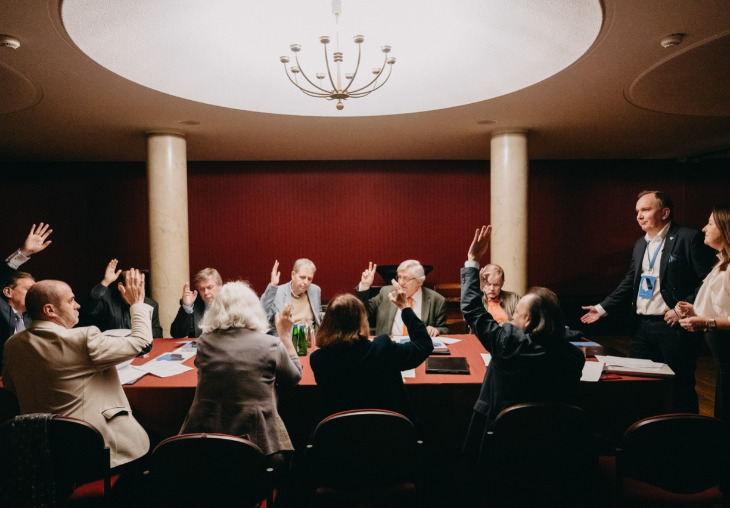
The preliminary rounds of the 19th Chopin Competition concluded on 4 May at the Warsaw Philharmonic after 12 days of daily auditions. The jury, chaired by Professor Piotr Paleczny, selected 66 pianists, who will return to Warsaw in less than five months for the 19th Chopin Competition.
Additionally, 19 performers have been admitted directly to Stage I of the Competition without going through the preliminaries. These are laureates of selected piano competitions such as competitions in Leeds, Tel Aviv, Miami, Bolzano, Hamamatsu, the Paderewski International Piano Competition in Bydgoszcz, as well as the Fryderyk Chopin National Piano Competition in Warsaw.
In the first stage of the 19th Chopin Competition, we will hear 85 participants from 20 countries. The most represented countries are China, Japan, and Poland.
The Competition repertoire includes solely works by Fryderyk Chopin. Competitors may play pieces they presented on the video recording enclosed with the application. They can also play pieces they performed in the Preliminary Round ‒ except for the Etudes. However, the same piece cannot be played in the different rounds of the Competition.
in C major, Op. 10 No. 1
in A minor, Op. 10 No. 2
in G sharp minor, Op. 25 No. 6
in B minor, Op. 25 No. 10
in A minor, Op. 25 No. 11
• one of the following pieces:
Nocturne in B major, Op. 9 No. 3
Nocturne in C sharp minor, Op. 27 No. 1
Nocturne in D flat major, Op. 27 No. 2
Nocturne in G major, Op. 37 No. 2
Nocturne in C minor, Op. 48 No. 1
Nocturne in F sharp minor, Op. 48 No. 2
Nocturne in E flat major, Op. 55 No. 2
Nocturne in B major, Op. 62 No. 1
Nocturne in E major, Op. 62 No. 2
Etude in E major, Op. 10 No. 3
Etude in E flat minor, Op. 10 No. 6
Etude in C sharp minor, Op. 25 No. 7
• one of the following Waltzes:
in E flat major, Op. 18
in A flat major, Op. 34 No. 1
in A flat major, Op. 42
• one of the following pieces:
Ballade in G minor, Op. 23
Ballade in F major, Op. 38
Ballade in A flat major, Op. 47
Ballade in F minor, Op. 52
Barcarolle in F sharp major, Op. 60
Fantasy in F minor, Op. 49
The pieces may be performed in any order.
19–24
• one of the following Polonaises:
Andante Spianato and Grande Polonaise brillante in E flat major, Op. 22
Polonaise in F sharp minor, Op. 44
Polonaise in A flat major, Op. 53
or both Polonaises from Op. 26
• any other solo piece or pieces by Fryderyk Chopin (the full Op. 28 is allowed).
Performance time in the second round: 40–50 minutes.
The pieces may be performed in any order (except Op. 26).
Should the contestant overrun the time limit, the Jury may stop his/her performance.
The exposition in the first movement of both Sonatas should not be repeated.
• a full set of Mazurkas from the following opuses:
17, 24, 30, 33, 41, 50, 56, 59
The Mazurkas must be played in the order in which they are numbered in the opus. In the case of Opuses 33 and 41, the following numbering applies:
Op. 33 No. 1 in G sharp minor Op. 41 No. 1 in E minor
No. 2 in C major No. 2 in B major
No. 3 in D major No. 3 in A flat major
No. 4 in B minor No. 4 in C sharp minor
• any other solo piece or pieces by Fryderyk Chopin (if the hitherto performed repertoire does not achieve the minimum performance time indicated below).
Performance time in the third round: 45–55 minutes.
The pieces may be performed in any order (except the Mazurkas). Should the contestant overrun the time limit, the Jury may stop his/her performance.
• One of the Piano Concertos: in E minor, Op. 11 or in F minor, Op. 21
- The Competition repertoire must be shown in the candidate’s Competition application.
- The Competition repertoire must be played from memory.
- The Competition Office should be notified in writing of any changes to the Competition repertoire no later than 21 August 2025.
Prizes
- The following main prizes will be awarded to the top six finalists:
- 1st prize - € 60 000 and a gold medal
2nd prize - € 40 000 and a silver medal
3rd prize - € 35 000 and a bronze medal
4th prize - € 30 000
5th prize - € 25 000
6th prize - € 20 000
The main prize-winners will be given the title ‘Laureate of the Nineteenth International Fryderyk Chopin Piano Competition’. - The remaining finalists will receive equal distinctions of € 8 000 each.
- Independently of the prizes listed above, the following special prizes may be awarded:
• for the best performance of a Concerto
• for the best performance of Mazurkas
• for the best performance of a Polonaise
• for the best performance of a Sonata
• for the best performance of a Ballade - Participants in the second or third round who failed to qualify for the next round will receive participation diplomas.
A record number of 642 pianists from around the world applied for the musical competition held at the turn of 2024 and 2025. Out of them, 171 were admitted to the Preliminary Round based on submitted recordings. Ultimately, 162 participants from 28 countries took part in the Preliminaries.
The official inauguration of the 19th Chopin Competition is scheduled for 2 October. The competition auditions will begin the following day and continue until 20 October. The competition will culminate in an awards gala and a concert by the laureates, which will take place on 21 October at the Teatr Wielkie—Polish National Opera. The winner of the Competition will receive a gold medal and a First Prize of 60,000 euros.
After the Chopin Competition concludes, a months-long concert tour will begin, during which the laureates will perform in prestigious concert halls across Europe, Asia, and the Americas. The tour will be organized by the Fryderyk Chopin Institute in collaboration with the Liu Kotow agency.
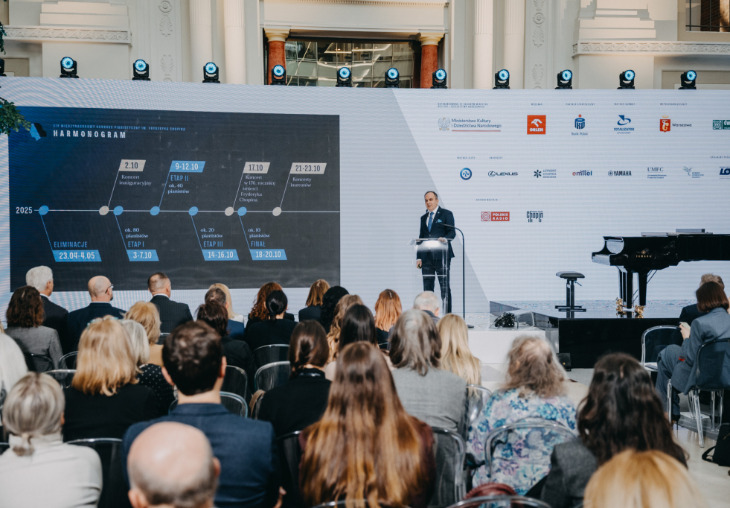
I am also not sure of the continued usefulness of my written commentaries, apart from being an historical record. Even then with YouTube, the original performances are easily accessible once again. I feel my observations have become rather redundant. Also, there is now a huge amount of technological coverage and musical analysis in print and on air by musically sensitive and vastly knowledgeable radio and TV presenters, music professors, established pianists, critics both domestic and international, musicologists and pure melomanes. One is in danger of being 'Chopined out', to invent an appropriate phrasal verb. After all I am not employed to write my personal impressions and have little idea of the readership outreach.
Also, online, real time, transmissions are now available to hear for listeners both at home and abroad. They can come to their own personal judgments without reference to me.
We all have our own Chopin
Some years ago when I began writing my assessments, it was rather different. I was one of the only detailed critical outlets in English of music in Poland. The usefulness of this activity has diminished if not passed. Now instant translations are available on mobile phones for criticism, even those written in perceptive Polish.
A journey of rewarding even exciting discovery lies in store during this 2025 competition for the interpretatively adventurous and perceptive pianist and listener. Those pianists are significant who search for their own true voice and what they consider to be that of the composer. Intuition and knowledge working as one!
 | ||
Chopin's autograph of Prelude No: VI in B Minor Op. 28. [Biblioteka Narodowa, Warszawa] Reviewer's unabridged Notebook for XVI, XVII, XVIII International Fryderyk Chopin Competitions from October 2010 - October 2021
The music of Chopin enters chambers of the heart and soul no other composer touches In the horrifying conflagration that approaches, faith, spiritual nourishment and emotional consolation is of utmost importance The music of Chopin has become once again profoundly meaningful for humanity (Michael Moran) * * * * * * * * * * The XVI International Fryderyk Chopin Competition Warsaw, October 2010 XVII International Fryderyk Chopin Competition Warsaw, October 2015 XVIII International Fryderyk Chopin Piano Competition Preliminary Round Warsaw, 12-23 July 2021 XVIII International Fryderyk Chopin Competition Warsaw, October 2021 |


On 19 September 2025, the global premiere of immersive exhibition “Romantic Chopin” took place at Fabryka Norblina in Warsaw. This was the first multimedia project in Poland of this scale dedicated to Fryderyk Chopin, produced by Art Box Experience in cooperation with the Fryderyk Chopin Institute. The project blends cutting edge technologies with classical artistic techniques, creating an extraordinary experience combining art, music, history and modern storytelling.
 |
| Opening Ceremony |
Romantic Chopin is a unique exhibition dedicated to Fryderyk Chopin, one of the most outstanding composers of all times.
Based on the composer's biography, work, and correspondence, the exhibition takes visitors through eight thematic spaces – from his childhood in Żelazowa Wola, through the salons of Warsaw and the turmoil of his life in Vienna, to the artistic bohemia of Paris, where Chopin created his most important works. Visitors will learn not only about his life and work, but also about the world that surrounded him – George Sand, Ferenc Liszt, Adam Mickiewicz, Eugène Delacroix, and Honoré de Balzac.
The exhibition does not leave viewers indifferent. It touches the soul, reveals fears, uncovers secrets, and points to the composer's musical inspirations. Not only those from the world of high art, but also those stemming from folk art. “Romantic Chopin” is music and at the same time a picture of a man thrown into the whirlwind of history, feeling the consequences of the November Uprising and the loss of his homeland. A man who absorbed his surroundings and poured his feelings into immortal works. A man who was loving yet restrained, consumed by his passion for composing and at the same time shining in Parisian salons.
The main part of the exhibition is an immersive space – a 30-minute show based on Chopin's letters and compositions, in which images and sounds guide the viewer through the emotional and artistic turning points in the composer's life. Modern technologies also allow for a deeper immersion into his world – through an interactive musical sculpture, virtual reality created by the Platige Image studio, and a unique interactive tree with Chopin's mentors and inspirations, which uses artificial intelligence to enable personal contact with figures from Chopin's inner circle.

Work on the exhibition lasted nearly two years. Artists, programmers, scenarists, interaction specialists and new technology experts took part. The project merges painting and the newest animation technologies with interactive techniques, placing it among the most advanced productions of its kind in Europe. The concept and implementation are led by Piotr Sikora — artistic director of “Romantic Chopin”, founder of Art Box Experience and co-founder of Platige Image; the substantive side is overseen by a team of experts from the Fryderyk Chopin Institute and Jakub Puchalski, a music critic and publicist, author among others of the small monograph “Chopin” (PWM Edition) and the texts for the exhibition.
Work on the exhibition lasted two years and was an interesting professional adventure for the employees of the Fryderyk Chopin Museum, as we used a completely new language of expression and a new way of building emotions. Our contribution concerned the substantive content of the script, the selection of iconography, and the creation of the musical path. We invite all viewers to the world of Chopin, shown through means of expression other than strictly museum-related ones.
Seweryn Kuter, curator of the Fryderyk Chopin Museum
 |
| Michael immersed in the virtual reality aspect of this event (Photo Alex Laskowski) |


 |
| Michael (far Rt.) immersed in the virtual reality aspect of this event The Piano Congress, Warsaw  http://www.michael-moran.com/2025/09/piano-congress-2025-discover-piano_27.html |

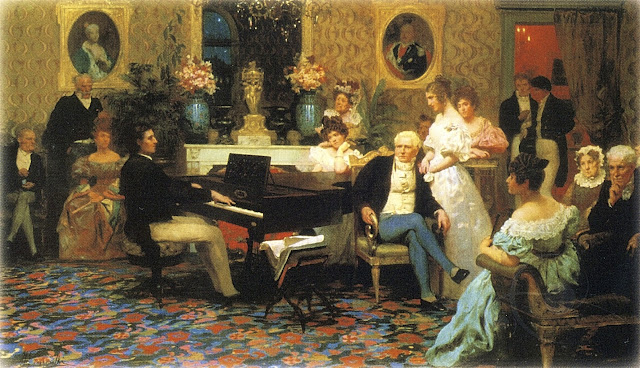
I particularly enjoyed Shiori Kuwahara's playing. I noted that you had heard her before, and I read your review, and am now listening to a video of her playing at the Duszniki Festival, of the Liszt Sonata. I am impressed by how ferociously she attacks the piano, the massive sound she produces, the thunderous octaves, the speed of her runs. She plays boldly with complete confidence. It is scary. She deserves some 1st prize.
ReplyDelete