Chopin and His Europe 23 August - 6 September 2026 (Chopin i jego Europa 23 Sierpień - 6 Wrzesień 2026)
Chopin and His Europe 2026
23 August - 6 September 2026
Outstanding interpretations
Profile of the Reviewer Michael Moran : https://en.gravatar.c atom/mjcmoran#pic-0
Reviews will be posted in reverse order of live performance (latest recital first) to save listeners the labour of scrolling down after each recital to read the latest review

The Authors Guild
All the reviews and notes on this site are human authored
Many people have mentioned that my reviews are, in the current mnemonic, TLTR (Too Long To Read) on a mobile phone, which most people use to read them. Of course such reviews and I myself am a complete anachronism in 2026.
With some reluctance I shall reduce the length to accommodate reading on a mobile phone which seems to be the ubiquitous technology for much of life's activities in 2026. With my conviction of the prime importance of social, historical and creational context in assessing compositions and composers prior to the performer's interpretation, I will find this length issue and matter of detail rather difficult to adopt but needs must I suppose if I am to continue reviewing.
This is now in serious question with infinitely more 'reviewers' far more musically qualified to comment than I am, instant translation available on I phones, CHAT, AI and elsewhere.
DETAILED PROGRAMME
https://festiwal.nifc.pl/en/2026/kalendarium/
All artists' photographs by Wojciech Grzędziński / NIFC
Thursday 3.09.26 20:30
Tomasz Ritter (period piano)
{oh!}
Orchestra
Martyna
Pastuszka violin, artistic director
Ludwig
van Beethoven
Piano Concerto No. 4 in G major, Op. 58
I felt I needed to write this review instanter! The others will follow!
I wanted to call this post 'a star is born' as I felt this had occurred tonight, having followed Tomasz Ritter for many years now. Surely this concert was one of the highlights of the Chopin i jego Europa Festival 2026. In one evening Tomasz Ritter performed two formidable Beethoven piano concertos (Piano Concerto No. 4 in G major, Op. 58 and Piano concerto No. 5 in E flat major, Op. 73 the 'Emperor'). I had previously heard this pianist in comparatively small works. This majestic foray (despite some small slips) was both musically ambitious and truly courageous. Another remarkable aspect of this performance was that he chose to give us the unique period sound of a rare 1851 Streicher period instrument.
Johann
Baptist Streicher (1796
- 1871) was an Austrian piano maker who came from a dynasty of piano builders.
The tradition began with Johann Streicher's grandfather, Johann Andreas Stein,
who was a central figure in the history of the piano. No less remarkable
figures in this dynasty were his parents. Nannette Streicher, his mother,
assumed charge of her father's business in 1792 and set up a piano making
company in Vienna. Initially, she was working together with her husband Andreas
Streicher and her 16-year-old younger brother Matthias Andreas Stein
(1776-1842) under the business name Geschwister Stein.
After
10 years, the siblings decided to part ways, and Nannette Streicher continued
building pianos under her own name (Nannette Streicher née Stein). She was also
one of the closest friends of Beethoven and even agreed in August 1817 to help
her friend by managing his chaotic household, while the composer was going
through one of the many crises that marked his life.
Brahms, a fond owner of a Streicher piano once said in
his letter to the German pianist Clara Schumann that "There [on my
Streicher] I always know exactly what I write and why I write one way or
another”. He received one as a gift in 1870 and kept in his house
until death in 1897.
 Piano
from the J.B.Streicher's manufactory (Vienna, 1869) |
This concerto was begun
in 1805, completed early the next year and premiered on December 22, 1808, as
part of the famous Akademie in the Theater an der Wien.
It was
Beethoven’s last appearance as a concerto soloist and the basis of an
extraordinary anecdote. The composer Louis Spohr recounted a description told
to him by Ignaz Xaver Seyfried, music director at that venue at that time. The
concert lasted some four hours. The audience sat with great determination in
the unheated concert hall in the freezing winter.
“Beethoven
was playing a new Pianoforte-Concerto of his, but forgot at the first tutti
that he was a solo player, and springing up, began to direct in his usual way.
At the first sforzando he threw out his arms so wide asunder, that he knocked
both the lights off the piano upon the ground. The audience laughed, and
Beethoven was so incensed that he made the orchestra cease playing, and begin
anew.
Fearing
a repetition of the accident, two boys of the chorus placed themselves on
either side of Beethoven, holding the lights. One of the boys innocently
approached nearer, and when the fatal sforzando came, he received from
Beethoven’s right hand a blow on the mouth, and the poor boy let fall the light
in terror… If the public were unable to restrain their laughter before, they
could now much less, and broke out into a regular bacchanalian roar. Beethoven
got into such a rage that at the first chords of the solo, he broke a dozen
strings.”
This
was a fine performance by Tomasz Ritter and the {oh!} Orchestra under Martyna
Pastuszka violin and artistic director. The period Streicher piano of
1851 and orchestra added a high degree of drama and period timbre to assist one's
imagination to fly in time.
Allegro
moderato
The opening
chord, so difficult for a pianist to manage dynamically dolce, was
soft, poised and set an almost dreamlike atmosphere, a domain sensitized to the
secrets of the forest. Ritter had a close connection with the orchestra and
conductor. A perfectly balanced symbiosis of dynamic and stylistic statements
and response.
His authoritative
approach on the Streicher in period tone, timbre, touch and texture suited the classical nature of the work. One
could feel Beethoven struggling against the limitations of his instrument with
romanticism attempting to soar above classical braces. The tempo was remarkably
variable expressing a sense of improvisation and discovery. Ritter's cadenza to
this movement was expressive and supremely virtuosic. So exciting the sound
spectrum!
Andante
con moto
The
second movement, accompanied only by strings, is well known to all music
lovers. The movement has often been compared to Orpheus taming the wild beasts
with his music. The underrated pupil of Beethoven, Carl Czerny, observed:
'in
this movement (which, like the entire concerto, belongs to the finest and most
poetical of Beethoven’s creations) one cannot help thinking of an antique
dramatic and tragic scene, and the player must feel with what movingly
lamenting expression his solo must be played in order to contrast with the
powerful and austere orchestral passages.'
The period
orchestra was powerful yet perfectly balance and the details played by
brilliant soloists was moving and
dramatic. Rich harmonies and cantabile phrases emerged under
Ritter's guidance in the piano part. Until the opening of the
final movement, one has been seduced by the emotional, implied restraint and
serenity of this concerto. Ritter was affectingly lyrical especially on
the Steicher that contains so many colours in its compass. He brought poetry
and poignant moods to this movement.
Rondo.
Vivace
He brought spectacular virtuosity and rhythm to the Finale. We transitioned from
the sublime second movement into an exuberant and vivacious Rondo, like
the flash of sunlight off a mountain pool.
Again I felt on the Streicher how Ritter perfectly balanced this great work which hovers beguilingly like a humming bird over the cusp of classicism and rich romanticism. The period instrument {oh!} Orchestra were remarkably energetic and 'driven', expressive and rhythmically persuasive under the conducting of Martyna Pastuszka.
Once again:
'This was a superb, poised performance by Tomasz Ritter and the {oh!} Orchestra under the musically perceptive and analytical Martyna Pastuszka.
Ludwig van Beethoven
Piano
concerto No. 5 in E flat major, Op. 73
The 'Emperor' Concerto
 |
| Napoleon at the Battle of Wagram 1809 Horace Vernet (1789-1863) |
Beethoven dedicated the ‘Emperor’ Concerto to Archduke
Rudolph, a fine pianist, and the composer’s student as well as friend and
patron, who was the soloist for the first private performance on January 13,
1811, at Prince Lobkowitz’s palace in Vienna. The first public performance of
the ‘Emperor’ Concerto was on November 28, 1811, at the Leipzig
Gewandhaus, with Friedrich Schneider as soloist. The reaction was galvanic.
The Allgemeine Musikalische Zeitung reported 'It is,
without doubt, one of the most original, imaginative and effective, but also
one of the most difficult of all existing concertos.' Carl Czerny, a
student of Beethoven’s and later the teacher of Liszt, gave its official
Viennese premiere early in 1812. Who gifted the title of 'Emperor' is rather
uncertain.
Beethoven had begun composing his ‘Emperor’
Concerto in 1809, while Vienna was under invasion from Napoleon’s forces
for the second time. Adam Zamoyski writes in his book Napoleon: The Man
Behind the Myth that Achille de Broglie, a member of the Council of
State, considered that all the generals longed for peace 'cursing their master'
and looking to the future with 'great apprehension'. General Vandamme on one
occasion burst out 'He's a coward, a cheat, a liar.' Admiral Decrés felt 'The
Emperor is mad, completely mad...' Napoleon enjoyed delightful evenings at
Schönbrunn and even invited Marie Walewska to join him.
Beethoven embraced a different reality. He was living in a top-floor apartment owned by Baron Pasqualati beside the ramparts. He was forced to shelter in the basement of his brother Kasper’s house, pressing pillows to his ears to protect what remained of his hearing. He was unable to perform this concerto because he could scarcely hear the orchestra. 'The whole course of events has affected my body and soul,' he wrote. 'What a disturbing, wild life around me; nothing but drums, cannons, men, misery of all sorts.' The war was ruinous for Austria and many aristocrats fled the city.
A spectacular performance by Ritter and the
orchestra explosively burst upon the audience with energy. The musicologist
Donald Francis Tovey was not describing this performance of course, but his depiction
of the concerto is perfectly apt.
'The orchestral writing is not only symphonic,
but is enabled by the very necessity of accompanying the solo lightly to
produce ethereal orchestral effects that are in quite a different category from
anything in the symphonies. On the other hand, the solo part develops the
technique of its instrument with a freedom and brilliance for which Beethoven
has no leisure in sonatas and chamber music.'
As I live in Poland it may be lightly diverting to mention that soon after establishing himself at Schönbrunn, Napoleon had written to his Polish mistress Maria Walewska inviting her to join him. She was secreted at nearby Mödling and taken to him by his valet under cover of night (he still being still married to Josephine).Beethoven composed two major works during this period, all in the key of E-flat major. The 'Emperor' piano concerto finished before the French occupation. Also, the composer's musical laments following the flight of the Archduke are deeply expressed in the programmatic 'Les Adieux' piano sonata Op. 81a, each movement expressing his sorrow at Rudolph’s departure, absence, and the joy felt upon his return.
The powerful, noble opening of the concerto on the Streicher
was a type of cadenza, in many ways revolutionary for the time. The orchestra
conducted by Pastuszka was impressive throughout, both dynamically and in individual detail
(emotional impact is clearer on individual and original instruments) after that
powerful entry of the Allegro theme of the first movement. A
dialogue emerges and not a further cadenza, in fact Beethoven directs the
orchestra and soloist not to attempt one. I was reminded of that high voltage
line of the Welsh poet Dylan Thomas that both 'Rage, rage against the
dying of the light.' In fact, Beethoven himself once wrote to his
childhood friend Franz Wegeler a phrase which underpinned for me the entire performance: 'I
shall seize fate by the throat. It shall not wholly overcome me. Oh, how
beautiful it is to live – to live a thousand times.'
The second movement Adagio un poco mosso illustrated Ritter's poetic sense and ability to paint the landscape of a yearning dream, a unique Streicher pianissimo to fashion an affecting and poignant aria. Here we have the Beethovenian self-awareness of disillusionment and loss yet placed within a faint watercolour of shadowy optimism. Then a moment of theatrical drama. The music rests in apparent equanimity on a low note, gliding low by a semitone, suggesting possibilities of rising chords but then the exuberant finale Rondo: Allegro ma non troppo blazes out with fire, symphonic energy and colour.
Ritter is
superb in Beethoven with a grasp of the classical style and the grand, almost
grandiose even militaristic gestures that this concerto demands. I felt that
this was a portrait of an 'Emperor' as imagined. Moments of romantic delivery seemed appropriate to me, thinking
of Beethoven's compositional adventurism. Counterpoint created historical echoes
of the baroque. But one must remember Beethoven was releasing 'imprisoned
romanticism' in many of his works as he matured. With Ritter the movement
flowed like a life force or 'The force that through the green fuse
drives the flower' (again the Welsh poet Dylan Thomas). This sense of irresistible
impetus was strongly present for me.
Ritter played
with great sensitivity, verve and élan - qualities that are required in
what is perhaps Beethoven's most imaginative concerto. The composer had lost
faith in the 'Emperor' (Napoleon) of the title. The name had not actually been applied by
Beethoven. Yet the notion of a compassionate, all powerful Emperor with
significant empathy and emotional scope emerged unscathed. An
'enlightened monarchy' indeed.
A deeply feeling artist, drawing on his deep fund of developing emotion together with a formidable keyboard virtuoso technique.
The audience went wild with shouts and cheering as well as energetic applause. This led to two encores:
1. The first was a terrifically engaging performance of the nervously agile Allegretto Scherzo from the Beethoven Piano Sonata No.18 Op.31 No: 3 in E flat.
2. The second rather calming and poetic utterance was the beautiful 'Song Without Words' Op.67 No.3 by Mendelssohn
Saturday 29.08.26 19:00
Warsaw Philharmonic Concert Hall
Bruce Liu piano
Pittsburgh Symphony Orchestra
Manfred Honeck conductor
What
a gift from the heavens to hear in Warsaw the Pittsburgh Symphony Orchestra from
Pennsylvania performing under one of the greatest of living conductors, their Music Director Manfred
Honeck. The orchestra was founded in 1895 with a number of musicians from the
Boston Symphony Orchestra.
I have never seen the stage of the Warsaw Philharmonia so filled with some 120 musicians of the highest musical calibre. This was a extremely welcome gesture of cultural affirmation in our benighted times. The presence of an American orchestra in a former communist (or more accurately 'Polish socialist') country speaks movingly of the expression of freedom and the national growth this implies and has become evident. The most recent past visit of the Pittsburgh Symphony to Poland was in 1989 under Lorin Maazel.
Over many years, Manfred Honeck's appointment has been constantly renewed up to the present which speaks volumes for his musical approbation by the virtuoso musicians that make up this remarkable orchestra (the challenge of entry is surely a successful crossing of the supremely difficult Rubicon of music).
The Pittsburgh Symphony is arguably the greatest of the American ensembles. A mere glance at their history sees a glittering array of chief conductors - Otto Klemperer, Fritz Reiner, Victor de Sabata, André Previn, Lorin Maazel, Mariss Jansons, Andrew Davis, Yan Pascal Tortelier and now from 2007 the Austrian Manfred Honeck.

Programme
Karol Szymanowski
Concert Overture in E major Op. 12 (1904–1905 and revised
1912–1913)
This
massive work was inspired by literature, which so much music has been in the past. A deeper
knowledge of poetic origins I feel is absolutely indispensable to musical appreciation in our
period of puerile social media and the utter debasement of language and values.
The
famous poetic introduction to this Concert Overture is entitled Witeź
Włast (1902) (Chieftan Włast) written by Tadeusz Miciński (1873-1918),
a poet, novelist and playwright of the Young Poland (Młoda Polska) movement.
I adore this period, a modernist period
in Polish visual arts, literature and music, covering roughly the years between
1890 and 1918.
Witeź is an archaic Polish word meaning a knight, hero, warrior, chieftain, or prince. The long poem is a dense vision, merging Slavic mythology, gnosticism, and Nietzschean 'superman' motifs. The poem begins with an atmosphere of darkness and supernatural fear. In the middle of the night, a bell rings, although nobody knows where the sound comes from. The people see what appears to be a strange funeral procession and are drawn, almost against their will, into a mysterious forest. They pass through a wild, frightening landscape and eventually reach an ancient castle or settlement.
'like wandering souls, we walk in dreams'
(jak
dusze błędne idziem w snach)
I am reminded of Chopin's moving musical journey from dream back to grim actuality. The journey can be interpreted as a journey into another dimension of reality.'Its aggressive, ecstatic manifesto of spiritual transfiguration deeply influenced early 20th-century Polish composers like Karol Szymanowski' (Chandos). This poetic inspiration was abundantly clear as the mythical orchestra and conductor expressed this magnificent early Polish work with incandescent fierceness and occasional lyricism.
Witeź Włast (1902)
Tadeusz Miciński (1873-1918)
[Fragment]
Original Polish
Knowing
such detail makes this early Szymanowski work, inspired by Richard Strauss and
Wagner, understandable and accessible despite its compositional solecisms, immensity and gargantuan impact.
The music is a graphic illustration of the emotions of the poem.
The very moment this work began, the intensity and expressiveness of this extraordinary orchestral ensemble was clear. The sheer power, fervour and vehemence of the sound in those early micro-seconds, instantly lifted this orchestra and conductor for me onto quite another interpretative musical plain to the customary. The sheer overwhelming, ravishing sound and tightness of ensemble, yet the indescribable and affective pianissimos capable by them under the passionate Manfred Honeck, I had never heard in this hall, except arguably the Russian National Orchestra under Mikhail Pletnev at this same festival in 2011 and 2013.
Sergei Rachmaninoff
Rhapsody on a theme of Paganini Op. 43
Pittsburgh Symphony Orchestra
Manfred Honeck conductor
Bruce Liu (piano)
 |
| Rachmaninoff close to the time he wrote the Rhapsody - 1936 |
 |
| Niccolò Paganini (1782-1840) |
The
appearance of this work on a programme with an orchestra and soloist of this
international stature gave me thoughtful dilemmas. I grew up in an atmosphere
of serious musical appreciation that regarded the work as rather 'lightweight'
Rachmaninoff compared to the concerti, verging on the decorative nature of
'film music' - as if this was a serious criticism of any true worth. Even my
eminent piano teacher in London felt this. In fact so did Rachmaninoff himself
who observed
at the time: 'It somehow looks suspicious that the
Rhapsody has had such an immediate success with everybody'
The fact the Rhapsody was written before so-called ' film music' originated as a genre seems an irrelevant argument. The great Russian composer Igor Stravinsky (1882-1971) was asked in an interview what music he felt would be played on space stations orbiting the earth. Atonal music? Schoenberg? His own ? Stravinsky answered with wit and without hesitation:
'Ah! Super hif-fi Rachmaninov! I find the Rhapsody a far more profound piece than a cosmetic augmentation for cinema, even if film music today, for example by Wojciech Kilar (1932-2013), adds to the overall conception and assists one's imaginative flights.
Rachmaninoff was inspired by a simple tune by the early nineteenth-century violin virtuoso, Niccolò Paganini (1782-1840). Many of his works were so difficult only he could play them. A fertile legend grew that he had made a pact with the devil to sell his soul like Faust in order to exhibit and augment these miraculous abilities in various ways. The Catholic Church refused him burial service upon his death.
Even Fryderyk Chopin went to hear him play his
24 Capriccios during his 10 concerts in Warsaw in 1829. The
simple tune of the last is the theme of this Rhapsody. Eliza Peruzzi
brought Paganini with her when they visited Chopin in Paris in August 1837. Countess
Eliza Peruzzi (née Eliza Eustaphiève; 1808–1892) was an accomplished nineteenth-century pianist, socialite and
student of Chopin. Paganini, who had never heard Chopin was captivated
by his music and artistry. Perhaps the Paganini Capriccios inspired the
demanding difficulties of the Chopin Études.
Rachmaninoff left Russia in 1917 having lost everything. He summed up his life as a composer shortly before his death in Beverly Hills, his final home:
'In my own compositions, no conscious effort has been made to be original, or Romantic, or Nationalistic, or anything else. I write down on paper the music I hear within me, as naturally as possible. I am a Russian composer, and the land of my birth has influenced my temperament and outlook. My music is the product of my temperament, and so it is Russian music….I have been strongly influenced by Tchaikovsky and Rimsky-Korsakov; but I have never, to the best of my knowledge, imitated anyone. What I try to do, when writing down my music, is to make it say simply and directly that which is in my heart when I am composing. If there is love there, or bitterness, or sadness, or religion, these moods become part of my music, and it becomes either beautiful or bitter or sad or religious.'

The renowned choreographer Michel Fokine approached Rachmaninoff suggesting some variety of collaborate. Rachmaninoff suggested this Rhapsody, and provided an outline scenario for a ballet. He clarified the manner in which the Rhapsody could tell the history of Paganini, his Faustian agreement with the devil and his doomed love for a woman. I agree with Heinrich Schenker and Wilhelm Fürtwangler that 'The fundamental moral attitude indicates the source and hence the quality of the music itself.' (Wilhelm Fürtwangler Notebooks 1924-1954 p.77) And further 'A work of art is a king, one must wait to be addressed by it....the problem of art is a problem not of artists but of the audience, the consumers.' (ibid. p.75).
The very appearance of the Dies Irae (a melody that haunted Rachmaninoff) indicates a far more serious intention in this work. A pendulum of the heart. Rachmaninoff commented “All variations on the Dies Irae would be for the evil spirit… 'Variations 8, 9, 10—progress of the evil spirit....Variation 11 is the transition to the realm of love he continues. This affecting and intensely beautiful love theme comprising Variation 18, is a melody of supreme tenderness, affection and love, a movement of the soul. Familiarity and repetition has lessened its modern impact and the appreciation of and reception of the work.
Variation 19 is the triumphantly expresses Paganini’s art of 'diabolic pizzicato.' Rachmaninoff creates glittering highly virtuosic passages for the pianist 'quasi pizzicato'. This surely is a possible reference to Paganini's own heart-stopping virtuoso performances on the violin, a reflection of immense keyboard virtuosity in the Rhapsody. Rachmaninoff concludes his explanation: Paganini 'appears for the last time at the 23rd variation—the first 12 bars—after which, to the end, is the triumph of his conquerors. Rachmaninoff observes 'And it also seems to me that at the conclusion of the play the several personages [representing] the evil spirit should be caricatures, absolute caricatures, of Paganini himself.' This great work should be given time to deepen thought on hearing and possibly analyzing.

Bruce Liu has magnificent finger dexterity and glistening delivery even in the almost insurmountable virtuoso passages on the piano. One can only marvel. However, I felt if he had fully understood the reverential, referential, moral density of this extraordinary piece, he may have invested it with more expressive content. Of course Rachmaninoff's writing almost begs for virtuosity on the part of the soloist but I feel there are far deeper spiritual resonances in this popular composition. This being said, Bruce Liu has matured immensely in emotional expressiveness and depth since winning the competition.
I am convinced Rachmaninoff intended a serious, existential depiction - the pendulum of human existence swinging Faust-like between love and the devil. Paganini as a metaphorical symbol of wider life. The Pittsburgh Symphony Orchestra directed by the penetrative interpretation of Manfred Honeck their conductor, provided a highly affecting and dynamically fluctuating atmospheric base on which the piano declaimed its shifting moods, doubts, affirmations and existential slope. A true elevation of this great work of 1934 I feel should be considered that further occupies the exalted musical level of the exploratory Concerti No 4 in G minor Op.40 of 1926.
As an encore, Bruce Liu gave us the most scintillating, style brillante account imaginable of Liszt's La Campanella. A spectacular performance followed by screams and shouts of approbation from this svengalied audience.

Antonín Dvořák
.jpg) |
| Antonín Dvořák (1841-1904) |
 |
| New York City in 1890 |


Symphony in E minor , No. 9 'From The New World' (1893)
Antonín Dvořák (1841-1904) sailed to New York in 1892 to take up the directorship of the National Conservatory of Music of America. This organization had been founded to encourage the composition of American music. From Negro spirituals to the singing and percussion of Native American music, Dvořák saw American music as a crucial separate cultural phenomenon to the European tradition. he conceived it as a unique art form that originated from within the United States
“I am now satisfied that the future music
of this country must be founded upon what are called the negro melodies...They
are the songs of America and your composers must turn to them. In the negro
melodies…I discover all that is needed for a great and noble school of music.
They are heartbreaking, tender, passionate, melancholy, solemn, religious,
bold, merry, gay, gracious or what you will.
It
is music that suits itself to any mood or purpose. There is nothing in
the whole range of composition that cannot find a thematic source here.”
Again
is evidenced in this symphony, my deep concern with literature (poetry
especially) and musical composition and inspiration.
The
Song of Hiawatha by
American poet Henry Wadsworth Longfellow (1807-1882) heavily influenced
the New World Symphony, particularly the inner two movements.
By the shore of Gitche Gumee,
By the shining Big-Sea-Water,
At the doorway of his wigwam,
In the pleasant Summer morning,
Hiawatha stood and waited.
All the air was full of freshness,
All the earth was bright and joyous,
And before him, through the sunshine,
Westward toward the neighboring forest
Passed in golden swarms the Ahmo,
Passed the bees, the honey-makers,
Burning, singing in the sunshine.
Dvořák’s
thesis that African-American culture should be the foundation for American
classical music was heavily criticized and even attracted racist prejudice by
American composers and music critics. Yet his compositions laid the groundwork for
future American composers such as George Gershwin (who merged jazz with orchestral
writing) and Aaron Copland, whose compositions were strongly influenced by
American folk music. African-American composers, including William Grant Still,
Florence Price, and William Dawson would compose symphonies inspired by Black
culture. All these creations were in many ways a continuation of Dvořák’s conceptions.
The
Pittsburgh Symphony Orchestra under Manfred Honeck have immense ensemble weight
and cohesion of sound with perfect ensemble string intonation. This is created with an
almost incomprehensibly large force and orchestral sound spectrum from possibly
120 musicians. The pianissimos scattered throughout this work are desperately
affecting in dynamic variation. The inner detail was revealed by Honeck in
quite visionary ways - phrases and kaleidoscopic melodic phrasing by the soloists,
ranging from meandering arabesques of sensibility, yearning to tympani-driven
avalanches or veritable tsunamis of sound. The augmentation of melodies was sculpted
by the conductor and fully realized by this extraordinary orchestra.
An aspect that strikes one about the orchestra is the remarkably intense commitment in their playing - passionate engagement with their instruments and as a tutti ensemble - all of them as one passionate organism! Honeck conducted this familiar work without a score which gave him relieving spontaneous freedom to express the essential folkloric elements and native American texture of the work. Woodwinds were perfect in timbre and musical 'speech' was intoned with extreme subtlety and sensibility.
A magical evolution of folk rhythms were often manifested to
cultivate the rural moods of native Americans inhabiting their incomparable
landscapes. Rural, bucolic dances were in abundance. I was aware, for possibly
the first time in my life (after hearing many performances of this work), that
the composition is made up of multiple
and variegated layers of sound and time. Especially prominent were the overwhelming brass,
the greatest brass section I have ever heard.
This monumental performance was an absolute revelation in multiple musical parameters.
As
encores a splendid rhythmical and rich mahogany-textured Brahms Hungarian
Dance in G minor. Honeck introduced as 'most important for me
personally' the lyrical and meditative Litanei auf das Fest Aller Seelen by
Schubert.
Thursday 27.08.26 19:00
Witold Lutosławski Studio of the Polish Radio
Chamber Concert
Roel Dieltiens (cello)
Frank Braley (period piano)
Program
August Franchomme
 |
| August-Joseph Franchomme (1808-1884) |
Chopin made the
acquaintance of August-Joseph Franchomme (1808-1884) through the good
offices of Franz Liszt during his first few months in Paris. He recognized a
kindred spirit in this quiet, rather reserved man who played and composed for
the cello. They often had dinner a deux, occasionally
attended the opera or theatre together. When Chopin was ill the Franchomme
family cared for him when they took the waters together at Enghien-le-Bains.
They shared a feeling for the subtle expressive nuances in music and often
played and composed together.
Franchomme offered him
emotional and material support. As the light of day faded forever over Chopin,
his friend Franchomme played the cello at his deathbed. The blighted
composer requested the Largo third movement from
his own G minor cello sonata.
I must admit, perhaps not so surprisingly, to not being as familiar with the music of Franchomme as that of Chopin. I cannot intelligently in limited time and space analyse these deeply affecting Nocturnes individually. He was a productive composer of chamber works.
The cello played by Dieltins seduced me with its mahogany richness, power and timbre. The sound of a human voice singing these divine melodies from all the Nocturnes this evening that floated above us transported me far away. Chopin loved the cello in the manner he loved the bel canto human voice in opera.
Nocturne Op. 19 No. 3
Nocturne Op. 15 No. 1
Nocturne Op. 14 No. 1
Fryderyk Chopin
Introduction and Polonaise brillante in C major for piano and cello Op.
 |
| Prince Antoni Radziwiłł's hunting lodge at Antonin |
In November 1829, Chopin wrote to his friend Tytus Woyciechowski
‘I received your last letter, in which you tell me to give myself a kiss at Radziwill's place in Antonin. I was there for a week, and you’ll not believe how well I felt there. I returned by the last mail-coach and barely excused myself from extending my stay. As for my own person and passing amusement, I would have stayed there until I was chased away, but my affairs, and my Concerto in particular [the first, in F minor Op.21], not yet completed, and impatiently awaiting the completion of its finale, compelled me to leave that Paradise.’
Prince Antoni Radziwiłł was a fine cellist and composer. At Antonin, Chopin hunted in the morning, gave lessons to his 'two Eves' - Princess Wanda and Princess Eliza, even posing for the popular pastime of drawing in the afternoon. He could sketch cartoon figures skillfully and she sketched him on a previous occasion!
 | ||
|
They then might listen to excerpts from the surprisingly complex music that his host, Prince Antoni Radziwiłł, had composed to Faust (Mephisotopheles and Gretchen - music of the sacred and profane). In the evening Chopin showed off his skills as a pianist and duetted with the cellist prince. But above all, he composed. He was working on the Trio in G minor Op.8, which would be dedicated to Antoni Radziwiłł, and also the Introduction and Polonaise brillante in C major, Op. 3. Chopin knew and loved the cello repertoire, especially the superb playing of the renowned cellist Jozef Merk in Warsaw.
And more to Tytus:
‘While I was staying with him, I wrote there an alla polacca with a cello part. Nothing but baubles to dazzle, for the salon, for the ladies. I wished you see, that Princess Wanda learn to play it. I was supposed to have been giving her lessons during that time. A young thing, 17 years old, pretty, and, by my word, it was nice to help her place her little fingers on the keys. But all joking aside, she has a lot of genuine musical feeling, such that you don't have to tell her to make a crescendo here, a piano there, and 'faster here, and slower there', and so forth.'
(At the time she was actually 21 and Chopin was only 19 himself!)
"There is dazzle, and plenty of it. After all, brillante means sparkling. But there is also bravura, verve and a Slavic, typically polonaise vigour, as well as an undeniable feel for the spirit of the dance. That is just how it was danced at grand balls in Poland. But this is obviously a work to listen to, not for dancing. It has the form of a rondo. The principal theme, that is, the refrain, is distinctive to a fault. It falls lightly on the ear – almost too lightly. Each of its returns (and it returns twice) brings a strong anchorage. On each occasion, it appears twice: first it is presented with dash and with spirit (con spirito) by the cello, and immediately afterwards it issues forth from the piano in a different guise, in a style that Chopin defined as elegantemente. The piano’s pearly playing is accompanied by the cello’s pizzicato."(Tomaszewski).

The stylish keyboard playing of Frank Braley and the rich, singing cello of Roel Dieltiens produced a fine performance. Chopin's immense melodic gift was clearly in evidence. I felt the careless and youthful zest, verve, joy, grace and elegance of this early work, the style brillante atmosphere which balances the Slavic masculine bravura of the Polonaise. However, the social, rather light 'conversational' social affectation of a concert featuring this brilliant piece at say a Bad Ischl afternoon concert or the Bath Assembly Rooms, was a little lost. To quote the title of a piece from Schumann's Kinderszenen that I would apply to their interpretation - sometimes Fast zu Ernst (Almost too serious).

And so we move ahead seventeen years to the cello sonata written for and dedicated to Chopin's close friend, the renowned cellist Auguste Franchomme. Following some initial optimism, after some work developing sonata with Franchomme, the usual disillusion with his compositions set in.
The work began to give him anguish, grief and arduous challenges as no other piece before - well, the first movement has two hundred pages of sketches and notes of intense creative work, failures and trials! This is hardly surprising as Chopin was exploring, even inventing a forward thinking 'late style', a novel harmonic world and idiom more akin to that of German models such as Schumann, Mendelssohn and even the later Brahms. The high emotionalism of Franck is also prefigured. And yet at times the extremely demanding piano writing hearkens back to the youth of his piano concertos.
Also his relationship with George Sand was undergoing severe pressure owing to her increasing antagonism at Nohant towards her son, the painter Maurice. This could account partly for its overall intensely meditative and introspective psychic landscape. It was the last work to be published in his lifetime.
Fortunately for us Chopin was an obsessive letter writer and wrote enormously long, generous and newsy letters to his family in Warsaw (with a quill dipped in ink dried with fine grain sand remember!). They indicate the remarkable encyclopedic nature of his roving mind. 'I am in some strange world ... I am in an imaginary space.' Far more than a great composer this man, this genius
On Sunday, 11 October 1846 from George Sand's domain Ch de Nohant, he sat at the little table next to the piano to write when 'they' had gone out for a drive. He wrote, in a type of internal stream of consciousness monologue, of the fine vendage or grape harvest especially in Burgundy, of countryside rambles on which he was not particularly keen, an eccentric dog named Marquis who refuses to eat or drink from gilded bowls and impulsively overturns them. He also described, among other scientific wonders, of his marveling at the discovery of a new planet (Neptune) by the French astronomer Urbain le Verrier merely by astronomical mathematical calculation.
Musical reflections and gossip dominate concerning the fascinating history of Covent Garden Opera in London, the Paris Opera (and news of two ladies dueling over the young, handsome baritone Coletti). He also writes of the activities of the Royals and their lavish activities with 17 carriages.
He profoundly laments the death of the giraffe in Warsaw zoo (Europe in the nineteenth century was fascinated by this extraordinary animal which inspired all sorts of poems, paintings and interior decoration, including pianos!). Chopin expresses a wish not to be reminded of death.
 |
French print of a giraffe from 1849
More to our point, he speaks of the difficulties of writing the cello sonata as the letter closes:
I would like to fill my letter with the best news, but I know nothing other than the fact that I love you and love you. I play a little, write a little. Now I am satisfied with my Cello Sonata, the next time not. I throw it into the corner, then I gather it up again. I have three new Mazurkas...' After salutations and embraces for everyone [...] It is five, and already so dark that I practically can't see. I will end this letter. [...] I embrace you most heartily, and I kiss Mama's little hands and feet. Ch.
 |
A rare Viennese Giraffe Piano ca. 1825 created under the extraordinary influence of this exotic creature when first seen by the society of the day. |
George Sand describes his behavior during the white heat crucible of his creations:
'He shut himself up in his room for whole days, weeping, walking about, breaking his quills, repeating or altering a bar a hundred times, writing it down and erasing it as often, and starting over the next day with a scrupulous and desperate perseverance. He would spend six weeks on one page, only to return to it and write it just as he had on the first draft.'

The sonata is a great masterpiece and our duo were far more at home with the introspective, passionate intensity of this mature work. The pattern of lyrical themes transformed into passionate, majestic utterances in the extensive opening Allegro moderato movement were accomplished by Roel Dieltiens (cello) and Frank Braley (period piano) with energy and expressiveness. Soul searching and emotional resistance were present at once. Braley was accomplished in the virtuosic, formidable piano part as Chopin's melodic gift soared effortlessly above us on the cello.
The typically Chopinesque Scherzo was painted in all its shifting moods and jagged dance rhythms so well on the piano. The 'Trio' that lies at the centre is one of the most beautiful melodies Chopin ever wrote for cello. It wings above a gently oscillating piano accompaniment and Roel Dieltiens on the cello did full justice to its aching lyricism.
The beauty of the ardent Largo cantilena on the cello became a moving and consoling contemporary commentary on the tragic situation of multiple wars and unpredictable natural disasters that humanity finds itself beset with at present. I was reminded of the affecting and moving Adagietto from Mahler's Fifth Symphony.
But energetic life returned in the dotted rhythms of the Finale. Allegro which then modulate into melancholic reflections. The movement begins full of the joy of dance and lyrically agitated with expressive, passionate and emotional playing by both musicians. However darker shadows form. The tempestuous coda, concluding in C minor, offers no great consolation to the tragedy that has unfolded.
Dieltiens and Braley were successful and inspiring on all levels at communicating the deep national and personal sadness that pervades this work overall. Chopin and Sand at the time of composition were also suffering the unraveling of their extraordinary love, the disintegration of their creative literary and musical world and its former fruitful symbiosis.
Chopin always brings to my mind the poetry of John Keats (1795-1821)
The final stanza of his Ode on Melancholy (1820) seems so appropriate for this late work of Chopin - and not only this work of his...
She dwells with Beauty—Beauty that must die;
And Joy, whose hand is ever at his lips
Bidding adieu; and aching Pleasure nigh,
Turning to poison while the bee-mouth sips:
Ay, in the very temple of Delight
Veil'd Melancholy has her sovran shrine,
Though seen of none save him whose strenuous tongue
Can burst Joy's grape against his palate fine;
His soul shalt taste the sadness of her might,
And be among her cloudy trophies hung.
Wednesday 26.08.26 19:00
Warsaw Philharmonic Concert Hall
 |
| Martyna Pastuszka - violin, artistic director {oh!} Orchestra |
Program
Wolfgang Amadeus Mozart
Symphony in D major No. 30 (K. 202)
Earning a living that guarantees some degree of domestic comfort and reliable standard of comfortable life increasingly provides highly talented musicians with immense challenges. Historically, even the genius Mozart faced similar obstacles to survival in the mid eighteenth century when he arrived in to live in Saltzburg. In 1772 Archbishop Hieronymus Colloredo was appointed to a post that in the course of his religious duties rendered infamous with his laceration of musical and cultural life. Despite a chain of magnificent religious compositions, Mozart had a temperament that was attracted to lighter virtuoso and entertainment works. The rather lightweight D major Symphony performed this evening formed part of both a fascinating and entertaining programme
The opening Molto allegro movement had rather a military flavour amplified by the period percussive section of this wonderful orchestra led by the standing Martyna Pastuszka who leads on the violin and functions as the involved conductor. There was a charming obbligato period piano added to the orchestration (a copy of a Graf constructed by Paul McNulty). Was this original in the composition I asked myself ? Whatever, it added a degree of 'civilized conversation and commentary' to the symphony.
The second Andantino con moto movement was both charming an elegant in the inimitable Mozart manner. His melodic inspiration is such a gift for all humanity. The Menuetto.Trio also possessed shadows of the military within the delights, not surprising when marching street batallions must have been an ever present aspect of life at the time. Mozart's writing for brass an tympani impart this feeling. the final Presto was full of life's joyful moods with a highly witty, ironical conclusion.
François-Adrien Boieldieu
Concerto for Harp and Orchestra, Op. 82
 |
Xavier de Maistre - harp |
This composer specialized in opera which was what attracted him to Chopin the improviser. The young Polish pianist, obsessed with opera, presented arias from La dame blanche during his first concert in Vienna to a delighted audience. I am unfamiliar with both his operas and many chamber works, so it was highly pleasurable for me to hear this harp concerto, one of the first of this genre I have ever heard. After moving to Paris from Rouen in 1795, Boïldieu befriended Sébastian Erard of pianoforte fame who happened to be working on harps and their improvement at the time.
To be rather too 'gender-based', as contemporary usage would have it, I was surprised to see a physically substantial male harpist rather than my own female harpist prejudices would lead me to believe. The opening Allegro brillante movement was most joyful and charming a musical surprise. Boïldieu's melodic gifts were certainly vocal and operatic. The harpist engaged the audience with telling communication as they may not have been familiar with such a work as a harp concerto ever before.
The second Andante lento movement was a subtle expression of sensitive Enlightenment sensibility, which was intensely beautiful, creating a seductive texture and timbre with the harpist's fingers on the strings, often pianissimo with the orchestra. I was reminded of my beloved Handel Harp Concerto in B-flat, Op. 4, No. 6 originally published as an organ concerto in 1738. The ubiquitous final Rondo. Allegro agitato movement (seemingly unavoidable in symphonies and concertos at the time) was lively, vivacious and certainly highly virtuosic probably incorporating the mechanical improvements of the piano genius Sébastian Erard.
Xavier de Maistre on the harp captured the audience attention and approbation completely with hypnotic communication. For me he became an instant 'star' in the classical music firmament.

Feliks Janiewicz
Violin Concerto No. 5 in E minor, arranged for piano and orchestra (1803-1807)
(arrangement by Sebastian Gottschick performed by Tomasz Ritter on the Chopin Institute 1849 Erard)
This concerto is the finest for me of his set of five. The opening Largo is dark and a touch forbidding. The Allegro. Moderato is highly emotional, dramatic and a subjective Sturm und Drang melody and put me in mind of the Mozart D minor piano concerto in its intense emotionalism. This or even the premonitory energy within Verdi overture to La Forza de Destino. Mozart admired Janiewicz greatly. In fact, Mozart’s 19th-century biographer Otto Jahn speculates that his lost Andante in A major K470 written at this time may have been composed for Janiewicz.
Michael Kelly, a famous tenor, wrote that while in Vienna he was privileged to hear one of the foremost violinists in the world: ‘...a very young man, in the service of the King of Poland, he touched the instrument with thrilling effect, and was an excellent leader of an orchestra. His concertos always finished with some pretty Polonaise air; his variations were truly beautiful.’
The composition certainly sets the individual soaring virtuoso violin part (now brilliantly transcribed for piano) as a superb display piece against the period orchestra. The woodwinds were especially seductive, impressive and romantic. Great virtuosity was displayed by all the orchestral soloists and ensemble.
The long, polyphonic, virtuosic cadenza to this first movement is dazzling and absolutely sensational, rather like a prized piece of decorative Sevres porcelain displayed in a solitary cabinet in a Parisian museum. No surprise Paganini was impressed by Janiewicz. Martyna Pastuszka convincing in her flourishes with the remarkably inspiring orchestra and soloist.
Ritter presented the Adagio as an affectingly lyrical, poetic and emotionally touching keyboard pastoral melody of love, gliding effortlessly above pizzicato orchestral strings. A warm, uncomplicated alluring love song. I could imagine a superb concert including this piece in the Bath Assembly Rooms in England or Bad Ischel in Austria where it may well have been played. Another picturesque venue may well have been the Pleasure Gardens of Vauxhall and Ranelagh in London.
This extraordinarily long lyrical period by the soloist led magically attaca (no pause) into the spirited and exuberant Rondo. Allegretto. This conclusion suited Ritter's virtuoso temperament well and his instinctive sense of rhythm and dance. He was the winner of the 1st. International Chopin Competition on period instruments after all. This movement emerged as rich in unmistakable folkloric, Jewish-Ukrainian dancing elements and a physical joy. I so love this movement ! I felt at times I could have been in Kazimierz in Kraków during a late evening klezmer concert in a tavern. The accelerando conclusion was exciting and uplifting in gaiety. the entire concerto came across as both dramatic and theatrical and as a result highly entertaining.
I cannot imagine why this concerto, in a fine performance by any exceptional violinist or pianist, competent with the technical demands of the work, has not been absorbed into the conventional repertoire. Such pleasure would be taken in hearing the sheer tuneful, ornamented virtuosity. We do not always need to inhabit the 'dark night of the soul' in a concert hall! Here we had a balance of temperament, the unalloyed ideal of Sturm und Drang.
For more on the remarkable Polish virtuoso violinist Felix Janiewicz and his long period in Edinburgh musical life planting the seeds of the today's Edinburgh Festival - if you have time, here is an illustrated presentation ....
 |
| Martyna Pastuszka, Thomasz Ritter and the {oh!} Orchestra performing Felix Janiewicz Violin Concerto No. 5 in E minor, arranged for piano and orchestra (1803-1807) (arrangement by Sebastian Gottschick) |
 |
Tomasz Ritter - period piano - the Chopin Institute 1849 Erard |
Tuesday 25.08.26 19:00
Warsaw Philharmonic Concert Hall
András Schiff (modern and period piano)

Program
As determined by the artist prior to the recital
The
sudden manifestation of what will become a lifetime musical experience is scarcely
predictable, but when it occurs spontaneously in an unrepeatable form, one
cannot help but be permanently enriched. This certainly happened to me on the
25th August 2026 in Warsaw during the course of a recital by the eminent musician
and pianist András Schiff. I could list these musical monoliths but perhaps
this is not the place.
He opened his recital with Bach, The Aria that opens the Goldberg Variations, one of his great loves. I had last heard Sir András Schiff in Leipzig in June 2019, when he gave a piano recital of the complete Bach Partitas. Despite the almost oppressive heat and a broken air-conditioner, he gave one of these flawless performances that on every level one was left with nothing left to say. There was no intermission to distract concentration. Surely being reduced to awed silence is an incontrovertible sign of greatness.
On
that occasion I wrote: 'An utterly satisfying artistic and aesthetic experience
on every conceivable level by one of the greatest pianists performing today and
undoubtedly one of the greatest living Bach exponents on the pianoforte.'
He then
began to talk to the audience with a microphone explaining each piece and the trajectory
of his recital. What follows below is partly his remarks and the results of my own
personal researches. What a delight this was to be so engaged as a member of
the audience by the artist!
He
opened with the Capriccio on the Departure of a Beloved Brother (Capriccio
sopra la lontananza del suo fratello dilettissimo) BWV 992. This is an
early work by Johann Sebastian Bach, possibly modeled on the Biblical Sonatas
of Johann Kuhnau. Bach allegedly performed it at age nineteen when his brother
Johann Jacob left to become an oboist in the army of Charles XII of Sweden. It
comprises various episodes:
- Arioso: Adagio – 'Friends Gather & Try to
Dissuade Him from departing'
- Andante)– 'They Picture the Dangers Which
May Befall Him'
- Adagissimo – 'The Friends' Lament'
- Andante con moto – 'Since He Cannot Be Dissuaded,
They Say Farewell'
- Allegro poco – 'Aria of the Postilion' Aria
di postiglione
- 'Fugue in Imitation of the
Postilion's Horn' Fuga all'imitazione della cornetta di postiglione
This would
be followed by the Bach French Suite No.5 in G major BWV 816. The title ‘French’
was not actually given by Bach himself and appears for the first time in a text
from 1762, twelve years after Bach’s death. András Schiff pointed out to us
that Bach is using a cosmopolitan language, that the suite is 'international'
with each movement part of an ingenious synthesis of various European styles -
German, French, Italian and so on.
He also
indicated that that he would perform a connected
work by Mozart. The composer wrote a remarkable 'Little Gigue' (Kleine Gigue)
in G major, K. 574 considered a homage to Bach whom Mozart adored and respected.
This was a composition for solo piano written by Wolfgang Amadeus during his
stay in the wonderful city of Leipzig. It is dated 16 May 1789, the day before
he left the metropolis. It was directly written into the notebook of Leipzig
court organist Carl Immanuel Engel.
In the
performance of the Bach 'French' suite, András Schiff left me with nothing to
say as I was almost immediately transported into a realm of beauty, musical
authority and maturity through his instinctive artistic touch, tone and phrasing
that is quite inaccessible to most of the young pianists I generally hear. His
complete understanding of the various French dance forms and performance
practice, varied, subtle articulation, intensely musical phrasing, affecting
expressiveness, minimal or no use of the pedal, polyphonic grasp and clarity of
voice were always crystalline. The Mozart 'little gigue' was a delight and
fascinating in its rather atonal polyphonic, almost abstract harmonic transitions.
 |
| The Palace of Sanssouci, Potsdam |
We then moved on to the genius Frederick the Great. I once spent a late spring afternoon of June wandering in the sun, like many young other lovers, in the monumental park at Sanssoucci ('Without Care') laid out by Frederick (Friederick II), the King of Prussia. The ensemble is an unsurpassed marriage of landscape and architecture created by a cultured, private figure of the Enlightenment. Characteristic of the man, Frederick is now buried beside his hounds in the gardens just outside the palace in a simple grave plot without decoration except potatoes offered by visitors.
 |
| The modest grave of Frederick the Great at Sanssoucci Palace (with potatoes) |
I explored the architecturally modest yet sumptuously decorated
palace interior, especially the Rococo Music Room where Sebastian Bach had
performed.
 |
| The Music Room at Sanssoucci Palace where J.S.Bach and his son C.P.E.Bach played for Frederick the Great |
The king had been treated cruelly by his father, the obsessively militaristic Frederick William I. His son simply wanted to study music and learn to play the transverse flute. Dr Charles Burney, the urbane yet critical English music historian, had a high opinion of his playing when he heard him in Berlin in 1772. He wrote: ‘his embouchure was clear and even, his finger brilliant, and his taste pure and simple’. The paternal accusations directed at Frederick were of betraying in his concern with music ‘effeminate, dissolute and unmasculine preoccupations’. Frederick the flute musician and composer (taught by the great Joachim Quantz) was beaten in public by his father and forced to watch the beheading by sword of his best friend.
András Schiff then spoke of the Bach Ricercare a tre. The history of this work is authentically fascinating. It all started in May 1747, when Bach went to Potsdam to visit his son Carl Philipp Emanuel, who was working at the court of Frederick the Great. The king took his elderly, eminent guest on a tour of the Potsdam Stadtschloss. In the immense instrument collection, Bach went from Silbermann to Silbermann keyboard. The outstanding organ and fortepiano builder Gottfried Silbermann had sold many instruments to Frederick’s court.
At the end of his tour, Bach asked his host for a fugue theme, and we thus become acquainted with Frederick’s ingenious musical ideas in the opening bars of the Ricercar a 3. Frederick, who had heard that Bach was a great improviser, asked him 'on the spot' to improvise a fugue on this given theme. The theme was complex and musically brilliant - Frederick was also an accomplished composer. Bach brilliantly improvised on it and showed such enthusiasm for the ‘royal theme’ he promised to have the fugue engraved ‘on copper’ and printed. This 'royal theme' was eventually worked up by Bach into that great collection of keyboard canons, fugues, and other pieces known famously as 'The Musical Offering' (Das Musikalische Opfer), BWV 1079.
András Schiff expressed great nobility of overall structure and conception, variation in dynamics and an appropriate air of courtly grandeur.
Next came the Mozart C minor Fantasia K.475. Mozart (1756-1791) was 26 and had recently moved from Salzburg to Vienna. He began attending the weekly musical salons held by Baron Gottfried van Swieten in 1782. This enlightened Baron encouraged Mozart to transcribe excerpts from Bach’s Well-Tempered Clavier for strings.
By May of 1785, when the Fantasia in C minor, K. 475 was written, the influences of Bach and Bach’s son C.P.E. Bach were clear in Mozart’s music. The compositional influence of the gloriously free keyboard fantasias of C.P.E. Bach are evident. The spontaneous, febrile spontaneity of the younger Bach emerge in what might be considered a preserved improvisation. The elder Bach's influence can be heard in its horizontal contrapuntal nature. András Schiff betrayed immense polyphonic grasp and clarity of voice with eloquent left hand counterpoint, organic musical growth and seamless legato.
Now the
matchless Mozart Sonata in F major K 533 in two movements, Allegro and
Andante. Some amusement crept into András Schiff's presentation as it is bound to always
do. Mozart wrote these two movements over the new year of 1788, entering them
into his personal catalogue on January 3 as 'an Allegro and Andante for
piano solo.' This was in the months after the premiere of Don
Giovanni and the death of Mozart’s father, Leopold. To make a complete
sonata, Mozart added the Rondo K. 494 which he had written for a pupil some
eighteen months earlier.
András Schiff
told us he felt this Rondo Finale was a rather trivial work that did not
belong to this vivid and meaningful sonata, so he would omit it. The scholar
Alfred Einstein would not have agreed with him and felt no conflict of style. I
felt the entire work revealed much Mozart had learned from Bach and learned it was
the composer's favourite sonata. There was transparent clarity of voices in Schiff's
playing and detailed polyphonic articulation, elegant and charming phrasing
that rendered the music as speech and language. Schiff is possessed of perfectly
judged note duration, buoyant rhythmic variety, lightness and a velvet quality
of touch that never borders on the harsh, even in forte, together
with an incandescent tone, especially in Mozart.
To
conclude, certainly with a gesture of authentic affection, András Schiff chose the energetic and
delightful Bach Italian Concerto BWV 971. He pointed out that Bach
had actually never visited Italy, France or England and yet ....
His performance was rhythmically perfect and communicated the Italian sun-drenched landscape and vivacious people to the maximum.
INTERMISSION
 |
| A sketch by Eugéne Delacroix for the unfinished portrait of George Sand and Fryderyk Chopin |
 |
| The last Pleyel 14810 piano of 1848 played by Fryderyk Chopin in the Fryderyk Chopin Museum Warsaw The story of the recent restoration and fascinating history of this piano: |
http://www.michael-moran.com/2025/08/the-renovation-of-chopins-last-pleyel.html
The
sudden manifestation of what will become a lifetime musical experience is
scarcely predictable, but when it occurs spontaneously in an unrepeatable form,
one cannot help but be permanently enriched. This certainly happened to me on
the 25th August 2026 in Warsaw during the course of a recital by the eminent
musician and pianist András Schiff. I could list these human musical monoliths
but perhaps this is not the place.
He
opened his recital with Bach, The Aria that opens the Goldberg
Variations, one of his great loves. I had last heard Sir András Schiff in
Leipzig in June 2019, when he gave a piano recital of the complete Bach
Partitas. Despite the almost oppressive heat and a broken air-conditioner, he
gave one of these flawless performances that on every level one was left with
nothing left to say. There was no intermission to distract concentration.
Surely being reduced to awed silence is an incontrovertible sign of
greatness. On that occasion I wrote: 'An utterly satisfying artistic
and aesthetic experience on every conceivable level by one of the greatest
pianists performing today and undoubtedly one of the greatest living Bach
exponents on the pianoforte.'
He then
began to talk to the audience with a microphone explaining each piece and the
trajectory of his recital. What follows below is partly his remarks and the
results of my own personal researches. What a delight this was to be so engaged
as a member of the audience by the artist!
He
opened with the Capriccio on the Departure of a Beloved Brother (Capriccio
sopra la lontananza del suo fratello dilettissimo) BWV 992. This is an
early work by Johann Sebastian Bach, possibly modeled on the Biblical Sonatas
of Johann Kuhnau. Bach allegedly performed it at age nineteen when his brother
Johann Jacob left to become an oboist in the army of Charles XII of Sweden. It
comprises various episodes:
- Arioso: Adagio – 'Friends Gather & Try to
Dissuade Him from departing'
- Andante)– 'They Picture the Dangers Which
May Befall Him'
- Adagissimo – 'The Friends' Lament'
- Andante con moto – 'Since He Cannot Be Dissuaded,
They Say Farewell'
- Allegro poco – 'Aria of the Postilion' Aria
di postiglione
- 'Fugue in Imitation of the
Postilion's Horn' Fuga all'imitazione della cornetta di postiglione
This
would be followed by the Bach French Suite No.5 in G major BWV 816. The
title ‘French’ was not actually given by Bach himself and appears for the first
time in a text from 1762, twelve years after Bach’s death. András Schiff
pointed out to us that Bach is using a cosmopolitan language, that the suite is
'international' with each movement part of an ingenious synthesis of various
European styles - German, French, Italian and so on.
He also
indicated that that he would perform a connected
work by Mozart. The composer wrote a remarkable 'Little Gigue' (Kleine Gigue)
in G major, K. 574 considered a homage to Bach whom Mozart adored and
respected. This was a composition for solo piano written by Wolfgang Amadeus
during his stay in the wonderful city of Leipzig. It is dated 16 May 1789, the
day before he left the metropolis. It was directly written into the notebook of
Leipzig court organist Carl Immanuel Engel.
In the
performance of the Bach 'French' suite, András Schiff left me with nothing to
say as I was almost immediately transported into a realm of beauty, musical
authority and maturity through his instinctive artistic touch, tone and
phrasing that is quite inaccessible to most of the young pianists I generally hear.
His complete understanding of the various French dance forms and performance
practice, varied, subtle articulation, intensely musical phrasing, affecting
expressiveness, minimal or no use of the pedal, polyphonic grasp and clarity of
voice were always crystalline. The Mozart 'little gigue' was a delight and
fascinating in its rather atonal polyphonic, almost abstract harmonic
transitions.
We then
moved on to the genius Frederick the Great. I once spent a late spring
afternoon of June wandering in the sun, like many young other lovers, in the
monumental park at Sanssoucci laid out by Frederick (Friedrich II), the King of
Prussia. The ensemble is an unsurpassed marriage of landscape and architecture
created by a cultured, private figure of the Enlightenment. Characteristic of
the man, Frederick is now buried beside his hounds in the gardens just outside
the palace in a simple grave plot without decoration except potatoes offered by
visitors. I explored the architecturally modest yet sumptuously decorated
palace interior, especially the Rococo Music Room where Sebastian Bach had
performed.
The king had been treated cruelly by his father, the obsessively militaristic Frederick William I. His son simply wanted to study music and learn to play the transverse flute. Dr Charles Burney, the urbane yet critical English music historian, had a high opinion of his playing when he heard him in Berlin in 1772. He wrote: ‘his embouchure was clear and even, his finger brilliant, and his taste pure and simple’. The paternal accusations directed at Frederick were of betraying in his concern with music ‘effeminate, dissolute and unmasculine preoccupations’. Frederick the flute musician and composer (taught by the great Joachim Quantz) was beaten in public by his father and forced to watch the beheading by sword of his best friend.
András Schiff then spoke of the Bach Ricercare a tre. The history of this work is authentically fascinating. It all started in May 1747, when Bach went to Potsdam to visit his son Carl Philipp Emanuel, who was working at the court of Frederick the Great. The king took his elderly, eminent guest on a tour of the Potsdam Stadtschloss. In the immense instrument collection, Bach went from Silbermann to Silbermann keyboard. The outstanding organ and fortepiano builder Gottfried Silbermann had sold many instruments to Frederick’s court.
At the end of his tour, Bach asked his host for a fugue theme, and we thus become acquainted with Frederick’s ingenious musical ideas in the opening bars of the Ricercar a 3. Frederick, who had heard that Bach was a great improviser, asked him 'on the spot' to improvise a fugue on this given theme. The theme was complex and musically brilliant - Frederick was also an accomplished composer. Bach brilliantly improvised on it and showed such enthusiasm for the ‘royal theme’ he promised to have the fugue engraved ‘on copper’ and printed. This 'royal theme' was eventually worked up by Bach into that great collection of keyboard canons, fugues, and other pieces known famously as 'The Musical Offering' (Das Musikalische Opfer), BWV 1079.
András Schiff expressed great nobility of overall structure and conception, variation in dynamics and an appropriate air of courtly grandeur.
Next came the Mozart C minor Fantasia K.475. Mozart (1756-1791) was 26 and had recently moved from Salzburg to Vienna. He began attending the weekly musical salons held by Baron Gottfried van Swieten in 1782. This enlightened Baron encouraged Mozart to transcribe excerpts from Bach’s Well-Tempered Clavier for strings.
By May of 1785, when the Fantasia in C minor, K. 475 was written, the influences of Bach and Bach’s son C.P.E. Bach were clear in Mozart’s music. The compositional influence of the gloriously free keyboard fantasias of C.P.E. Bach are evident. The spontaneous, febrile spontaneity of the younger Bach emerge in what might be considered a preserved improvisation. The elder Bach's influence can be heard in its horizontal contrapuntal nature. András Schiff betrayed immense polyphonic grasp and clarity of voice with eloquent left hand counterpoint, organic musical growth and seamless legato.
Now the
matchless Mozart Sonata in F major K 533 in two movements, Allegro and
Andante. Some amusement crept into Schiff's presentation as it is bound to
always do. Mozart wrote these two movements over the new year of 1788, entering
them into his personal catalogue on January 3 as 'an Allegro and Andante for
piano solo.' This was in the months after the premiere of Don
Giovanni and the death of Mozart’s father, Leopold. To make a complete
sonata, Mozart added the Rondo K. 494 which he had written for a pupil some
eighteen months earlier.
András Schiff
told us he felt this Rondo Finale was a rather trivial work that did not
belong to this vivid and meaningful sonata, so he would omit it. The scholar
Alfred Einstein would not have agreed with him and felt no conflict of style. I
felt the entire work revealed much Mozart had learned from Bach and learned it was
the composer's favourite sonata. There was transparent clarity of voices in
Schiff's playing and detailed polyphonic articulation, elegant and charming
phrasing that rendered the music as speech and language. Schiff is possessed of
perfectly judged note duration, buoyant rhythmic variety, lightness and a
velvet quality of touch that never borders on the harsh, even in forte,
together with an incandescent tone, especially in Mozart.
To
conclude, certainly with a gesture of authentic affection, András Schiff chose the energetic and
delightful Bach Italian Concerto BWV 971. He pointed out that
Bach had actually never visited Italy, France or England and yet ....
His performance was rhythmically perfect and communicated the Italian sun-drenched landscape and vivacious people to the maximum.
In musical life, the presence of an immortal pianist who
imparts spiritual transport, the notion of travel through historical time whilst
creating the immanent power of sound, remains extremely rare. Tonight we were
generously given all these qualities, a miracle unlike another ever to be
repeated in my life. András Schiff played Chopin's Preludes and sublime
encores on the great Polish composer's last Pleyel piano (1848 Factory
No.14810) before he passed beyond the invisible veil.

Endymion (1818)
John Keats
(1795-1821)
A Poetic
Romance
(excerpt)
BOOK I
A thing of
beauty is a joy for ever:
Its
loveliness increases; it will never
Pass into
nothingness; but still will keep
A bower
quiet for us, and a sleep
Full of
sweet dreams, and health, and quiet breathing.
One may wonder why in Warsaw I open
an important music review of a performance of the music of Chopin played on his
last Pleyel piano with a quotation from the immortal English
poet John Keats. In the domain of music, the poem arouses a singularly
appropriate emotional feeling in my heart. This was one of the most significant
performances one can imagine in these benighted times of human barbarity.
I have always found Keats similar in
tender yet passionate poetic temperament to Fryderyk Chopin. This 1848 Pleyel instrument
on which András Schiff played is, without doubt or hindrance of mind, 'a thing of
beauty'. Lodged now in the suspended paralysis of time, here it is was once
again raised to miraculous life. András Schiff revealed
the subtle range of colour, grace, tone, timbre, and touch possible on this
sensitive instrument.
The widely experienced restorer and
builder of historical instruments, Paul McNulty, said in December 2021 that
this instrument was the best preserved Pleyel he had ever
seen. The sound in the hall this evening was ravishing and unforgettable, a
revelation of Chopin undiminished by any uncomfortable, aged 'period piano'
sound. McNulty was 'thrilled' to be working on this historic instrument,
one of the high points of his career, the 'most exciting thing I have
ever done'. Much of the original instrument had been
miraculously preserved and sensitively restored whilst in the
possession of Chopin's family and during a later historical
restoration. The old mechanism required little work, simply restringing, tuning
and regulation.
The Pleyel is a
conservative instrument in comparison to say the Erard, eminently
suitable for the intimate, nuanced and subtle recitals that suited
Chopin's introverted temperament. Chopin referred to the Pleyel as
the ne plus ultra of pianos. With its single escapement
mechanism, he needed to 'work' to produce the tone and perfect touch, the
intimate, poetic sound he envisaged for many of his compositions.
András
Schiff became a conduit for the nuanced, untrammeled conception of the
composer, a rare experience in concert halls today The fragile poetic delicacy
of the instrument was clear from the opening of this masterpiece which took me
unresisting, so close to the aesthetically ravishing sound world of
Chopin.
András Schiff opened his recital appropriately
with the first Bach Prelude and Fugue in C major BWV
846 from Book I of the Well-Tempered Clavier before embarking on the
Chopin Preludes Op.28. An appropriate choice as Chopin, before
recitals of his own music as a pianist-composer, would play only Bach Preludes
and Fugues as a preparation. The 'interpretation' or rather 'recreation'
of these works by Schiff left me speechless and in spiritual and mortal awe in
the face of such beauty. I am left with nothing to say in terms of any
mean-spirited criticism. Whether they should be played as a cycle or
individually and so on in the depths of that prolix argument was utterly
irrelevant. This was one of the few, scarcely a handful, of
unique musical experiences during my long life.
Ravishing in sound and conception and played on the last piano owned by Chopin...
As encores
(five of them!) he played works suitable for the instrument in a manner betraying
the deepest sensibility, grace and tonal sensitivity following wild, seemingly endless
yet emotionally encumbered applause and cheers.
Performances of Chopin’s Mazurkas featured, so suitable for this profoundly emotionally associative 1848 Pleyel. The affecting Mazurka Op. 17 No. 4 in A minor (which I still play and means so much to me on every emotionally associative level), the Mazurka Op. 24 No. 2 in C major and the F-sharp major Nocturne Op.15 No.2. Again an amusing and rather ironical gesture, in a reference to the first half of the programme where he omitted this work from the Sonata in F major K 533, he played what he considers the 'stand alone' and affecting Mozart Rondo in A minor. In conclusion, Chopin’s otherworldly Waltz in A minor performed as if a dream trance.
After leaving the concert hall and entering the grim reality of Warsaw streets under reconstruction, I wandered for an hour or more, encapsulated and protected from the grim intrusion of reality by this magic dust experience.
Monday 24.08.26 19.00
Warsaw Philharmonic Concert Hall
Program
Claude Debussy
L'isle joyeuse, L. 106 (The Island of Pleasure)
 |
| Jean-Antoine Watteau L'embarquement pour Cythère (1717) Interestingly although this piece was not begun there, it was revised and completed on the island of Jersey in the summer of 1904 where he stayed with his lover Emma Bardac - the reason the title is somewhat anglicized. In London, I lived close to the Wallace Collection for over thirty years and was intimately familiar with the collection of paintings by one of my favourite painters, the French artist Antoine Watteau (1684-1721). Debussy also had in mind this artist and the paintings of Turner. His sense of melancholy, loss and nostalgia is expressed in the painting L'embarquement pour Cythère (the Island of Love) and the poetry of Paul Verlaine. He was also inspired by the painting. Jersey is lovely but now scarcely the enchanted island Watteau and Debussy had in mind but remember, imaginative genius was at work. It was an island and islands are special places indeed. |
| Your soul is a favoured landscape For maskers and bergamaskers enticingly to roam Dancing and playing the lute, Almost sad beneath their fanciful disguises. (Paul Verlaine) |
Originally the work was to be part of a trilogy that never came to fruition. Certainly Debussy wanted to conjure up an enchanted impressionistic landscape in sound. He often wrote love messages on his scores such as this on the L'isle joyeuse manuscript: 'these bars belong to Madame Bardac pp.m. (petite mienne or 'little darling' in English) who dictated them to me one Tuesday in June 1904'. I was disappointed with this performance. The cloud, the haze which hovers over Debussy rendering it so seductively impressionistic, was simply not present. The Frenchman is a master of seduction. The dynamic of this score is (rather like the nature of romantic love itself) predominantly in piano or pianissimo rising occasionally to mezzo-forte or forte with the final section a triumphal fortissimo. There was not enough subtle dynamic variation for me. The finer harmonic and rhythmic detail and development was absent. The orchestra seemed not to understand so well, in musical expression, the nature of love and its possible, often inevitable, disillusionments, set in an enchanted landscape. I failed to deeply feel from their interpretation, that the sad nature of the fetes galantes, the elegant party, must incontrovertibly come to an end. The performance could have been more full of superb colour effects, warmth and affection. |
Piano Concerto in E minor Op. 11
Allegro maestoso
Romanze. Larghetto
Rondo. Vivace
 |
| The Young Chopin in 1829 Ambroży Mieroszewski (1802–1884) |
Chopin wasted no time in
composing his next concerto after the F minor Op.23, the Piano Concerto in E minor
Op. 11 in 1830 after that in F minor.
 |
| Warsaw Panorama from Praga 1770 - Bernado Bellotto |
At this time (1830) Warsaw was an extraordinary melange of cultures. Magnificent magnate palaces shared muddy unpaved streets with dilapidated townhouses, szlachta farms, filthy hovels and teeming markets. By 1812 the Napoleonic campaigns had financially crippled the Duchy of Warsaw.
The French Ambassador commented ‘Nothing could exceed the
misery of all classes . . . I even saw princesses quit Warsaw from the most
extreme distress’. Chopin spent his formative years during this turbulent
political period and the family often escaped the capital to the refuge of the
Mazovian countryside at Żelazowa Wola. Here the fields are alive with birdsong,
butterflies and wildflowers. On summer nights the piano was placed in the
garden and Chopin would improvise eloquent melodies that floated through the
orchards and across the river to the listening villagers gathered beyond.
In many ways the E
minor concerto revolves around the exalted Romanze. Larghetto central
movement. He elucidated its inspiration to his friend Tytus Woyciechowski: ‘Involuntarily,
something has entered my head through my eyes and I like to caress it’.
The limpid, untroubled and joyful nature of the early polonaises, mazurkas, rondos, sets of variations on Polish themes and piano concertos were written in the virtuosic style brillante fashionable in Warsaw. Now decidedly, from what we hear in this competition, returning to fashion especially with Asian pianists, this style was characterized by lightness, delicacy, charm, sonority, purity, precision and a rippling execution resembling pearls – le son perlé. These works could only have been composed in a state of happiness and youthful ‘sweet sorrows’ living in his native land.
He was clearly still emotionally preoccupied with the idealized young singer Konstancja Gładowska. ‘Little is wanting in Gładkowska’s singing’, he wrote to his friend following her performance in the Italian Ferdinando Paer’s opera Agnese, ‘She is better on stage that in a hall. I shall say nothing of her excellent tragic acting, as nothing need be said, whilst as for her singing, were it not for the F sharp and G, sometimes too high, we should need nothing better’. In the same letter written to Tytus in May 1830, Chopin describes the nature of the pivotal movement of this work. ‘The Adagio for the new concerto is in E major. It is not intended to be powerful, it is more romance-like, calm, melancholic, it should give the impression of a pleasant glance at a place where a thousand fond memories come to mind.’
One cannot help wondering about the source of these 'fond
memories' and imagining the romantic nature and occurrences that may have given
rise to them. Yet this limpid music of extraordinary inspiration has a far
greater resonance than an adolescent infatuation.
The Warsaw premiere
audience numbered around 700. ‘Yesterday’s concert was a success’, wrote
Chopin on 12 October 1830 to Tytus ‘A full house!’ Two young female
singers also performed at the concert conducted by that controversial figure in
Warsaw musical life, Carlo Soliva. Contemporary programming was unimaginably
different to 2021. After the Allegro had been played to ‘a
thunderous ovation’, Chopin sacrificed the stage to a singer [‘dressed like an
angel, in blue’], Anna Wołkow. Typical of the pressing personality of Soliva,
she sang an aria he had composed.
The other young singer was
Konstancja Gładkowska. Chopin wrote as descriptively as always: ‘Dressed
becomingly in white, with roses in her hair, she sang the cavatina from
[Rossini’s] La donna del lago as she had never sung anything, except for the
aria in (Paer’s) Agnese. You know that “Oh, quante lagrime per te versai”. She
uttered "tutto desto” to the bottom B in such a way that Zieliński (an
acquaintance) held that single B to be worth a thousand ducats’.
This 'farewell' concert was
only three weeks before Chopin left Warsaw and the subsequent November 1830
uprising burst upon the city. ‘The trunk for the journey is bought,
scores corrected, handkerchiefs hemmed… Nothing left but to bid farewell, and
most sadly’. Konstancja and Frycek exchanged rings. She had packed an
album in which she had written the words ‘while others may better
appraise and reward you, they certainly can’t love you better than we’. Only
two years later, Chopin added: ‘they can’ which speaks volumes.
An introductory book on the
concertos and their context I cannot recommend more highly:
Chopin -
The Piano Concertos by the jury member John
Rink
(Cambridge
Music Handbooks 1997)
I have written enthusiastically about this winner, the remarkably sensitive musician and outstanding pianist Eric Lu. There are many posts on his art in my internet Reviewer's Notebook over the last 10 years if you care to search ...
I first heard him at the Duszniki Zdrój International Chopin Piano Festival in 2015 after achieving 4th place at the age of 17 in the International Chopin Competition of 2015. At that time I termed him a 'poet of the piano', an identity he has certainly regained this evening after it seemed to fade a little over intervening years. Time and inevitable maturity and change altered the character and musical interpretation he adopted following the glowing successes like the Leeds competition victory and many performances of his subsequent distinguished career.
http://www.michael-moran.com/2026/01/review-of-laureate-recordings-of-19th.html
The music of Chopin uniquely enters chambers of the heart and soul no other composer comes near to touching.
One makes a very personal and intimate judgement on Chopin's music. I know of no other composer, national or otherwise, who produces such an emotionally passionate and intense response in a listener and melomane.
In the horrifying world conflagrations and moral bankruptcy of modern times engulfing us, faith, spiritual nourishment, integrity and emotional consolation are of utmost importance. The universal music of Chopin has become once again a profoundly meaningful expression of living truth in humanity.
[As my reviews follow the example of the London Review of Books in terms of appropriate length and detail, I suggest you read them on a tablet or laptop.]
Allegro maestoso
From the very outset Lu painted a fine truly majestic cantabile singing legato line, operatic in consistency, characterizing the main theme. It was clear this opening movement of the concerto was to be the introduction to a love poem, pivoting on the second movement, the Romanze. Larghetto. Here were fine and subtle nuances, graceful and suggestive phrasing with a shading of dynamics that communicated lyrical visions. Passages of superb clarity, transparency, inner voices and polyphony followed. Lu's style brillante was perfectly focused and the phrasing revealed a complete musical personality and unique 'voice'.
I remembered his familiar crystalline colour, rich tone, refined touch and creation of rich timbre. Was this the complete poet of the piano that I once recognized and celebrated ? Certainly. His refined touch and tone spoke volumes of restrained feeling, a statement of that perfect cusp of expression. Classicism with Chopin merging persuasively into romanticism.
 |
| An expression of true emotional commitment |
Romanze. Larghetto
Lu chose a perfect tempo for an expression of this inner reflection of the heart and unrequited love. The feeling of nostalgic meditation and reminiscence was strong in this most beautiful love song of all. All its febrile moods of insecurity and quests for certainty were present as were the hints of darker realities gathering, yet with the omnipresent presence of the unreality of dreams. Once more a perfectly refined, graceful touch and tone of great aristocracy but not too cool or detached - just a perfect balance of sensibility. This was never the fraught trajectory of difficult adult love.

Rondo. Vivace
In the Rondo vivace Lu's sparkling articulation was quite stunning as was the glittering sound of his style brillante in the krakowiak dance of this movement. I felt he perfectly captured that stylish sensibility of Hummel, Moscheles or Kalkbrenner in the Viennese or Parisian manner. The style brillante of Chopin’s piano concertos and variations was much influenced by the glittering style of Hummel’s piano concertos. There was a constant vibratory pulse of youthful energy of great maturity and authority from Lu, leavened by lyric inspiration. He communicated youthful joy where one could hear every note and many variations of tempo for expression.
The traditional Cortot sound of the jeu perlé ('playing pearls') was evident in his playing. This is a quality where the sound becomes clear and the notes gain much clarity and distinction, their succession reminiscent of the row of pearls on a necklace. This sound was maintained by Lu until the triumphant conclusion, a sense of effortless dance and a tremendously acute inner sense of rhythm.
Richard Strauss
Ein Heldenleben "A Hero's Life" Op. 40

One rarely
hears a work such as this in Warsaw perhaps because of the immense demands it
makes on orchestra and conductor. Also orchestral repertoires verge on the limited, apart from much Polish contemporary works. Richard Strauss’ 1898 tone poem, Ein
Heldenleben, Op. 40 (A Hero’s Life), is in many ways a musical
autobiography with the composer cast as the 'Hero'. This was a work peculiarly
suited to the massive and virtuosic Montréal Symphony Orchestra under this physically, highly committed conductor. We had already tasted his possession and abandonment in the performance
of the grueling Shostakovitch 10th Symphony.
Strauss selects E-flat major, the same key as Beethoven’s Third Symphony, the “Eroica” , originally dedicated to Napoleon but then as we know redirected in disillusionment. In a letter, Strauss actually remarks that he felt himself 'No less interesting than Napoleon'.
While working on
the piece in a Bavarian mountain resort, dated July 25, 1898 he wrote:
'Since
Beethoven’s ‘Eroica’ is so unpopular with our conductors today and hence rarely
performed, I am filling the void with a
tone poem of substantial length on a similar theme. It is titled ‘A Hero’s
Life,’ and while it has no funeral march, it does have lots of horns, horns
being quite the thing to express heroism. Thanks to the healthy country air, my
sketch has progressed well and I hope to finish by New Year’s Day.' Strauss
conducted the premiere in Frankfurt in March 1899.
Certainly
one may regard the work as an expression of sublime egotism or possibly egoism. Is there a difference? The scoring was considered almost impossibly 'advanced' at the time. It was
described by one mean-spirited critic as ' a monstrous act of egotism, and
as revolting a picture of this revolting man as one might ever encounter. He
is, then, honest'
Ein Heldenleben is set in six movements which unfold without interruption. Program music attracts all manner of negative appraisal but with Strauss I found it fascinating and do not share this wholesale rejection of programmatic tone poems, even those of Liszt or Berlioz. The Montréal Symphony were as overwhelming in integrated sound as one might imagine from this great ensemble conducted by the rhythmical gifted, even musically possessed, Rafael Payare. I felt however that despite the monumental nature of their conception and delivery, the interpretation could have been given far more expressiveness and dynamic variation as the differing movements unrolled.
[I quote
the interesting notes of the violinist and teacher Timothy Judd concerning the
programme which cannot be bettered by me in succinctness.]
- The Hero –Ein Heldenleben’s larger-than-life character is
evident from the expansive, swashbuckling opening phrase, which hints at
adventure and Nietzschean struggle to come.
- The Hero’s Adversaries -Incessantly prattling woodwinds
suggest the small-mindedness of music critics, while the name of the
nineteenth-century Viennese music critic Doktor Dehring is outlined in a
recurring leitmotif in the two tubas which seems simultaneously ominous
and brain-dead. This leitmotif employs parallel fifths- the mother of all
voice leading errors.
- The Hero’s Companion -An extended violin solo depicts
Strauss’ wife, the singer Pauline de Ahna. He described her as, “very
complex, very feminine, a little perverse, a little coquettish, never like
herself, at every minute different from how she had been a moment before”.
The gifted French novelist and music
historian Romain Rolland related a conversation he had in 1924 with Strauss
regarding this 'Hero’s Companion' section (the 'companion' characterized by a passionate violin solo):
'I questioned him about the Hero’s wife,
who so greatly intrigued the audience—some considering her a depraved woman,
others simply a flirt. Strauss said, ‘Neither the one nor the other. It’s my
real-life wife, Pauline, whom I wanted to portray. She is very complex, very
much a woman, a little depraved, something of a flirt, never twice alike, every
moment different from what she was the moment before. At the beginning, the
hero follows her, goes into the key she has just sung [Pauline had been an
opera singer], but she always flies further away. Then at the end she says,
‘No, I’m staying here.’ He stays in his thoughts, in his own key. Then she
comes to him.”
- The Hero at Battle -This movement begins with the
distant sounds of offstage trumpet fanfares. One critic wrote, “The
climax of everything that is ugly, cacophonous, blatant and erratic, the
most perverse music I ever heard in all my life, is reached in the chapter
‘The Hero’s Battlefield.’ The man who wrote this outrageously hideous
noise, no longer deserving of the word music, is either a lunatic, or he
is rapidly approaching idiocy.
- The Hero’s Works of Peace -Quotes from Strauss’ earlier tone
poems emerge and intermingle in this movement, including Don
Quixote, Don Juan, Death and Transfiguration, Macbeth, Also
sprach Zarathustra, Till Eulenspiegel’s Merry Pranks.
- The Hero’s Retirement from this World and Completion –The opening motive is now heard in the pastoral serenity of the English horn. After so much harmonic turmoil, Ein Heldenleben closes with some incredibly transcendent music. Listen to this noble moment of resolution which reaches ever higher with perhaps music history’s most sensuous use of the major seventh. A nostalgic duet unfolds between the horn (representing Strauss) and the solo violin (his wife). In the last bars, we hear echoes of the opening of Also sprach Zarathustra in the trumpets. The final chord ranges from the lowest to highest voices of the orchestra.
Wild reception and standing ovation by the Warsaw audience!
Sunday 23.08.26
Warsaw Philharmonic Concert Hall
Orchestre Symphonique de Montréal
Rafael Payare conductor
Program
Krzysztof Penderecki
Sinfonietta No. 1

This festival and tonight's extraordinary inaugural programme
design has stirred so many memories.
I first encountered the music of Penderecki in Paris in 1968, the year of avant-garde revolution. His long, productive compositional life reflected a variety of sources and musical inspirations. His artistic flight began with sonorically adventurous 'avant-garde' works in the 1960s, when he established himself as one of the leading lights of Polish contemporary music alongside Wojciech Kilar (1932-2013) and Henryk Mikołaj Górecki (1933-2010).
During those years I was in Paris writing my
own experimental 'indeterminate' avant garde texts influenced
by the style of the Nouveau Roman literary movement (Marguerite
Duras, Nathalie Sarraute, Alain Robbe-Grillet). I was deeply interested in
the contemporary classical music of Messiaen, Nono, Berio, the Kontarsky brothers, Dallapiccola,
Penderecki, Pousseur, Stockhausen, Boulez, Kagel and Xenakis. I also attended
as an observer many of the classes and premieres given by the German electronic
composer Karlheinz Stockhausen at the Rheinische Musikschule in
Cologne (Courses for New Music). I now tend to agree with Penderecki that
the avant-garde movement in the arts oftentimes led these
deeply imaginative and courageous artists into a creative cul-de-sac.
The three Sinfoniettas are all orchestral
works that originate from chamber compositions. The first entitled 'Sinfonietta
for Strings' (1990-1991) contains long concertante-like contrapuntal segments
for viola, cello and violin originally written as a string trio. Penderecki
referred to it as 'a creative reference to Baroque style and practice.'
The rich and tightly disciplined ensemble of
the Montréal Symphony Orchestra under their musically passionate and gifted
conductor Rafael Payare was abundantly clear from the outset. In the first movement the
massive tutti of repeated chords, Allegro molto, provided an extraordinarily
savage background to eloquent contrapuntal viola, cello and violin solos. Rhythmically
abandoned, it continued with great variety of timbre and overall sound texture. Massive contrast of mood reside here.
Having abandoned atonality and various
avant-garde techniques by the early 1980s, Penderecki embraced tonality and
harmony, the rich orchestral textures typical of late nineteenth century German
music. This rather surprising stylistic turning point came in 1980, perhaps
encouraged by Zubin Mehta and a New York Philharmonic commission.
“I sat down and demonstrated that one could
write—as some people would say—a romantic symphony. I did so also for the
public and it was very successful. That’s how a new phase in my music began” said Penderecki in one of his interviews for the Polish daily,
Rzeczpospolita.
For detailed coverage of the immense November 2018 Penderecki Festival in Warsaw
https://mjcmoran.blogspot.com/
Fryderyk Chopin
Piano Concerto in F minor Op. 21
Kevin Chen piano

Maestoso
I approached this performance not as a fully mature personal expressive,
considered example of the concerto by the pianist but as a remarkable example
of a type of keyboard perfection only obtainable by a detailed following of the
score. The phrasing was poetic and his touch has a remarkable delicacy and
refinement. Music emerged as speech.
I do not think this magnificent but large orchestra and its conductor
are particularly familiar with the temperament and period colour and texture of
Chopin's spare orchestral writing marked Maestoso in this movement. The piano quintet chamber arrangement illustrates this aspect admirably. The
meaning and concept of this indication Maestoso is vital to the interpretative approach.
This became for me a familiar if brilliant, interpretation without any particular character. I
feel the pianist must impress his personality to some extent on an interpretation
or it does not 'live'. But he is so young one cannot ask for the inaccessible. I felt there were many overlooked opportunities for more
period style, character and style brillante in connection with this remarkable
young pianist. This being said, he has a sense of expressive varied dynamics and
magical clarity of articulation and a sense of appropriate tempo.

The Larghetto emerged however as a true
narrative of illusioned, adolescent love transformed into dream. His decorative,
expressive fioraturas were true
to the many descriptions of the famed Chopinesque jeu perlé. The large
audience were completely silent during this movement which added to the atmosphere
of intimate reflection and innocent desire. Deeply moving as 'the most
beautiful love song ever written'.
Of the piano’s entrance of the Larghetto, the great Polish
writer and musician Jarosław Iwaszkiewicz said that it ‘sounds like the
opening of a gate to some haven of love and peace’. The principal
theme appears three times. On each occasion, Chopin has it played molto
con delicatezza, yet each time he arrays it in new, increasingly airy fiorituras.
The third time, the phrase originally comprising eight notes gains the form of
a wave, expressed by a forty-note fioritura. An inimitably
Chopinian mood is forged writes the great Polish musicologist Tomaszewski.
Chen made a fine and subtle transition to
the Allegro vivace. His touch ably produced the stile
brillante that this movement calls for, influenced as it is by Hummel,
Moscheles or Kalkbrenner. The opening key is F minor, a key with a
slightly sentimental tinge. According to Marceli Szulc, it brings ‘wistful
reflection’. But the Concerto ends by shaking itself out of reflection,
nostalgia and reverie, with the appearance of a horn signal, the French cor
de chasse, denoting the start of the dazzling coda and the entrance of
the simple, cheerful key of F major.' I felt the horn could have had far more
the character of an active 'hunt' in progress and overheard by the composer.

Tomaszewski again concerning this final
movement:
'It thrills us with the exuberance of a
dance of kujawiak provenance. It plays with two kinds of dance
gesture. The first, defined by the composer as semplice ma
graziosamente, characterizes the principal theme of the Rondo, namely the
refrain.
A different kind of dance character –
swashbuckling and truculent – is presented by the episodes, which are scored in
a particularly interesting way. The first episode is bursting with energy. The
second, played scherzando and rubato, brings
a rustic aura.
It is a cliché of merry-making in a country inn, or perhaps in front of a manor house, at a harvest festival, when the young Chopin danced till he dropped with the whole of the village. The striking of the strings with the stick of the bow, the pizzicato and the open fifths of the basses appear to show that Chopin preserved the atmosphere of those days in his memory."
The music of his concerto expresses the young Chopin's complex yet joyful personality strongly and Chen achieved this in part but not fully. The orchestra and their conductor Rafal Payare should not approach the work as a traditional, later romantic work but one replete with the tension of resting on the transitional cusp between classicism and romanticism. Chen is clearly a natural musician of immense talent and this was a true vivace.

* * * * * * * * * *
Here is some important cultural context and my own
views concerning the F minor Piano Concerto Op.21 for you to peruse after reading the review. Some of you may have already read this
The Concerto in F minor Op. 21 is
the fruit of youthful compositional spontaneity. Despite the differing opus
numbers it was composed first, before the E-minor concerto Op.11.
Written on the wave of Chopin's Vienna success, it gives the impression of a
matter of extraordinary consistency, shaped with dramatic logic and consistency,
without unnecessary dilemmas.
The fascinating document below is extracted from
Friederike Müller:
Letters from Paris 1839–1845
Chopin's teaching and surroundings in the light of the correspondence of his favorite student (published by the Fryderyk Chopin Institute, Warsaw, 2022)
[Please
excuse the solecisms in translation as it involves French, German, Polish and
English !]
Dear Aunt Sophie, please pray that Chopin might
remain healthy, kind and contented with me. I want to work with all my soul,
head and heart, then everything will turn out well’ (from a letter to Sophie Müller of 30–31 August 1840)
* * * * * *
* * * *
Friederike Müller was one of Chopin’s favourite
and most talented pupils. In 231 letters written to her aunts in Vienna, gives
detailed accounts of her life in Paris. She writes (sometimes in highly
critical terms) about artists, concerts, pianos and musical novelties,
sketching out, in a way that is filled with youthful wit and temperament, a
remarkably vivid picture of Parisian musical and social life in the early
1840s.
Above all, however, she gives vivid and
detailed descriptions of nearly every one of the 70 or so lessons she had with
Chopin and quotes verbatim many of the conversations she had with him. Therein
lies the extraordinary character of this material: this is not an account given
a long time after, like the testimonies of other pupils, often based on
recollections seen in a better light; it is one that conveys her immediate,
fresh and unembellished experiences.
Her remarks concerning Chopin's lessons on the
solo version of the F minor concerto have particular significance for any
executant of this demanding work.
Fryderyk Chopin observed on his Concerto in F minor Op.21:
'There are people with whom studying this is impossible for me'
* * * * * * * * *
*
'The concerto in F minor is wonderful [...]. The Adagio is sublime! And
thanks to its kindness, I will be able to play it in full sound even without an
orchestra. Lately, I said that choosing between his two Concertos is painful
for me. One is worth the other - he said - and both are worthless. And I assure
Aunt that he not only says so, but he really thinks so.'
(Letter from Friederike Müller, dated Paris, Sunday, November 1, 1840.)
We have the comfort that we can disagree with Chopin about the
assessment of his piano concertos. Refusing them value, we would deprive
ourselves of the most beautiful pages of music from the first half of the 19th
century.
However, the dilemma of his students - also our privilege - can be
resolved in favor of the Concerto in F minor op. 21, using a quote
from Schumann: 'the second concerto, which we all together barely
reach, we can only kiss its edge.'
He wrote these words in 1836, already after the publication of the work,
accompanied by a dedication 'to Countess Delfina Potocka née de Komar'. It
is symptomatic that six years after the completion of the Concerto there is no
trace of the youthful fascination in it, of which Chopin confessed in letters
to Tytus Woyciechowski. Later biographies are attached to this thread like a
burr... The 'Ideal' (that is, the unfortunate Konstancja Gładkowska),
which Fryderyk dreamed of for half a year, 'for which Adagio was
erected' (Chopin always titled the Larghetto Adagio),
passed with the wind from Warsaw and never returned. But the Concerto
in F minor - the quintessence of romantic virtuosity and emotional
lightness, the embodiment of beauty - remained.
Its premiere took place on March 17, 1830, at the National Theatre. An
anonymous reviewer (probably Wojciech Grzymała) in Kurier Polski summed
up the mastery of the work: 'In addition to originality, beautiful
singing, great and bold passages applied to the nature of the instrument,
decorated in vivid colors of feeling and fire, finally, the combination of all
this into one whole, constitute the main feature of his composition.' The
extraordinary work, practically without precedent, entered not only Polish but
also European piano literature.
The Concerto in F minor op. 21 is the fruit of youthful
compositional spontaneity. Written on the wave of Vienna success, it gives the
impression of a matter of extraordinary consistency, shaped with dramatic logic
and consistency, without unnecessary dilemmas.
Chopin juxtaposed the classical, three-part form with contrasting and
complementing elements: a sonata-like Allegro (Maestoso), captured
in the form of a Larghetto song, and a dance-like rondo. If
the theme of the first part was marked with seriousness, it is far from
tragedy, although the main key would suggest such an affect. The third
part (Allegro vivace), although not afraid of sentimentality,
predominantly emanates joyful playfulness, fixed in the cheerful F major key.
The essence of the Concerto in F minor, however, is its central part -
almost unearthly, poeticized - the culmination of emotions and feelings. Chopin
offers the listener a certain programme - first leading him astray, 'lulling' him
with idyllic, nocturnal moods, tempting him with cantilena fiorituras and
rocking rhythms. Therefore, with incredible energy, a recitative melody
explodes against the background of tremolando - in this
culmination there is everything, including ecstacy. And then, as if nothing had
happened, the music returns to the dreamy, initial aura. The Larghetto was
enthusiastically received already during the first performance and to this day
belongs to the most brilliant pages of European romanticism. Liszt saw in
it 'ideal perfection'.
On Saturday and Sunday (October 31 - November 1, 1840), Friederike
Müller wrote a letter to 'dear, good Aunt Lotte'. At Tuesday's
lesson, she played the Concerto in F entirely by heart.
Chopin was pleasantly surprised by this. He commented: 'How is
it, do you already play it by heart? [...] so let's start, but everything, even
tutti. I played it. I'm sorry, but that's not what it's about - he said - you
play it like a solo, and I want to hear the orchestra as best as possible; this
is a completely different style - I will try to play it for you. Saying this,
he played tutti for me, accentuating just like an orchestra'.
A week later, on November 7, 1840, 'dear, good Aunt Sopherl' reported
on the course of the next, Thursday's lesson: "Oh, let's take my
Adagio right away - he announced, so I started playing it. I accompanied the
recitative according to the score with my left hand and fortunately Chopin
liked it, but he changed a few places. Then I played those places one by one,
imitating him. I have never taught this way and I don't want to show it to
anyone. Only you will be able to play this Adagio in my way. [...] - You see -
said Chopin - there are people with whom studying this is impossible for me. If
you don't understand me completely, that's it. There are still those who simply
play me the notes, and those who manage to grasp some sense. I listen to them,
but I would like to finally show you all the subtleties of the style, so that
you convey my thought as I conceived it, and that pleases me".
Friederike must have been extremely happy to hear such compliments from
her beloved teacher. And we have evidence that the Concerto in F minor
op. 21 functioned in Chopin's pedagogical practice and, importantly,
was played in its entirety in the solo version.
The printed edition from 1836 was arranged so that the entire musical
content of the work was placed on two staves (in the classical notation layout)
- both all orchestral tutti (reduced) and the solo part, highlighted with a
different font. The verbal markings tutti and solo introduced additional
structural-formal divisions. In the most important places, the parts of wind
instruments were also indicated. Friederike must have used such an
edition.
Chopin, in one of the copies of the Concerto in F minor, belonging to Jane Stirling, proposed his own version of the accompaniment in the middle section of the second part (mm. 45-72) for use in solo performances. It is interesting to what extent it differed from what Friederike suggested on Thursday, November 5, 1840, in Paris...
Dmitri
Symphony No. 10 in E minor, Op. 93


I could not have imagined a better choice in this terrifyingly lamentable time to perform this particular Russian work. There is a dearth of profound expression of the suffering and wholesale, lawless destruction we are at present witnessing and being experienced by millions. Perhaps deep art works delineating this are hidden away and yet to be revealed.
There was an eight year interval between the 9th Symphony of Shostakovich and this tenth Symphony. On March 5, 1953, Joseph Stalin died, introducing what became known as the Khrushchev Thaw. In the summer of 1953, Shostakovich began the composition of his Tenth Symphony, finishing the first movement on August 5 and the last on October 25.
In 1979, one Solomon Volkov, published a book book entitled Testimony. This text of questionable authenticity in the opinion of skeptics, purports to be a memoir penned by Shostakovich himself, secretly from the Soviet Union. In it, he claims the symphony as a 'portrait of Stalin and the Stalin years.' I had no trouble believing this, the violence of the music was, on occasion, so devastating.
It was performed by one of the greatest world orchestras in terms of sheer quantity of sound, size and variety of instrumentation. The soloistic brilliance was remarkable, the conducting inspired and the rich timbre of a powerfully integrated ensemble moved the soul. This massive symphony is scored for piccolo, two flutes (first flute with B foot extension, second flute doubling piccolo), three oboes (third doubling cor anglais), three clarinets (third doubling E♭ clarinet), three bassoons (third doubling contrabassoon), four horns, three trumpets, three trombones, tuba, timpani, bass drum, snare drum, triangle, cymbals, tambourine, tam-tam, xylophone, and strings. I was reminded of a Russian aphorism: 'The heavy hammer breaks fine glass but forges strong steel'.' Fertile words in this fraught context - 'Steel' and 'Stalin'. The fine glass was surely the contrasting innocence of the Chopin F minor Concerto that preceded this outburst of tumultuous, visceral anger.
Moderato
This monumental edifice opens in a dark, forbidding and melancholic tonality, harbouring no ambiguity in its expression of the nature of tragedy. There was no 'programme' here to follow, simply a portrait of feeling the fraught journey through the landscape of violent war. Much nostalgic yearning permeates this movement. The conductor Rafael Payare moved or rather danced passionately as a man possessed. The many tensions and relaxations were expressed eloquently, especially the nostalgia for the civilized world of the waltz and the ballroom, fragments Shostakovich presented in a faintly ironical manner. This long movement moved me into a metaphysical realm of unfamiliar tumult quite beyond this material world.
The Scherzo appeared to me as an incandescent dance of the devil. Mephistophelian in a word. A quite flammable fortissimo energy emerged from the orchestral sound and the sheer unbound energy leapt over us from the composition. A heart-stopping silence before an explosive, impetuous conclusion.
The third Allegretto - Largo - Più mosso movement and its themes had an almost rural or pastoral, reminiscent of the Russian steppes atmosphere. The arabesques written for brass especially French horns (there are four remember) created harmonic transitions of an almost modal oriental kind. A certain detaché sequence again led to an oriental texture on oboe (three) or bassoon (three). We were given an ironic parade, with piccolo and flute accompanied by timpani and triangle. Knowing the racial characteristics of the Slavic world, this does not surprise but confirms origins, influences and feelings. An inflated dynamic again amplifies the intrusive horrors of war with a vicious and merciless medieval cruelty given voice on the tympani and a lonely solo horn has a voiced lament.
'The pitches spell out a kind of emblem—D-S-C-H. Dmitri Schostakowitsch. (All in German spelling, where S=E-flat and H=B-natural.) It became a recurring hallmark in his later works, and appears prominently for the first time here. There’s also a second name hidden in lonesome horn calls: E-La-Mi-Re-La. Elmira. (This one in a mix of German and French notation.) She was Elmira Nazirova, a 25-year-old Jewish Azerbaijani pianist and composer who had studied with Shostakovich in the late ’40s. They reconnected when he visited Baku in 1952, and in April 1953 he started writing her regularly, initiating a mostly one-sided emotional affair by mail. She accepted his invitation to attend the symphony’s first Moscow performance, and he gave her an autographed copy of the score. Between its pages, their musical monograms mingle and then slip apart.'
(Benjamin Pesetsky - notes for the Melbourne Symphony Orchestra)
Andante - Allegro - L'istesso tempo
Dark clouds and deepest melancholy descend once again in the final movement - the cellos, brass and oboes call again but without faith, couched in an eastern, oriental atmosphere. The entire symphony is such a kaleidoscope of moods and textures, one's consciousness is utterly taken over by the music. And yet I found humour in this final movement, moments of surprising irony. Dance rhythms (a klezmer wedding dance?) were taken over by other-worldly forces and became emotionally possessed.
What a marvellous, integrated ensemble the Montréal orchestra is under their conductor Rafael Payare in monumental works of this kind. From battlefield to ballroom, from barbarism to civilization. Did I hear echoes of the Dies Irae, an ironic oboe parody ?
I stumbled out into a cool Warsaw summer night ... attempting to recover
my wits, blown apart and exacerbated by the gruesome Ukrainian war, a grim repetition,
in progress on my Polish doorstep ...
* * * * * * * * * *
The 22nd International “Chopin and His Europe” Festival will feature fewer concerts than in previous years, but will welcome magnificent major symphony orchestras from Canada, the United States and Europe. Each evening will be an artistic event in its own right, and together the programmes will form an attractive offering for every music lover – a hallmark of our musical celebration for nearly a quarter of a century.
In brief:
• Polish music will, of course, remain at the heart of the Festival, as it has since its very first editions. Alongside Chopin, audiences will hear works by Feliks Janiewicz, Karol Mikuli, Mieczysław Karłowicz, Karol Szymanowski, Grażyna Bacewicz and Krzysztof Penderecki.
• Great pianism: among others, we will hear the most recent Chopin Competition winner, Eric Lu; the previous winner, Bruce Liu; and the winner of the Chopin Competition on Period Instruments, Tomasz Ritter. The masters Mikhail Pletnev and Sir András Schiff will also appear.
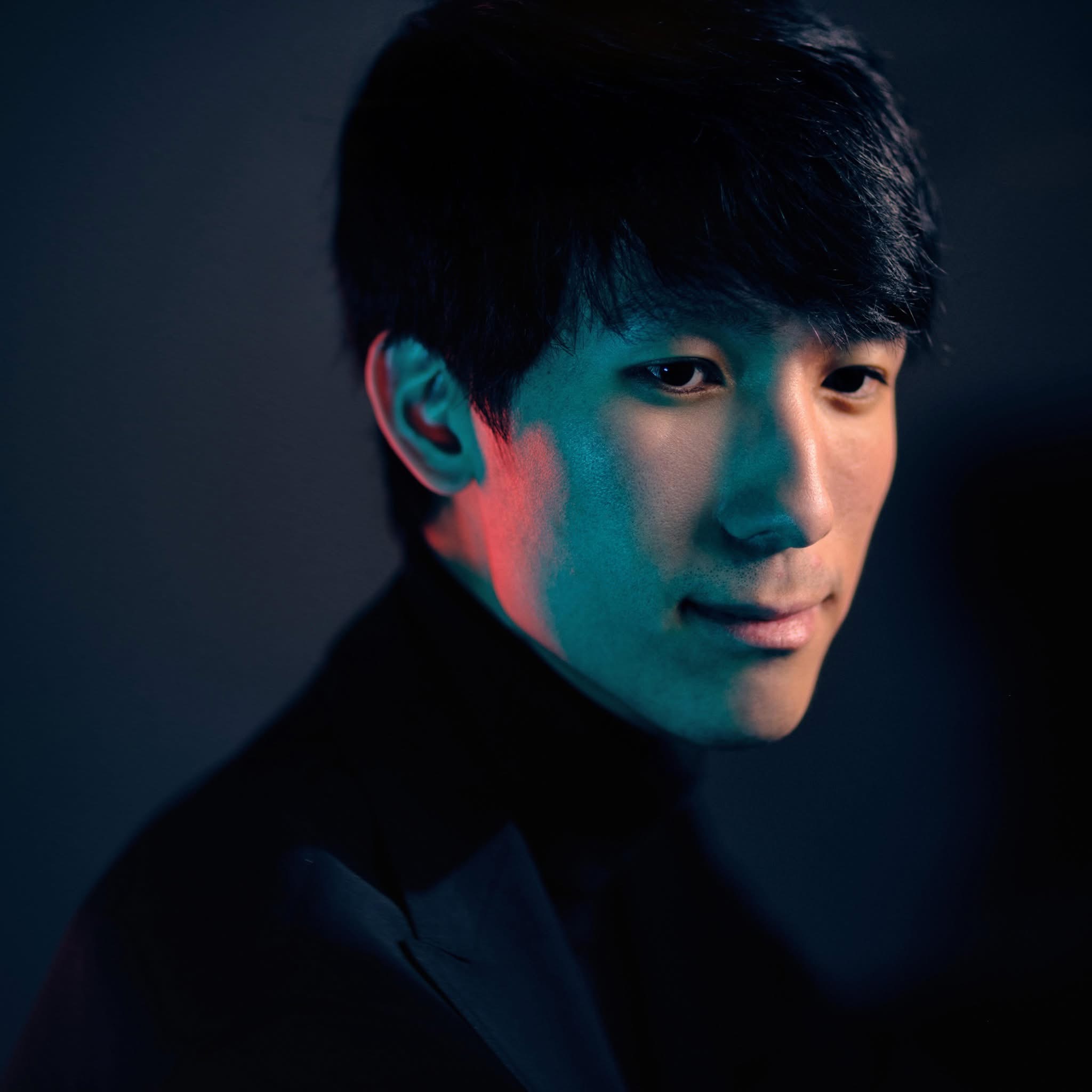
• We will also hear Bomsori on the violin, and on period instruments: Tomasz Ritter and Xavier de Maistre with {oh!} Orkiestra under Martyna Pastuszka, Chouchane Siranossian with Martin García García, and Roel Dieltiens with Frank Braley.
 A festival of perfect sound and distinguished interpretations awaits us...
Tickets are available online at bilety.nifc.pl and at the box office of the Fryderyk Chopin Institute, 43 Tamka Street (open from 10.00 am to 5.00 pm, Tuesday to Sunday).


Comments
Post a Comment