Review of Eric Lu's Fryderyk Chopin 216th Anniversary Birthday Concert 1st March 2026, Warsaw
Review of Eric Lu's
Fryderyk Chopin
216th Anniversary Birthday Concert
1st March 2026

 |
| Chopin's Polonaise - A Ball at the Hôtel Lambert in Paris by Teofil Kwiatkowski now in the National Museum, Poznań |
February 26th 2026, 7:30 p.m.
Warsaw Philharmonic Concert Hall
Jan Lisiecki – piano
I was unfortunately unable to attend this concert
Program:
Bohuslav Martinů: Three Czech Dances, H. 154
Manuel de Falla: Spanish Dance, No. 2, No. 1
Karol Szymanowski: Four Polish Dances for Piano, M60
Franz Schubert: 16 German Dances, D. 783
Béla Bartók: Romanian Folk Dances, Sz. 56
Alberto Ginastera: Argentine Dances, Op. 2
***
Fryderyk Chopin: Grand Valse Brillante in E-flat major, Op. 18
Johannes Brahms: Waltz, Op. 39 No. 3
Fryderyk Chopin: Waltz Op. 34 No. 1, No. 2
Johannes Brahms: Waltz, Op. 39 No. 15
Astor Piazzolla: Libertango
Isaac Albéniz: España, Op. 165 No. 2 (Tango)
Manuel de Falla: Fire Dance
Fryderyk Chopin: Polonaise in A-flat major, Op. 53
March 1st 2026, 12:00 p.m.
Fryderyk Chopin's Birthplace in Żelazowa Wola
Mateusz Dubiel (Erard 1838)
Fryderyk Chopin: Nocturne in E flat major, Op. 55 No. 2, 4 Mazurkas, Op. 41, Barcarolle in F sharp major, Op. 60, Sonata in B minor, Op. 58
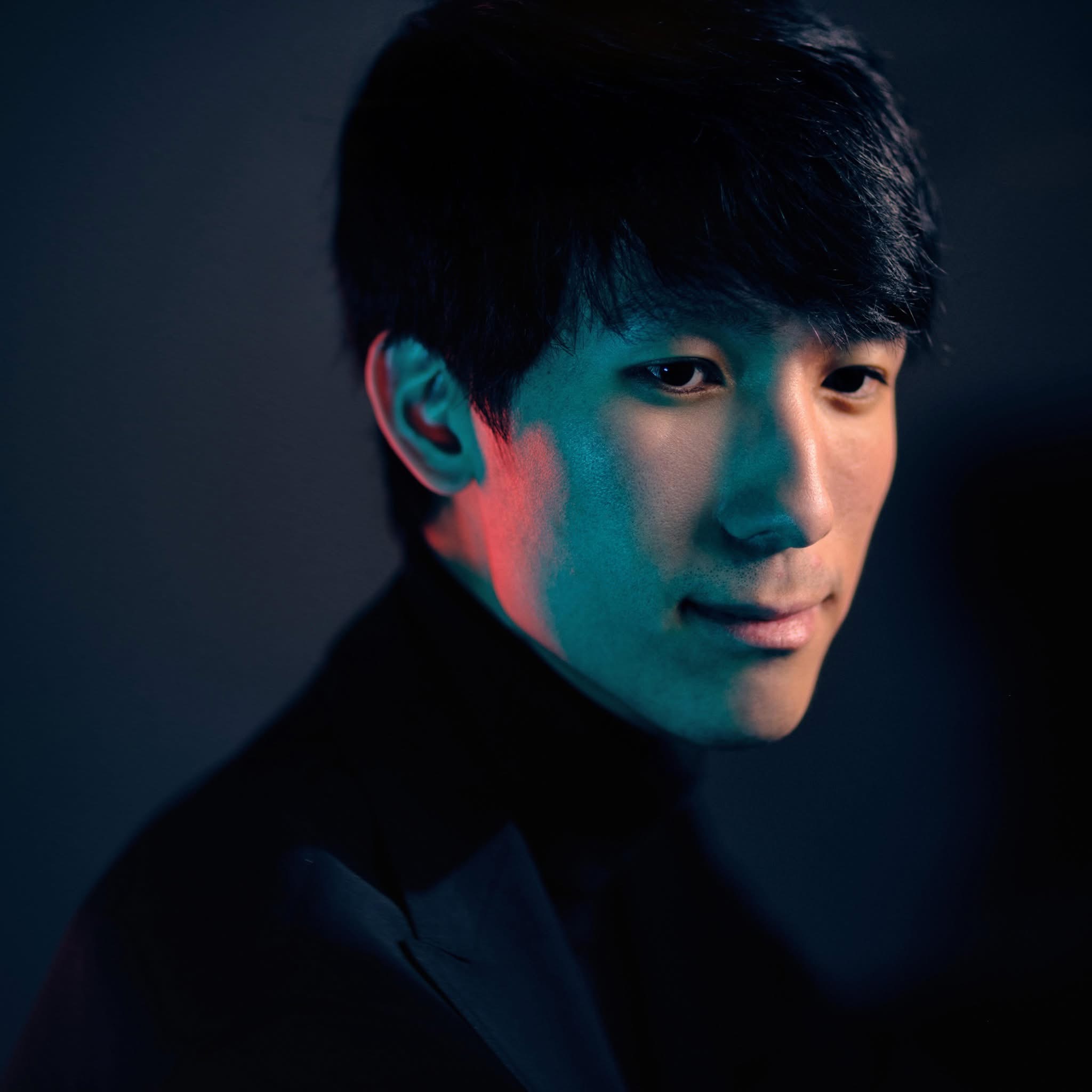 |
| Eric Lu |
Review
March 1st 2026, 7:30 p.m.
Filharmonia, Warsaw
Fryderyk Chopin Program
I am in the position where I have nothing left to say following this extraordinary birthday recital by the winner of the XIX International Chopin Piano Competition 2025, Eric Lu. It surely occupiers a unique position in music criticism and comes from his profound understanding of the Polish composer, Fryderyk Chopin.
By some miracle Lu took us onto that creative cusp of the classical and romantic in music that Chopin uniquely occupies. He gave voice to a remarkable period of transformation in the history of music. One style of intense transparent beauty which subtly hints at another that was appearing on the musical horizon. At times so clear, while at others, poetically merely hinted at, diaphanous.
In this concert, Lu placed us at the beginning of subtle transformations through musical suggestion and sound. We were carried in piano tone, touch and interpretation, through the pure classical, harmonic transitions of Mozart and at times the baroque detached polyphony of Bach. Yet additionally, on occasion, he took us on a mystical journey into the confident embrace of romantic love.
These transcendental voyages also accompanied us into the Beethoven concerto No.3 in C minor which depicts a new direction, the composer's struggle with deafness and his triumphal surmounting of creative crisis. A remarkable painting of creative evolution and change was given us by Lu, quite beyond most pianists to communicate in my experience.
This devotion and tangible stylistic reminder of Chopin and his adored earlier composers, was clear from the divinely executed sole encore Lu gave us - the Aria that opens Bach's Goldberg Variations.
We should be eternally grateful to Lu for this human creative distraction and achievement in the art of music, precious moments of uplifting time. Such a blessed release, even if brief, that carried us away from the present obverse of the human coin, away, away from the present brutality and madness that is smothering us.
Polonaise in B-flat major, Op. 71 No.2
I must say I love this poet of the piano with his arabesques of expression even in the polonaise. This work written in 1828 rests on the cusp of change. It shows Chopin beginning to introduce personal moods and emotions into his work and move away from conventional expressions created in the shackles of previous forms and genres. This Polonaise seems to be one of the documents of an imminent breakthrough. It was composed in the virtuosic style brillant.
Really, the work is a piece of chamber music for an room of intimate ambience. As Frederick Niecks noted, in Chopin’s music from that time ‘The bravura character is still prominent, but, instead of ruling supreme, it becomes in every successive work more and more subordinate to thought and emotion’. This work admirably reconciles the conventional with the original, the coquetry of the salons with the approaching Romantic watershed (Tomaszewski)
Lu extracted a beautiful tone from the Fazioli. His entire approach to interpretation of the work speaks of an accomplished artist and a deep understanding of the Polish idiom and character of Chopinesque expression.
Polonaise in F minor Op.44
In the nineteenth century, F-sharp minor was often considered a dark, melancholic, and expressive key, particularly in the Romantic era, but it also presented technical and compositional challenges for a composer. It was used to convey a wide range of emotions, from passion and grief to introspection. The key Chopin chose for this polonaise expressed intense emotion and extended the boundaries of classical form.
Lu gave us a powerful interpretation of this monumental polonaise. The lyrical interludes were creatively contrasted with the muscular forward-driven anger and resistance with much żal in evidence. Lu developed the work into a final statement of tragic triumph.
Waltz in C sharp minor Op.64 No.2
This was a unique interpretation to my mind and essentially moving in unusually nostalgic, emotional scope. Accomplished technique was placed at the service of charm, reflection and elegance in this waltz, wherein Lu captured Chopin's remembered period sensibility to perfection, unlike many other participants.
We were taken into another dimension of musical resonance almost immediately by Lu's superb tone production and refinement of touch on the Fazioli. The emotional tensions and relaxations were expressively carried and deeply felt by the pianist.
Nadia Boulanger was once asked what made a great as opposed to an excellent performance of a piano work. She answered 'I cannot tell you that. It is something I cannot describe in words. A magical element descends.'
This remark could not be more appropriate applied to this fine performance. Lu created a dream atmosphere which descended over us like the shadowed wings of a nightingale. This dream becomes a rhythm of longing. Chopin chooses sadness because he cannot find the joy he loves. Almost uncontrollable emotional agitation rises wildly yet organically like all emotion does. This nocturne was performed with both tenderness, sensitivity yet with intense żal.
Ballade No. 4 in F minor
This remains one of the finest and subtle interpretations of this transcendent composition I have ever heard. In many ways it opens the portals to Lu's Chopinesque mind vision, the exploration of a great spiritual garden which continues throughout this performance and his quite remarkable recording. Such profound musical penetration could only have come from deep and prolonged study and musical experience of playing the works of the great Polish genius. We are taken one dimension deeper than most pianists and musicians transport us in the music of Chopin.
For everyone in Chopin's day, the ballad was an epic literary work. That which had been rejected in severe Classical high poetry, now came to the fore: a world of extraordinary, inexplicable, mysterious, fantastical and irrational events inspired by a more popular imagination. In Romantic poetry, the ballad became a ‘programmatic’ genre. It was here that the real met the surreal.
Mickiewicz gave his own definition: ‘The ballad is a tale spun from the incidents of everyday (that is, real) life or from chivalrous stories, animated by the strangeness of the Romantic world, sung in a melancholy tone, in a serious style, simple and natural in its expressions’.
Penetrating the expressive core of the Chopin Ballades requires an understanding of the influence of a generalized view of the literary, musical and operatic balladic genres of the time. Not a simple task of time travel. In the musical structure there are parallels with sonata form but Chopin basically invented entirely new musical material. I have always felt it helpful to consider the Chopin Ballades as miniature operas being played out in absolute music, forever exercising one's musical imagination.
Chopin possesses an unrivaled position as Poland’s national composer and its musical wieszcz (poet, balladeer and prophet). This is particularly obvious in the musically narrative Ballades. His music is the beating heart of the nation. The great Polish poet Cyprian Norwid (1821–83) described Chopin as ‘a Varsovian by birth, a Pole by heart, and a citizen of the world by talent’.
Virtuoso brilliance, a supreme gift for melody and an air of sentimentality explain his immense appeal on a popular level. But more deeply the universality of Chopin lies in the sense of loss and nostalgia for his homeland. Contained within his intense music is patriotic resistance to domination, a feeling of sacrifice and melancholy in the face of ‘the bitter finales of life’ – all universal human emotions. ‘Chopin’s music was a kind of cultural battle-ground in the nineteenth century, prey to appropriation.’
I received from Lu the mental painting of a reflective wanderer strolling, sometimes hurrying in passionate embrace and memory through the landscape of his life. A reminiscence of Marcel Proust's madeleine cake remembrances but expressed in music. Chopin seems to reflect on the mystery of his entire life, examining and judging its intense joys, sorrows and moments of resignation to destiny.
And so this magnificent opera of life passes through the various phases of age, innocence and experience, painted by Lu in polyphonic sound with the rich and luminous sound palette provided by the modern Fazioli he chose to play.
The pure, simple melodic innocence of the opening that Lu grants us, prepares the spirit in a poignant manner for the polyphonic, emotional turbulence that then follows, carried aloft as we are by his persuasive phrasing, subtle dynamic variation and rubato. This rare experience was an augmentation to what I felt was the deep philosophical penetration of the piece by Lu. It was as if one chapter after another of a linked, profound spiritual and musical travel journey was opening in his mind before us.
* * * * *
Ludwig van Beethoven
Piano Concerto No. 3 in C minor Op. 37
The Vienna of Mozart, the composer he adored above all others, drew Beethoven like a magnet. He was sixteen when he made his first journey there in 1787 and returned in 1792 ostensibly to study with Haydn. His brilliant keyboard playing caused many musical connoisseurs to consider him the second Mozart, unaware of his latent compositional genius. His revolutionary creative spirit soon outstripped Haydn. When he gave his first public concert on 2 April 1800 he included a Mozart symphony but failed to play this recently completed concerto, the C minor Op. 37 for reasons that remain obscure.
In this concerto Beethoven attempted successfully to break out of a creative crisis. The key of C Minor he always favored for the expression of his most turbulent emotions. He had become horrifyingly and increasingly aware of his accelerating deafness which resulted in those profoundly melancholic words in the Heligenstadt Testament of 1802:
Written at much the same time as the glorious 'Spring' Sonata for violin and piano Beethoven wrote that in this concerto he wanted to 'breathe new life into an old form'.
The outstanding pianist Eric Lu, winner of the 2025 XIX International Chopin Piano Competition and the AUKSO Chamber Orchestra of the City of Tychy under their conductor Marek Moś (conductor), gave us the finest of performances. One might have expected a satisfying recreation on every level, particularly moving emotionally, mired as we are in the destructive nature of current world events. It was in many ways a miraculously refined performance that inhabited a poetic, Beethovinian world rarely explored or touched by lesser pianists. The performance encapsulated the classical style at a remarkably elevated level of mature, sensitive musicianship.
After the extensive orchestral exposition of the first movement Allegro con brio, Lu opened with those immense C minor scales, scales that encompassed the entire keyboard for both hands and revealed him as a true virtuoso of rare perfection.
Again as the development of the movement progressed, I was aware of his quite superb, even incandescent piano sound, tone colour, the magical absorption of the classical style. His utilized great variation in dynamic, breathing, phrasing and articulation. The monumental cadenza (integrated with the first movement as well as merging into the Largo) with its tremendous trill (reminiscent surely of Op. 111) was penetratingly authoritative.
The heartfelt and expressive Largo was deeply moving. Here again was the poet of the piano I remembered so well from his earlier appearance in competition when he in achieved 4th prize in the XVII International Fryderyk Chopin Piano Competition in Warsaw in 2015 at age 17. An introspective, spiritually searching account. The colouration, the beautiful, glowing tone, the luminous cantabile and ardent phrasing always expressed emotion and sensibility organically from within.
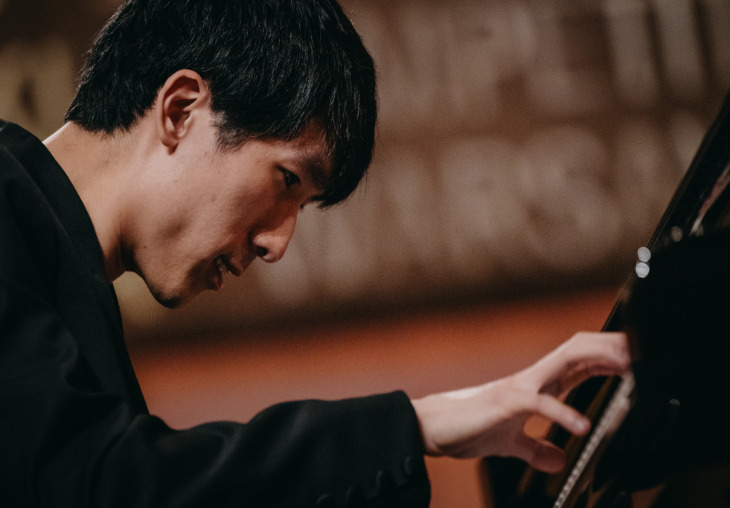
We were celebrating the 216th anniversary of Fryderyk Chopin’s birth with particular solemnity: three concerts featuring the winner of the last Chopin Competition – Eric Lu, Jan Lisiecki, and Mateusz Dubiel.
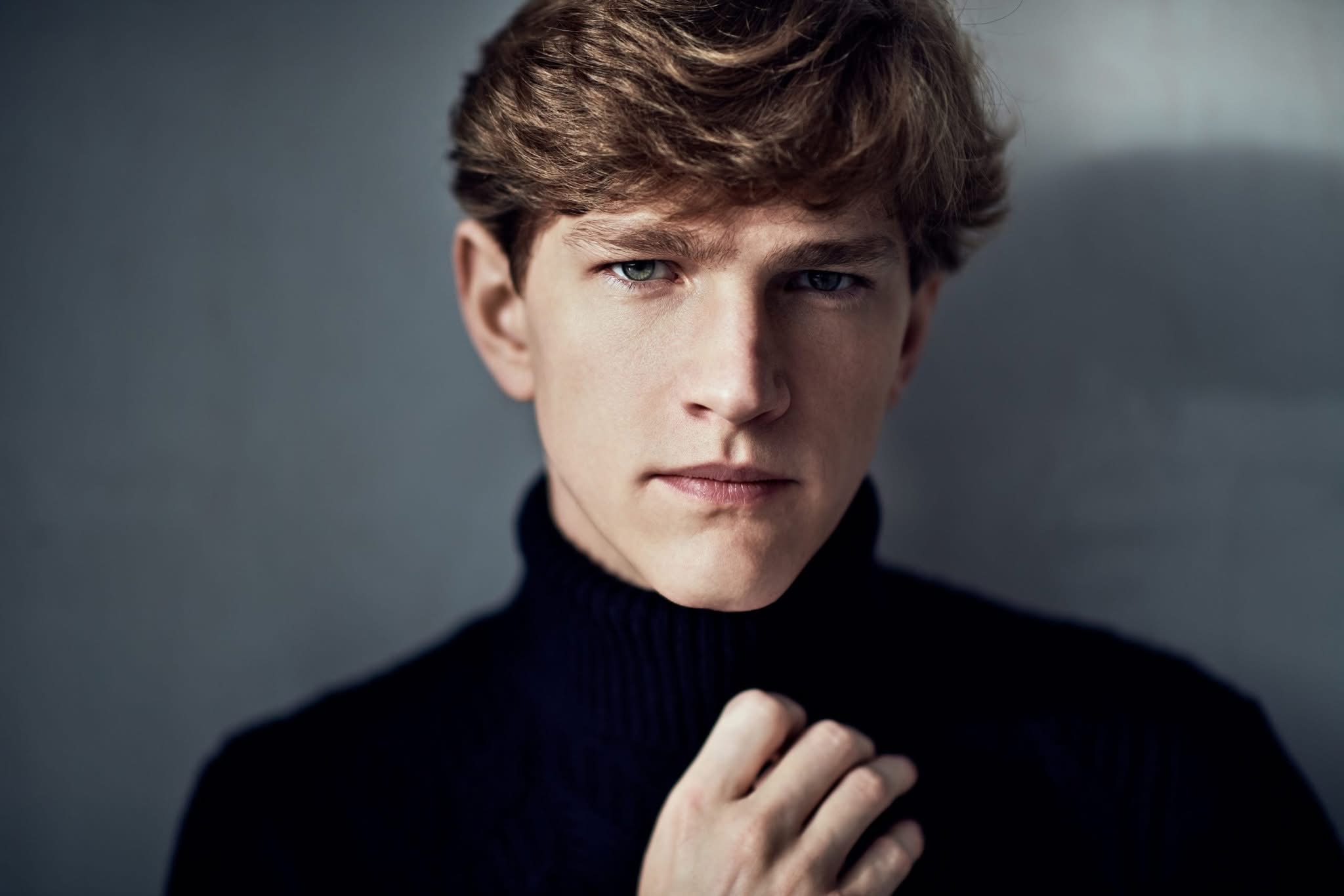
The celebrations began on February 26th with an extraordinary recital by Jan Lisiecki. Falling into a world’s elite of pianists, young virtuoso, linked by a long-standing artistic friendship with the Chopin Institute, in a program titled ‘World (of) Dance’ has combined works by Chopin, Brahms, Szymanowski, Schubert, de Falla, and Piazzolla; common denominator – not only the titular element – is danceability. The result is an exceptionally interesting, multi-coloured mosaic of styles and moods – an intelligent play on context, promising both good entertainment and a space for reflection.
On March 1st, as always, we invited you to a concert at the Warsaw Philharmonic and a broadcast of a recital from Żelazowa Wola.
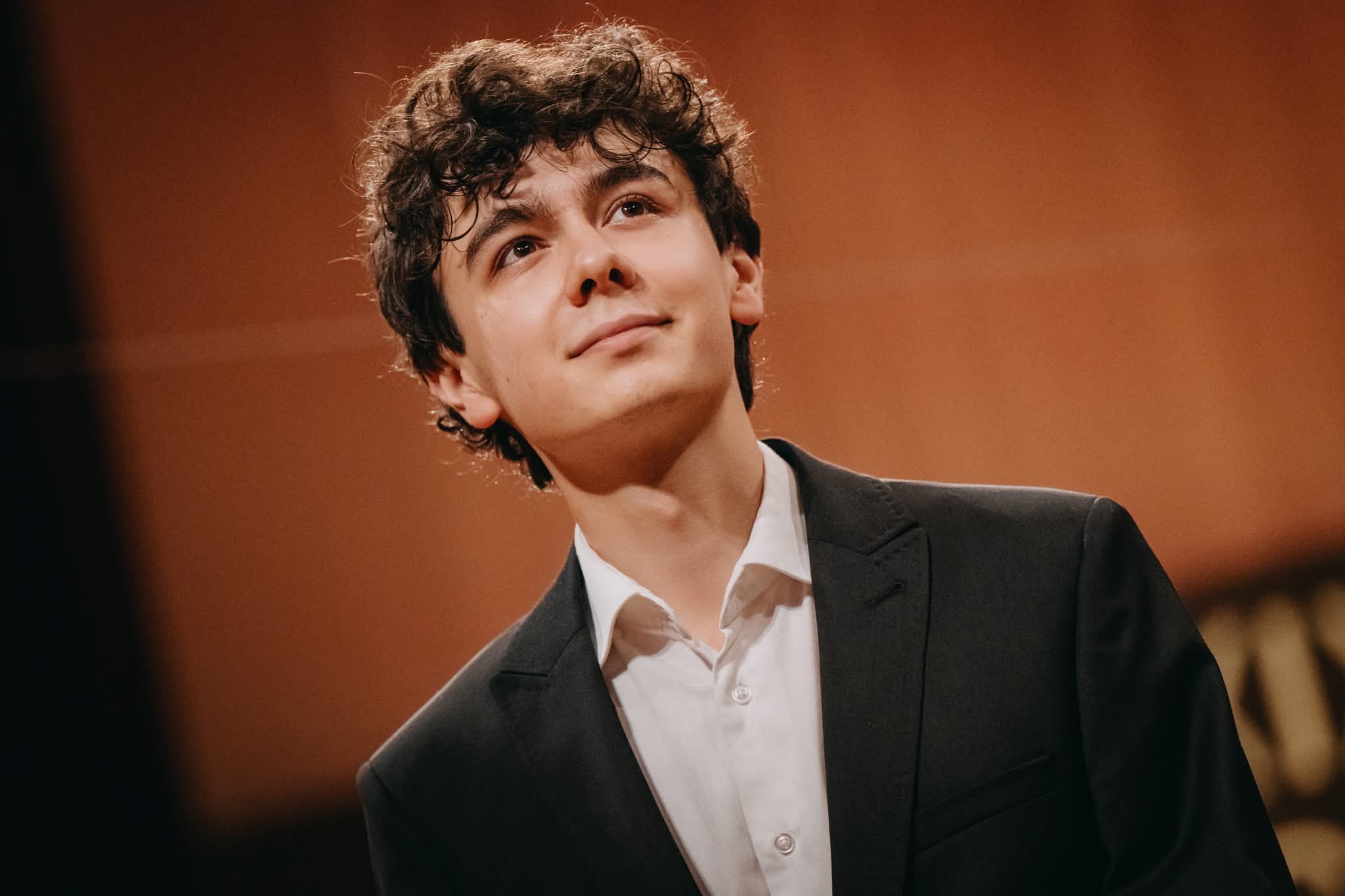
The winner of the last Chopin Competition returned to Warsaw for a gala evening organized by the Fryderyk Chopin Institute on the anniversary of the composer’s birth – the concert headlined by Eric Lu took place at 7:30 p.m.
The concert was broadcast on Polish Radio 2.


Comments
Post a Comment